Owner’s manual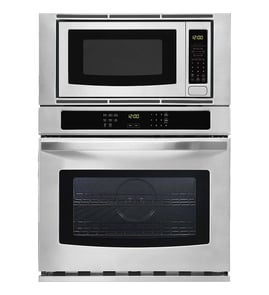



What is the life expectancy of a KitchenAid oven?
A KitchenAid built-in electric oven like model KOCE500ESS20 typically lasts 13 to 15 years with normal household use and basic care. Because KOCE500ESS20 is an electric wall oven/microwave combo, that 13 to 15 year range is the right expectation for the oven portion.
What affects lifespan most
- How often you run high-heat cooking and self-clean cycles
- Keeping vents clear and the cooling fan airflow unobstructed
- Preventing spills from baking onto the cavity bottom and door edges
- Avoiding slamming doors (protects hinges, latches, and glass)
- Fixing small issues early (weak heating, error codes, door not closing)
Maintenance habits that help KOCE500ESS20 reach the high end of the range
We recommend following the cleaning and care guidance in the KOCE500ESS20 owner’s manual. Key habits include:
- Clean spills after the oven cools to prevent permanent staining and odor
- Use self-clean before soil becomes heavy (heavy soil increases heat, smoke, and stress)
- Remove racks before self-clean to reduce discoloration and sticking
- Keep the door sealing surfaces clean so the door closes and seals properly
- Do not block oven vents during cooking or self-clean
Quick lifespan expectations (typical)
| Appliance type | Typical life expectancy | Notes |
|---|---|---|
| Electric oven | 13 to 15 years | Most common for built-in wall ovens |
| Gas oven | 15 to 17 years | Simpler heat system, fewer electrical heating components |
| Combo microwave/oven | 10 to 15 years overall | Microwave components can age differently than the oven |
Why it matters
Knowing the typical lifespan helps you decide whether to repair or replace when symptoms show up (slow preheat, uneven baking, frequent error codes). On KOCE500ESS20, common repairable wear items include heating and sensing components such as the range bake element W11545804 and the temperature sensor W11233913.
Last updated: January 2026
What is the best quality wall oven?
“Best quality” depends on what you value most (reliability, baking performance, features, service support, and fit). For a built-in combo like KitchenAid model KOCE500ESS20, the best choice is the unit that matches your cabinet cutout, electrical requirements, and cooking needs, then is supported by readily available replacement parts and documentation such as the KOCE500ESS20 owner’s manual.
What to look for when comparing wall ovens
- Correct size and fit: 27-inch vs 30-inch cutout requirements and depth clearance
- Cooking performance: even baking, convection performance, broil power
- Controls and features: smart connectivity, preheat speed, self-clean or steam clean options
- Serviceability: access to common replacement parts (elements, sensors, switches)
- Build and finish: door alignment, rack glide quality, stainless finish durability
How KOCE500ESS20 fits into the “quality” conversation
KOCE500ESS20 is a KitchenAid built-in microwave/oven combination, so you are evaluating both an oven and a microwave in one built-in package. The owner’s manual for this model covers maintenance, cleaning methods, and installation requirements, which are key indicators of long-term ownership experience. See the KOCE500ESS20 owner’s manual for cleaning guidance (including self-clean and steam clean details) and installation basics.
Quick comparison: what “best” usually means
| If you care most about... | Prioritize... | Why it matters |
|---|---|---|
| Reliability | Proven platform, strong parts support | Fewer breakdowns, easier repairs |
| Baking results | Convection design, temperature control | More even browning and doneness |
| Ease of ownership | Cleaning cycles, simple controls | Less time spent maintaining |
| Long-term value | Parts availability and documentation | Lower repair friction over time |
Why it matters
A wall oven is a long-term built-in investment; choosing “best quality” is really choosing the best match for your kitchen constraints and how you cook. For combo units, fit, ventilation, and electrical compatibility are just as important as brand reputation.
Last updated: January 2026
How to reset a KitchenAid wall oven?
To reset your KitchenAid KOCE500ESS20 wall oven/microwave combo, we recommend doing a simple power reset: turn the unit off, then cycle power at the home breaker for about 1 minute and restore power. The display should reboot and return to normal operation.
Quick reset steps (power cycle)
- Touch Oven Cancel to stop any active cooking cycle.
- Turn OFF the circuit breaker that supplies the oven.
- Wait 60 seconds (this clears many temporary control glitches).
- Turn the breaker ON.
- Set the clock and try a basic function like Bake or Broil.
For control and keypad behavior specific to this model, follow the reset and cancel guidance in the KOCE500ESS20 owner’s manual.
If the display shows “PF” after power returns
“PF” commonly appears after a power interruption and usually clears once you set the clock and start a cooking mode.
- Confirm the breaker is fully seated (not half-tripped).
- Set the clock and re-test oven heating.
- If “PF” keeps returning, check for a loose power connection at the junction box (a qualified installer should handle this).
When a reset is not enough
If the oven still will not respond after a power reset, the issue is often in the control system or a safety device.
Common next checks:
- Stuck or unresponsive touch panel
- Intermittent power to the control
- Overheat condition that opened a safety thermostat
If you are troubleshooting an overheat or no-heat condition, a common component to test is the range high-limit thermostat WP4449751.
Why it matters
A proper reset can clear temporary software lockups and restore normal keypad response without replacing parts. If the problem returns quickly, it helps narrow the issue to power supply, control electronics, or an overheat safety circuit.
| Situation | Best reset approach | What you should see |
|---|---|---|
| Frozen or blank display | Breaker power cycle (60 seconds) | Display reboots normally |
| “PF” after outage | Set clock, test Bake/Broil | “PF” clears after setup |
| Repeated failures | Diagnose power/control/safety | Consistent operation returns |
Last updated: January 2026