Owner’s manual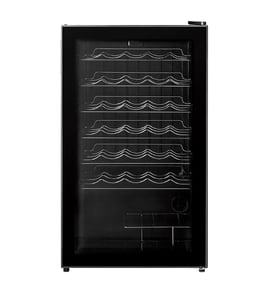



Is there a difference between a wine fridge and a wine cooler?
Yes. In everyday use, “wine fridge” and “wine cooler” often mean the same thing, but a wine fridge typically implies more cellar-like, long-term storage conditions (steady temperature, low vibration, and light protection), while a wine cooler is often used mainly to chill bottles to serving temperature. Your Kenmore 46199130700 is a wine cooler designed for controlled wine storage.
How the terms are commonly used
- Wine fridge (wine refrigerator): Focuses on stable, long-term storage conditions.
- Wine cooler: Often emphasizes convenient chilling and short-to-medium storage.
- Reality: Many consumer units are marketed with both terms, even when the design is similar.
What matters more than the name
When you compare units, these features affect wine quality more than the label:
- Temperature stability and how tightly it holds the setpoint
- Vibration level (less vibration is better for storage)
- Light exposure (especially UV) through the door
- Humidity management (to help protect corks)
- Rack layout and true bottle capacity
Quick comparison
| Feature | Wine fridge (typical) | Wine cooler (typical) |
|---|---|---|
| Best use | Longer-term storage | Serving-temp chilling and everyday storage |
| Temperature control | More precise and stable | Can be simpler depending on model |
| Humidity features | More likely to include | May be basic or optional |
Model-specific notes for Kenmore 46199130700
Our 46199130700 owner's manual covers temperature setting, wine storage guidance, shelf use, and care and cleaning. It also notes a maximum capacity of 38 (750 ml) bottles when loaded as instructed, and it describes using humidors when humidity is low (with a small capacity tradeoff).
Why it matters
Wine tastes best and ages more predictably when temperature swings, vibration, and light exposure are minimized. Choosing a unit based on those performance factors helps more than choosing based on the product name.
Last updated: January 2026
What are the most common issues with 46199130700?
The most common issues we see with the Kenmore 46199130700 wine and beverage cooler are temperature control problems, interior light or door-switch issues, and door sealing or hardware wear. Many symptoms trace back to airflow restrictions, control components, or door alignment and closure.
Common problems and what they usually look like
- Not cooling or weak cooling: unit runs but cabinet stays warm; bottles do not reach set temperature.
- Temperature swings: cooler alternates between too warm and too cold; inconsistent storage conditions.
- Light not working: interior light stays off or flickers; sometimes tied to the door switch/strike.
- Door will not lock or latch smoothly: key/lock hardware binds or the door does not close firmly.
- Noise or vibration: rattling shelves, buzzing, or fan-related noise that changes with door position.
Quick checks we recommend first
- Confirm the temperature setting and allow 24 hours after changes.
- Make sure the door closes fully and the gasket seals all the way around.
- Avoid overpacking; leave space for airflow around shelves and the evaporator cover.
- Verify the unit is level; an unlevel cabinet can cause door and vibration complaints.
- If the light is out, check the door strike and light cover for damage.
Parts that commonly relate to these symptoms
| Symptom | Common area to inspect | Example part on this model |
|---|---|---|
| Light not working | Light assembly or cover | Led light DG3-14-B |
| Door does not “click” closed | Door strike/switch alignment | Wine cooler light switch strike DG14-3 |
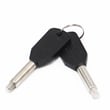
| Door will not lock | Lock cylinder/key | Kenmore lock key DG14-5 |
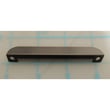
| Airflow issues, frost patterns | Evaporator area cover | Kenmore evaporator cover DG22-215 |
Why it matters
Wine coolers like the Kenmore 46199130700 rely on steady airflow and a tight door seal to hold a stable temperature. Small issues (a misaligned door strike, a blocked evaporator cover, or a failed light component) can lead to warm storage, excess run time, and moisture problems.
Model-specific guidance
For control locations, temperature setting details, and safe access to internal panels, follow the 46199130700 owner’s manual.
Last updated: March 2026
What is a beverage cooler?
A beverage cooler is a compact refrigerator designed specifically to chill drinks at a steady, drink-friendly temperature. For Kenmore model 46199130700, it is built to store sealed bottles on racks and keep the cabinet temperature controlled for beverage storage (including wine).
How a beverage cooler is different from a kitchen refrigerator
A beverage cooler focuses on consistent cooling and convenient drink storage rather than fresh-food features.
- Uses racks/shelves sized for bottles and cans
- Prioritizes stable cabinet temperature over freezer performance
- Typically has a glass door and interior light for visibility
- Often includes humidity accessories for wine storage
- Designed for sealed bottles (wine) and packaged beverages
What you can store in the Kenmore 46199130700
This model is a wine and beverage cooler; the owner’s guidance emphasizes sealed bottles and rack loading.
| Item type | Typical fit | Notes |
|---|---|---|
| Wine bottles (750 ml) | Yes | Max capacity is 38 bottles when loaded as instructed; humidors reduce capacity by 1 bottle per rack used. |
| Cans and bottled beverages | Often yes | Use shelves/racks to prevent shifting and improve airflow. |
| Open containers | Not recommended | Store sealed bottles only to reduce spills and odors. |
For the exact rack layout and loading pattern that achieves maximum bottle capacity, follow the 46199130700 owner’s manual.
Why it matters
Using a beverage cooler the way it is designed helps it cool evenly, prevents bottles from shifting on the racks, and supports long-term performance by keeping airflow paths clear.
Quick care tip (helps cooling and prevents odors)
- Turn power off before cleaning
- Wipe shelves and interior surfaces with a damp cloth
- Avoid abrasive cleaners and sharp tools
- Avoid cleaners containing ammonia or alcohol
- Keep the door-seal contact area clean and dry
Last updated: January 2026