Installation guide
 Owner’s manual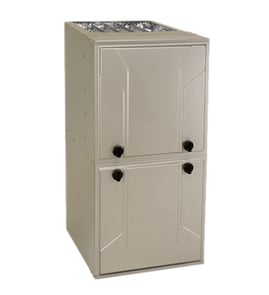



What is the most common part to fail on a furnace?
On the Icp gas furnace model G9MXE0801716A1, the most common “failure” we see is not a single part; it is restricted airflow from a dirty air filter, which overheats the furnace and triggers a safety shutdown. Your owner's manual calls out filter maintenance as a key prevention step.
What fails most often (and what to check first)
Start with the items that most commonly stop heat and are easiest to verify safely.
- Air filter clogged or too restrictive (most common cause of overheating and shutdown)
- Blocked return or supply grilles (closed registers, furniture blocking airflow)
- Blown furnace control fuse or tripped breaker
- Loose access door (door switch not made)
- Ignition problems (igniter or flame sensing issues)
Common “no-heat” causes vs. likely parts
| Symptom | Common cause | Part that may be involved |
|---|---|---|
| Furnace starts then shuts off | Overheating from low airflow | Limit switch such as furnace temperature limit switch 1177033 or furnace main temperature limit switch 1184422 (often reacting to airflow, not defective) |
| No ignition, no flame | Ignition failure | Furnace burner igniter 1176919 |
| Furnace appears dead | Power interruption | Control fuse/breaker; sometimes control issues like furnace electronic control board 1184412 |
| Blower runs but no heat | Safety or ignition lockout | Limit/rollout circuit, ignition components |
Why filter and airflow matter most
A dirty filter creates excessive stress on the heat exchanger and blower motor and can cause the furnace to overheat and automatically shut down. For this furnace, checking the filter about every 4 weeks during heating season and replacing it as needed prevents many “furnace won’t run” calls.
Quick checks we recommend before replacing parts
- Turn thermostat to HEAT and set it above room temperature
- Confirm the furnace power switch is ON and the breaker is not tripped
- Make sure the blower access door is fully seated (door switch must close)
- Check the air filter; replace with the same size and type originally specified
- Verify return-air and supply-air grilles are open and unobstructed
If the furnace repeatedly trips a manual-reset safety (rollout) or you suspect combustion air or venting issues, stop and have the system serviced.
Last updated: February 2026
Is it worth fixing a 20 year old furnace?
For an Icp gas furnace like model G9MXE0801716A1, it’s worth fixing at 20 years old only when the problem is a small, one-time repair and the furnace has been reliable; if you’re facing repeated breakdowns, major component costs, or comfort issues, replacement is the better long-term value.
Quick decision checklist
- Choose repair when it’s a single, straightforward failure (for example, an igniter or a switch) and the furnace otherwise runs normally.
- Choose replacement when you’ve had multiple service calls in the last 1 to 2 heating seasons.
- Choose replacement when repair cost is 50% or more of the installed cost of a new furnace.
- Choose replacement when you have overheating trips, airflow problems, or frequent shutdowns.
- Choose repair when you need a short-term fix to get through the season and plan to replace soon.
Repairs that are commonly “worth it” on this model
These are typical wear items that can fail even on a healthy furnace:
| Symptom | Common part type | Example part on this page |
|---|---|---|
| Burners won’t light, no flame | Hot surface igniter | Furnace burner igniter 1176919 |
| Furnace shuts down on high heat | Temperature limit switch | Furnace main temperature limit switch 1184422 |
| Furnace won’t run with door on | Door interlock switch | Furnace door switch 1171981 |
Why age matters (and why safety matters)
At around 20 years, efficiency is typically lower than modern equipment, and the risk of nuisance shutdowns increases as electrical parts, switches, and seals age. Your Icp documentation also emphasizes that heating equipment involves gas and electrical components; beyond basic maintenance like filter changes, repairs should be handled by trained service personnel (see the owner's manual).
What we recommend you do next
- Compare the repair estimate to replacement cost; use the 50% rule above.
- Check your air filter and airflow first; restricted airflow can cause overheating and limit switch trips.
- If you’ve had repeated high-temperature shutdowns, stop cycling the furnace and have it professionally diagnosed.
- Use the troubleshooting and safety guidance in the installation guide to understand required clearances and safe service practices.
Last updated: February 2026
What is the most expensive part to fix on a furnace?
On an Icp G9MXE0801716A1 gas furnace, the most expensive repair is typically a major sealed-combustion component, especially the heat exchanger (often the highest total cost once labor is included). Other high-cost repairs commonly involve the blower assembly or the control board.
What usually costs the most (and why)
The priciest furnace repairs combine expensive parts with time-intensive, safety-critical labor.
- Heat exchanger: highest-cost repair category because it is central to safe combustion and requires significant disassembly.
- Blower motor or blower assembly: higher parts cost and labor to access, remove, and set up correctly.
- Electronic control board: the furnace “brain”; replacement often includes wiring verification and setup.
- Inducer motor assembly (on many high-efficiency furnaces): can be costly and may involve venting and pressure-switch checks.
- Gas valve: part cost plus combustion setup checks.
Model-specific parts on this page that can be high-dollar
For the Icp G9MXE0801716A1, one of the most expensive listed components is the control board.
| Repair item (example) | What it does | Typical cost impact |
|---|---|---|
| Furnace electronic control board 1184412 | Manages ignition, blower timing, safety circuits | High part cost; moderate labor |
| Blower assembly (varies by model) | Moves heated air through ducts | Moderate to high part cost; moderate labor |
| Heat exchanger (varies by model) | Transfers heat from combustion to air stream | Highest total cost; high labor |
Why it matters
Your furnace manual emphasizes that combustion air must be clean and uncontaminated because certain household chemicals can contribute to heat exchanger deterioration over time. Following the safety and maintenance guidance in the owner's manual helps reduce the chance of major, expensive failures.
Practical ways to avoid the biggest repair bills
- Replace or clean the air filter on schedule.
- Keep the furnace area clear of insulation and combustibles.
- Avoid storing or using strong chemicals near the furnace air intake.
- If a manual-reset safety switch trips repeatedly, stop running the furnace and have it serviced.
- Have a qualified technician perform the annual inspection items listed in the manual (burners, blower, ignition, safety controls).
Last updated: February 2026