
What is the average lifespan of a gas grill?
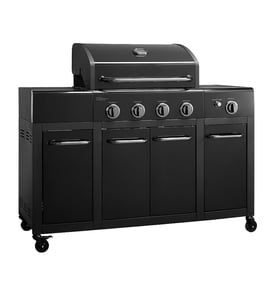
Most gas grills last 5 to 15 years with normal use; for a Kenmore grill like model 6162251001, lifespan depends mainly on burner condition, corrosion control, and how well the grill is cleaned and protected between cooks.
Typical lifespan ranges (what to expect)
| Grill build and care level | Typical lifespan | What usually fails first |
|---|---|---|
| Budget materials, minimal maintenance | 3 to 7 years | Burners, ignition parts, flavorizer/heat plates |
| Mid-range materials, regular cleaning | 5 to 12 years | Burners, regulator/hose, cooking grates |
| Heavier-duty materials, stored covered and dry | 10 to 15 years | Burners and grates (often replaceable) |
What extends the life of a Kenmore gas grill
- Clean grease and food debris off grates and heat plates after cooking.
- Keep burner ports clear; clogged ports cause uneven flames and hot spots.
- Check the regulator and hose for cracking, soft spots, or kinks.
- Keep the firebox and drip area free of heavy grease buildup.
- Store the grill covered and out of standing water; moisture drives rust.
Quick “replace vs. repair” checklist
We treat these as the most practical decision points:
- Repair makes sense when the frame and firebox are solid and only wear items are failing (burners, grates, ignition).
- Replace makes sense when the firebox is rusted through, the lid is badly warped, or the cart/frame is structurally unstable.
- Safety first: if you ever smell gas with the burners off, stop using the grill and inspect the fuel line and connections.
Why it matters
A grill can look fine but cook poorly when burners are partially clogged or when grease buildup restricts airflow. Regular cleaning and basic inspections keep heat output steady, reduce flare-ups, and help your Kenmore 6162251001 reach the upper end of the 5 to 15 year range.
For help confirming you have the correct model before ordering grill parts, use how to find your appliance model number (and what it means for parts).
Last updated: February 2026
How to find Kenmore Grill model number?
For a Kenmore grill, the model number is printed on the rating label attached to the grill body. On Kenmore model 6162251001, you’ll typically find that label on the back of the grill base or inside the cabinet area; write the full model number down exactly as shown.
Where to look on the grill
Check these common label locations first:
- Back panel of the grill base (rear of the cart)
- Inside the cabinet (open the doors and look on the inner side panels)
- Side panel near the gas tank area (LP models)
- Under the control panel (look behind the knobs area)
- On the firebox exterior (behind or beside the cookbox)
What the label looks like (and what to copy)
The rating label is usually a silver or white sticker/plate with several fields. Copy these items exactly:
| Label item | What to write down | Why it matters |
|---|---|---|
| Model number | Full model (example: 6162251001) | Ensures correct parts diagrams and fit |
| Serial number | Full serial | Helps match production changes |
| Fuel type | LP or NG | Prevents ordering the wrong regulator/valve type |
| Manufacturer info | Brand and any codes | Helps identify the correct parts list |
Tips if the label is dirty or hard to read
- Wipe gently with a damp cloth and mild soap; avoid harsh solvents that can erase printing
- Use a flashlight at an angle to make faded text easier to see
- Take a clear photo and zoom in to confirm each digit
- If the sticker is peeling, press it flat and photograph it before it tears
Why it matters
Kenmore grills often have similar-looking carts, lids, and control panels across different series. Using the exact model number prevents mismatched burners, heat plates, cooking grates, and ignition parts.
For more help identifying the correct number format, use how to find your appliance model number (and what it means for parts).
Last updated: February 2026
How to hook up grill to RV Quick Connect?
To hook up a Kenmore grill like model 6162251001 to an RV quick-connect, you connect the grill’s male quick-connect plug to the RV’s female quick-connect socket, lock it in place, then open the propane supply. This setup only works when the grill is configured for the RV’s regulated low-pressure propane.
Before you connect (pressure and fittings)
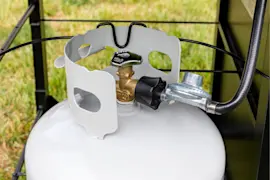
Most RV quick-connect ports supply low-pressure propane (after the RV regulator). Many grills are set up for a tank connection that uses a regulator at the grill. For safe operation, the grill must match the RV port type.
Check these items first:
- The RV quick-connect is a low-pressure outlet (common on RVs).
- The grill is set up for low-pressure feed (often means no second regulator in the hose).
- The hose has the correct male quick-connect plug for the RV socket.
- The quick-connect coupler sleeve moves freely and is not damaged.
- You have a way to do a leak test (soapy water in a spray bottle).
Hookup steps (typical RV quick-connect)
- Turn all grill control knobs OFF.
- Make sure the RV propane supply valve is OFF.
- Pull back the collar/sleeve on the RV’s female quick-connect.
- Push the grill’s male quick-connect fully into the socket.
- Release the collar to lock; tug gently to confirm it’s latched.
- Turn the RV propane supply ON.
- Spray soapy water on the connection; bubbles mean a leak, shut off gas and reseat the fitting.
Quick-connect troubleshooting
| Symptom | Most likely cause | What we do next |
|---|---|---|
| Connects but burners are weak | Grill still has its own regulator or wrong hose | Use a low-pressure RV quick-connect hose setup |
| Won’t latch | Plug not fully inserted or collar stuck | Clean, reinsert straight, confirm collar snaps forward |
| Smell gas or bubbles in leak test | Connection not sealed | Shut off propane, reconnect, retest before lighting |
Why it matters
RV quick-connect systems are designed around regulated low-pressure propane. If the grill has an extra regulator or the wrong hose/fittings, you can get poor flame, hard starts, or leaks.
For help confirming you have the right model and compatible connection parts, use how to find your appliance model number (and what it means for parts).
Last updated: February 2026
What are the parts on a gas grill?
Most gas grills (including Kenmore model 6162251001) share the same core parts: a fuel supply and regulator, burner and ignition system, heat distribution components, and a grease management system. Knowing these parts helps you diagnose uneven heat, ignition problems, flare-ups, and low flame.
Main gas grill parts (and what they do)
- Cooking grates: hold food and create sear marks; can be cast iron, stainless steel, or porcelain-coated.
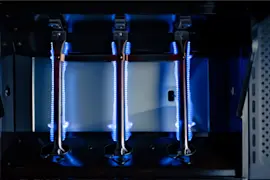
- Burners: mix gas and air, then produce the flame that heats the grill.
- Heat tents / flame tamers / radiants: sit above burners to spread heat and reduce flare-ups.
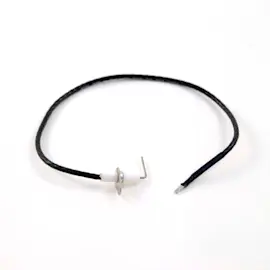
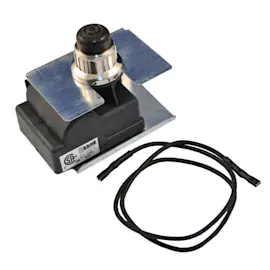
- Ignition system: igniter button/module, electrode(s), and wiring that create the spark.
- Control valves and knobs: regulate gas flow to each burner.
- Manifold: the gas “header” feeding the valves and burners.
- Grease tray / drip pan: catches grease to reduce flare-ups and make cleanup easier.
Quick “where to look” map
| Area of grill | Parts you’ll typically find there | Common symptom when it fails |
|---|---|---|
| Under the lid | Cooking grates, warming rack, thermometer | Poor sear, inaccurate temp reading |
| Firebox (middle) | Burners, heat tents/radiants | Hot spots, flare-ups, low heat |
| Front control panel | Knobs, valves, manifold | Burner won’t adjust, gas smell |
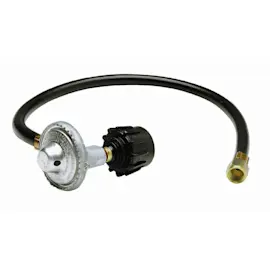
| Bottom/cabinet | Grease tray, LP tank, regulator/hose | Grease fires, weak flame |
Why it matters for troubleshooting
When we match the symptom to the system, repairs get faster:
- Won’t light: ignition system, electrode gap, battery/module, burner ports.
- Low flame: regulator, tank valve, burner venturi/air shutter, clogged ports.
- Uneven heat: burner corrosion, blocked ports, misaligned heat tents.
- Flare-ups: missing heat tents, dirty firebox, overflowing grease tray.
Helpful next step before ordering parts
Use our guide how to find your appliance model number (and what it means for parts) to confirm you’re shopping by the exact Kenmore model number and not a similar-looking series.
Last updated: February 2026
How to ignite a Kenmore gas grill?
To ignite your Kenmore gas grill model 6162251001, open the lid, confirm gas supply, then light the burners using the igniter button or a long match/lighter through the match-light hole (if equipped). This prevents gas buildup and helps the grill light safely and consistently.
Standard ignition steps (push-button or electronic igniter)
- Open the grill lid.
- Make sure the propane tank valve (or natural gas shutoff) is fully open.
- Turn one main burner control knob to LIGHT/HIGH.
- Press and hold the igniter button until the burner lights (up to about 5 seconds).
- Once the first burner is lit, turn on the remaining burners as needed.
- Preheat 10 to 15 minutes with the lid closed for more even heat.
If the igniter will not click or will not light
- Turn all knobs OFF and wait 5 minutes with the lid open before trying again.
- Check that the burner ports are not clogged with grease or debris.
- Confirm the electrode tip is close to the burner (typically about 1/8 to 3/16 inch gap) and not coated with grease.
- Inspect wiring for loose, corroded, or broken connections.
- If your grill uses a battery igniter, replace the battery and confirm correct polarity.
Match-lighting (manual lighting)
Many gas grills include a match-light hole on the side of the firebox. If your Kenmore 6162251001 has one, use this method:
- Open the lid.
- Insert a long match or long-reach lighter through the match-light hole.
- Turn the nearest burner knob to LIGHT/HIGH to ignite.
- Light other burners from the first burner.
Quick comparison
| Method | When to use | Key safety point |
|---|---|---|
| Igniter button | Normal start | Lid open before turning gas on |
| Match-light hole | Igniter failed | Wait 5 minutes if it does not light |
Why it matters
Lighting with the lid open and starting with a single burner reduces the chance of delayed ignition (a sudden flare when gas finally lights) and helps protect the burner, igniter electrode, and control valves.
For basic DIY safety habits and tool tips we recommend reviewing are diy appliance repairs safe and must have tools for appliance repair.
Last updated: February 2026
Is Kenmore a good brand for grills?
Kenmore grills are a solid choice for everyday backyard cooking because they typically deliver strong heat output, straightforward controls, and good cooking space for the price. For the Kenmore 6162251001 gas grill, long-term satisfaction usually comes down to routine cleaning and keeping ignition and rolling hardware in good condition.
What “good” means for a gas grill
A grill brand is a good fit when it matches how you cook and how much upkeep you want to do.
- Heat performance: burners light reliably and maintain steady temperature
- Cooking capacity: enough grate space for your typical cookout size
- Build quality: lid, firebox, and cart feel stable and resist corrosion
- Parts support: common wear items can be replaced as they age
- Ease of use: simple ignition, smooth knobs, and predictable flame control
What to check on your Kenmore 6162251001 before you buy parts
These quick checks help you decide whether a tune-up will restore performance or whether a deeper repair is needed.
| Area | What to look for | What it usually means |
|---|---|---|
| Ignition | Clicking but no flame | dirty electrode, weak spark path, or gas flow issue |
| Burners | Yellow, uneven flames | clogged ports or restricted air shutter |
| Wheels/cart | Wobble or hard rolling | loose fasteners or worn wheel hardware |
| Lid/firebox | Flaking rust, holes | advanced corrosion that affects safety and heat retention |
Why it matters
Most “brand” complaints on gas grills trace back to maintenance, not cooking ability. Grease buildup, blocked burner ports, and exposure to weather can make even a good grill heat unevenly or light inconsistently.
Helpful DIY resource
For basic repair readiness (tools, safe approach, and troubleshooting mindset), we recommend reviewing are diy appliance repairs safe.
Last updated: February 2026
Who makes the Kenmore grill?
Kenmore is a brand name; Kenmore grills (including model 6162251001) are built by an outside manufacturer that can vary by model and production run. The most reliable way to identify the actual maker for your exact grill is the rating label on the unit.
How to identify the manufacturer on model 6162251001
Use the grill’s data plate to capture the identifiers that point to the OEM.
- Find the rating label inside the cart, on a side panel, or on the rear panel
- Write down model 6162251001 exactly as shown
- Record the serial number and any additional codes on the label
- Note fuel type (LP propane vs. natural gas) and any conversion markings
- Take a clear photo of the entire label for reference when ordering parts
What you can use to match the right parts
Even if the OEM name is not obvious, these details consistently prevent wrong-fit parts for burners, igniters, valves, and regulators.
| What to collect | Example | Why it matters |
|---|---|---|
| Model number | 6162251001 | Ties parts to the correct Kenmore design |
| Serial number | (from label) | Identifies production run changes |
| Fuel type | LP or NG | Ensures correct regulator and orifice sizing |
| Component style | burner shape, igniter type | Confirms fit and mounting points |
Why it matters
Kenmore-branded outdoor grills are sourced from multiple manufacturers over time; confirming the exact identification label details helps you order the correct gas-carrying and ignition parts and reduces returns.
For help locating and reading the label information, use how to find your appliance model number (and what it means for parts).
Last updated: February 2026