
What is the 4 inch rule for bandsaw?
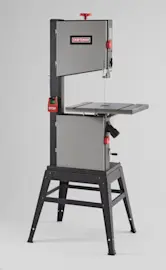
The 4-inch rule for a band saw means we keep our hands and fingers at least 4 inches away from the moving blade at all times. On a Craftsman band saw model 351214062, that typically means using a push stick, push block, or a jig to control small stock instead of guiding it with your fingertips.
How to follow the 4-inch rule in real cuts
- Use a push stick or push block whenever the cut would bring your hands within 4 inches of the blade.
- Keep the workpiece flat on the table and firmly against the fence or miter gauge (when used).
- Plan the cut so your hands stay to the sides of the blade path, not in line with it.
- Stop the saw before backing out of a tight curve or removing trapped offcuts.
- Never reach across the blade to clear scraps; wait for a full stop, then remove debris.
Quick guide: what to do based on stock size
| Situation | Safer approach | Why it helps |
|---|---|---|
| Narrow or short pieces | Push stick, push block, or a sled/jig | Keeps hands outside the 4-inch zone |
| Curved cuts | Relief cuts, slower feed rate | Reduces binding and sudden pull-in |
| Small offcuts near blade | Power off, wait for stop, then clear | Prevents contact with a coasting blade |
Why it matters
Band saw blades can grab, twist, or pull a workpiece unexpectedly (especially with dull blades, incorrect blade tension, or poor tracking). The 4-inch rule builds a consistent safety buffer so a slip does not become a blade contact.
Related setup and performance tips
If you are pushing harder than normal or the saw is wandering, fix the cause before continuing:
- Dull or wrong blade for the material
- Blade tension too low
- Blade tracking or guide blocks/bearings out of adjustment
- Feed rate too fast for the cut
For step-by-step troubleshooting and common symptoms, use our band saw repair guide landing page. For parts lookup by model number and diagrams, search on Sears PartsDirect.
Last updated: February 2026
What do the numbers mean on a bandsaw blade?
On a Craftsman band saw model 351214062, the numbers on a band saw blade usually describe the blade’s tooth pattern, especially TPI (teeth per inch). Higher TPI means finer, smoother cuts; lower TPI means faster cutting and better chip clearance in thicker material.
Common blade numbers and what they mean
Most blade packaging uses a few standard callouts:
- TPI (teeth per inch): Tooth density along the blade; it is measured from gullet to gullet (the valley between teeth).
- Blade width (inches): Affects how tight a curve you can cut; narrower blades turn tighter, wider blades track straighter.
- Blade length (inches): Must match your saw’s required blade length.
- Tooth style or set: Often shown as hook, skip, regular, or raker; this influences feed rate and finish.
- Vari-pitch (example: 6-10 TPI): The tooth spacing changes along the blade to reduce vibration and improve cut quality.
Quick TPI guide (how to choose)
Use this as a practical starting point for most shop tasks.
| Material and goal | Typical TPI range | What you get |
|---|---|---|
| Thick wood, fast rip cuts | 2 to 4 TPI | Faster cutting, rougher finish |
| General wood cutting | 4 to 6 TPI | Balanced speed and finish |
| Thin wood, plywood, plastics | 6 to 10 TPI | Cleaner edges, less tear-out |
| Non-ferrous metals (aluminum, brass) | 10 to 18 TPI | More control, smoother cut |
| Thin steel and small stock | 18 to 32 TPI | Fine finish, slower feed |
Why it matters
Matching the blade numbers to your material prevents slow cutting, wandering cuts, and ragged edges. The right TPI also reduces heat buildup and helps the blade track correctly on the wheels.
Helpful next steps for performance issues
If your blade is cutting poorly even with the right TPI, these checks usually fix it:
- Set blade tension correctly before adjusting tracking.
- Adjust blade tracking so the blade runs centered on the wheels.
- Set guide blocks/bearings close to the blade without pinching.
- Use a steady feed rate; forcing the cut dulls teeth quickly.
- Replace the blade if teeth are rounded, missing, or glazed.
For step-by-step help, use our DIY resources like band saw common questions. For replacement parts and blade-related components for model 351214062, start with the parts list for your saw, or search by model on Sears PartsDirect.
Last updated: February 2026
What is the 3-tooth rule for bandsaws?
The 3-tooth rule for a band saw (including Craftsman model 351214062) means you choose a blade tooth pitch (TPI) so at least three teeth are in the cut at all times. This prevents tooth snagging and stripping, improves chip clearance, and helps you get smoother, more controlled cuts.
How to apply the 3-tooth rule (quick method)
- Measure the material thickness where the blade enters the cut.
- Pick a TPI that keeps 3 or more teeth engaged in that thickness.
A simple rule of thumb:
- Minimum teeth engaged: 3
- Too few teeth engaged: teeth can hook, chatter, or break
- Too many teeth engaged: gullets pack with dust or chips, cutting slows and the blade heats up
Practical TPI guidance by material thickness
Use this as a starting point, then fine-tune for wood species, feed rate, and cut type.
| Material thickness | Typical blade pitch range | What you’ll notice if it’s wrong |
|---|---|---|
| 1/8 to 1/4 in. | 14 to 24 TPI | Too coarse: snagging and tooth damage |
| 1/4 to 3/4 in. | 6 to 14 TPI | Too fine: slow cutting, heat buildup |
| 3/4 to 2 in. | 3 to 6 TPI | Too fine: packed gullets, drift increases |
| Over 2 in. | 2 to 4 TPI | Too coarse: rough surface, more vibration |
Setup checks that matter as much as TPI
Even with the right blade pitch, these issues cause poor results:
- Blade tension is too low (blade wanders and drifts)
- Blade guides or thrust bearing are misadjusted
- Blade is dull or glazed (especially after cutting resinous wood)
- Feed rate is too aggressive (forces the blade off-line)
- Wheels or tires are dirty (tracking becomes unstable)
For step-by-step blade handling and safe replacement practices, use our guide: how to replace a band saw blade.
Why it matters
Matching blade TPI to the 3-tooth rule protects the blade, reduces vibration, and improves accuracy. It also helps prevent common complaints like slow cutting, ragged edges, and cuts that wander.
When to look for parts
If your Craftsman 351214062 still cuts poorly after installing the correct blade and tuning guides, you may be dealing with wear items (guides, tires, belts, bearings). You can search by model number on Sears PartsDirect to find the correct replacements.
Last updated: February 2026
Why does my Craftsman bandsaw blade keep falling off?
On Craftsman band saw model 351214062, a blade that keeps falling off is caused by incorrect tension or tracking, misadjusted blade guides, or wear in the wheel tires or wheel bearings. Correcting tracking first, then setting guides, usually stops derailments.
Safety first
- Unplug the band saw before adjusting tracking, guides, or wheels
- Wear cut-resistant gloves when handling the blade
- Hand-rotate the wheels after each adjustment to confirm the blade stays centered
What to check (in order)
- Blade condition and size: Replace any kinked, cracked, or welded-out-of-square blade; confirm the blade width matches what the saw is designed to run.
- Tension: Increase tension gradually; a loose blade climbs the wheel and walks off.
- Tracking: Adjust tracking so the blade rides near the center of the upper wheel tire while you hand-turn the wheel.
- Guides and thrust bearing: Set side guides very close (paper-thin gap) without pinching; set the thrust bearing just behind the blade so it only contacts under cutting load.
- Wheel tires and bearings: Look for glazed, cracked, or loose tires; check for wheel wobble, roughness, or play that points to worn bearings.
Quick symptom guide
| What you notice | Most likely cause | Best first fix |
|---|---|---|
| Comes off right after install | Tension or tracking | Set tension, then tracking |
| Comes off when you start cutting | Guides/thrust bearing | Reset guides and thrust |
| Won’t stay centered by hand-turning | Tracking or wheel alignment | Adjust tracking; inspect wheels |
Why it matters
A derailing blade can damage wheel tires and guides, and it increases the chance of a broken blade during a cut.
For a focused troubleshooting path, use band saw blade slips off the wheel. To find diagrams and replacement parts by model number, search Sears PartsDirect.
Last updated: February 2026
What size blade does a 12 inch Craftsman band saw take?
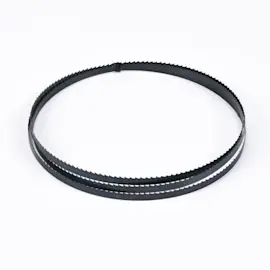
For the Craftsman band saw model 351214062, use a blade that is 83-5/8 inches long. This saw accepts a wide range of blade widths (from very narrow scroll-cut blades up to wider straight-cut blades); choose the width and TPI based on the type of cut and material.
Blade size specs to match
When you shop for a replacement band saw blade, match these three specs:
- Blade length: 83-5/8 in. (critical fit spec for proper tensioning)
- Blade width: choose within the saw’s supported range (narrow for curves, wide for straight cuts)
- Teeth per inch (TPI): lower TPI for faster cuts in thick stock, higher TPI for smoother cuts in thin stock
Choosing width and TPI (practical picks)
These are common, reliable starting points once you have the correct 83-5/8 in. length:
- 1/8 in. to 3/16 in.: tight curves; 10 to 14 TPI
- 1/4 in.: general woodworking; 6 to 10 TPI
- 3/8 in. to 1/2 in.: straighter cuts and light resawing; 3 to 6 TPI
| What you’re doing | Blade width to try | TPI to try | What you’ll notice |
|---|---|---|---|
| Tight curves | 1/8 to 3/16 in. | 10 to 14 | Turns tighter, slower feed |
| Everyday cuts | 1/4 in. | 6 to 10 | Balanced speed and finish |
| Straighter ripping | 3/8 to 1/2 in. | 3 to 6 | Faster feed, rougher finish |
Why it matters
Using the exact 83-5/8 in. length lets the tensioning system work correctly; the wrong length causes poor tracking, blade drift, slow cutting, and the blade slipping off the wheels.
Helpful DIY resources
- Blade change and setup: how to replace a band saw blade
- If cuts feel slow: band saw cutting slowly
- If the cut wanders: band saw not cutting straight
For replacement blades and other parts for model 351214062, start with the model parts list, or search by model on Sears PartsDirect.
Last updated: February 2026