Owner’s manual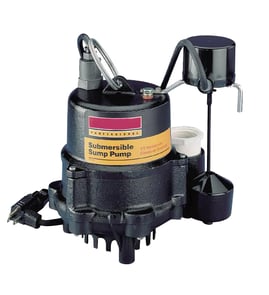

Can you repair a water pump?
Yes; we can often repair a Simer 3310P deep well pump when the problem is in the system setup or a serviceable component (like a leaking joint, a bad foot valve, or an air leak). If the pump body or internal components are damaged, replacement is typically the practical fix. See the 3310P owner's manual for model-specific safety and installation details.
What “repair” usually means on a deep well pump
Many “pump failures” are actually installation or well-condition issues that can be corrected without replacing the entire pump.
Common repairable causes include:
- Air leaks on the suction line (pump cannot pull water if it can suck air)
- Lost prime after service or a leak
- Frozen piping or components
- Foot valve or strainer clogged, buried in sand, or stuck
- Ejector or impeller clogged (performance drops)
- Incorrect nozzle and venturi match for the well conditions
Quick troubleshooting checklist (before replacing the pump)
Use these steps to narrow down whether you have a repairable issue:
- Disconnect power before touching wiring, motor, or tank components.
- Let the motor cool about 20 minutes after shutdown before handling.
- Check suction pipe joints; they must be air-tight and water-tight.
- Re-prime the pump per the manual if it is a new install or lost prime.
- Look for air leaks using soapy water or shaving cream on suction-side joints.
- Inspect for freezing; thaw and protect piping below the frost line.
Repair vs replace: practical guide
| Symptom | Most likely fix | Replace pump when… |
|---|---|---|
| Runs but won’t deliver water | Re-prime; seal suction leaks; clean foot valve/strainer | Pump won’t prime and suction system is confirmed tight |
| Low flow or weak pressure | Clean ejector/impeller; correct nozzle/venturi; address corroded/undersized piping | Internal wear is severe and performance cannot be restored |
| Cycles too often or won’t shut off | Check pressure system setup and leaks | Pump cannot build pressure with a verified tight system |
Why it matters
Replacing a pump without fixing suction leaks, priming issues, or an ejector mismatch can lead to the same “failure” again. A tight, properly sloped suction line and correct ejector setup are key to reliable deep well performance.
Last updated: February 2026
What are the 7 major parts of a water pump?
On a typical water pump, the 7 major parts are the motor, pump body (casing), impeller/diffuser, shaft and bearings, mechanical seal, and the inlet and outlet ports. On the Simer 3310P deep well pump, you will also commonly see a pressure gauge and control valve called out in the owner's manual.
The 7 major parts (plain-English breakdown)
- Motor: provides the power to spin the pump.
- Pump body (casing): the housing that holds internal components and directs water flow.
- Impeller (and diffuser, on many jet pumps): moves water and builds pressure.
- Shaft: transfers rotation from the motor to the impeller.
- Bearings: support the shaft so it spins smoothly.
- Mechanical seal (shaft seal): keeps water from leaking along the shaft.
- Inlet and outlet ports: where the suction line enters and discharge line exits.
How those parts map to what we see on the Simer 3310P
The Simer 3310P documentation lists several serviceable assemblies that align with the “major parts” above.
| Major part (generic) | Common name you may see | What it does |
|---|---|---|
| Motor | Motor | Drives the pump |
| Casing | Pump body (front/back half) | Holds internals, routes water |
| Impeller/diffuser | Impeller and diffuser (often in overhaul kits) | Creates flow and pressure |
| Seal | Seal and gasket kit, shaft seal | Prevents leaks |
| Controls/monitoring | Pressure gauge, control valve, pressure switch | Helps regulate and monitor pressure |
Why it matters for troubleshooting
Knowing these parts helps you narrow symptoms fast:
- No water or loss of prime often points to suction leaks, a foot valve issue, or an air lock.
- Leaks at the motor end often point to the shaft seal.
- Low pressure/flow can point to the impeller/diffuser, suction restrictions, or well conditions.
Quick install and service tips that protect the pump
- Keep suction piping air- and water-tight; even small air leaks can stop pumping.
- Use Teflon tape or Teflon-based pipe joint compound on threaded joints.
- Install the pump as close to the water source as practical with minimal elbows.
- Make sure the foot valve moves freely and the strainer is not buried in sand or mud.
Last updated: February 2026
What is the most common problem of a water pump?
For the Simer 3310P deep well pump, the most common problem is the motor running but no water being delivered because the pump lost prime or is pulling air on the suction side. Air leaks, priming issues, and check valve or foot valve problems are the usual root causes; see the 3310P owner's manual.
Most common symptoms
- Pump runs but no water is delivered
- Won’t pick up prime after installation
- Loses prime after working normally
- Cycles too frequently (short cycling)
- Low or fluctuating water pressure
Most common causes on the 3310P
- Air leaks in suction piping: if the suction line can suck air, the pump cannot pull water.
- Improper priming: the pump and suction piping must be filled with water before starting.
- Leaking or stuck check valve or foot valve: leaking lets water drain back; stuck shut blocks flow.
- Air pockets from piping layout: dips, sags, or high spots can trap air and air-lock the pump.
- Clogging: a plugged strainer, ejector, venturi, nozzle, or impeller restricts flow.
Quick checks we recommend
- Shut off power at the breaker before inspecting the pump.
- Check prime first at the priming plug; re-prime if needed.
- Verify suction piping is supported, has no sags, and slopes slightly upward toward the pump.
- Reseal suction-side joints and fittings (common after new installs).
- Confirm the check valve or foot valve is installed correctly and sealing.
Symptom-to-cause guide
| What you see | Most likely cause | Next step |
|---|---|---|
| Motor runs, no water | Lost prime or suction air leak | Re-prime; check suction joints and valve sealing |
| Won’t pick up prime (new install) | Improper priming, air leak, leaking valve | Re-prime per manual; reseal joints; replace leaking valve |
| Cycles too frequently | Leak, pressure tank issue, pressure switch issue | Check for leaks; verify tank air charge; inspect switch |
Why it matters
A deep well jet pump depends on an airtight, water-filled suction path to create suction. Even a small air leak or a leaking foot valve can stop water delivery and can lead to overheating if the pump runs dry.
Last updated: February 2026