
How often should I change my F-250 air filter?
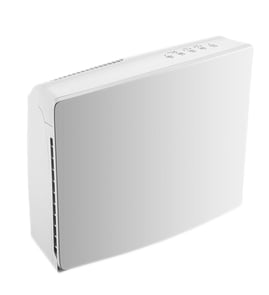
For a Bionaire F-250 air cleaner, we typically recommend checking the filter monthly and replacing it about every 3 months (sooner if you have pets, smoke, or heavy dust). A clogged filter reduces airflow and makes the fan work harder.
A practical replacement schedule
Use this as a simple baseline, then adjust based on your home and how often you run the purifier:
- Every month: Inspect the filter and remove loose dust (if your filter type allows it)
- Every 2 to 3 months: Replace in most homes with daily use
- Every 1 to 2 months: Replace with pets, smoke, wildfire-season use, or construction dust
- Right away: Replace if you notice odor, visible discoloration, or weak airflow
Signs your F-250 filter needs changing
If you see any of these, it is time to replace the filter even if it has not been 3 months:
- Airflow from the outlet feels noticeably weaker
- The unit seems louder than normal at the same speed
- Dust builds up quickly in the room after running the purifier
- Musty or stale odors persist while it is operating
- The filter looks gray, matted, or packed with lint
Quick guide: what changes the interval
| Home condition | Typical filter life | What to do |
|---|---|---|
| Light dust, no pets | ~3 months | Check monthly, replace quarterly |
| 1 to 2 pets | ~1 to 2 months | Replace more often; keep intake area clean |
| Smoke, candles, cooking fumes | ~1 month | Replace monthly for best odor control |
| Seasonal allergies (high pollen) | ~1 to 2 months | Replace sooner during peak season |
Why it matters
A fresh air filter helps your Bionaire F-250 capture more airborne particles, maintain steady airflow, and reduce strain on the fan motor. Replacing on time also helps keep noise and energy use from creeping up.
Finding the right replacement filter
Match the replacement to Bionaire model F-250 (filters are not universal across air purifier models). To search by model and confirm fit, use how to find your appliance model number (and what it means for parts).
Last updated: February 2026
Is there a downside to air purifiers?
Yes. With the Bionaire F-250 air cleaner, the main downsides are ongoing filter costs, fan noise, and the fact that most room air purifiers only clean the air in the space they are sized for. Some purifier features (like ionizers) can also be irritating for sensitive users.
Common downsides (what you may notice at home)
- Recurring maintenance cost: filters need regular replacement to keep airflow and filtration strong.
- Noise: higher fan speeds clean faster but can be loud in bedrooms.
- Limited coverage: one unit typically helps one room, not an entire home.
- Odors and gases: standard particle filtration helps with dust and pollen; it is less effective on VOCs and stubborn odors unless the unit uses activated carbon.
- Dirty filter smell: a loaded filter can cause musty odors and reduced performance.
- Added cleaning tasks: intake grilles and pre-filters (if equipped) need periodic cleaning.
What to check before you decide it is “not working”
Use this quick checklist to judge performance realistically:
- Place the unit where airflow is not blocked (avoid corners and behind furniture).
- Run a higher fan speed for 30 to 60 minutes, then reduce for quieter operation.
- Replace or clean filters on schedule; clogged filters reduce airflow dramatically.
- Keep doors and windows closed while you are trying to clean a room.
- Control the source (smoke, pets, cooking) because purifiers are not a substitute for ventilation.
Quick comparison: what air purifiers do well vs. poorly
| Air quality issue | Typical result with a room air purifier | What helps most |
|---|---|---|
| Dust, lint, pollen | Works well | Good filter condition, steady runtime |
| Pet dander | Works well | Correct room size, frequent filter changes |
| Smoke particles | Often helps | High fan speed, source control |
| Odors, VOCs | Limited unless carbon is used | Activated carbon, ventilation |
Why it matters
Knowing the limitations helps you size expectations and spend money where it counts: correct placement, consistent runtime, and timely filter maintenance usually deliver the biggest improvement in indoor air quality.
For general DIY safety and planning before you open or service an appliance, use are diy appliance repairs safe.
Last updated: February 2026
What is the 2 3 rule for air purifiers?
The 2/3 rule is a quick way to size an air purifier by CADR: for effective cleaning, the purifier’s smoke CADR should be at least two-thirds of your room’s square footage. For a Bionaire F-250 air cleaner, we use this rule to match the unit’s capacity to the room.
How to use the 2/3 rule (step by step)
- Measure room length and width in feet.
- Multiply to get square footage (sq ft).
- Multiply room size by 2/3 (0.67).
- Choose an air purifier with a smoke CADR at or above that number.
- If you have higher ceilings than 8 ft, pets, heavy cooking smoke, or wildfire smoke concerns, size up.
Quick sizing examples
| Room size (sq ft) | Minimum smoke CADR (2/3 rule) | Good next step |
|---|---|---|
| 120 | 80 | Small room purifier or higher setting |
| 200 | 133 | Medium room purifier |
| 300 | 200 | Larger purifier or higher CADR model |
| 450 | 300 | Consider a higher-capacity unit |
What the rule assumes (and when to go bigger)
The 2/3 rule is based on typical conditions (commonly an 8-foot ceiling and standard indoor air). In real homes, these factors often mean you should choose more CADR than the minimum:
- Open floor plans or frequent door opening
- High ceilings (more air volume)
- Smoke, strong odors, or allergy triggers
- You want faster cleanup (more air changes per hour)
Why it matters
If the CADR is too low for the room, the purifier runs constantly but the air still feels dusty or smoky. If it’s sized correctly (or slightly oversized), you get noticeably faster particle removal and better day-to-day comfort.
Related help
For general DIY safety and best practices before checking electrical components (like a switch, cord, or internal connections), use are diy appliance repairs safe.
Last updated: February 2026
What year F-250 to stay away from?
The Bionaire F-250 on this page is an air cleaner model number, not a Ford truck, so there are no “model years” to avoid. If you’re shopping for a used Bionaire F-250 air purifier, focus on condition: filter fit, fan noise, and whether it runs smoothly on every speed.
How to evaluate a used Bionaire F-250 air cleaner
- Plug it in and test every fan speed; listen for grinding, rattling, or squealing.
- Check airflow at the outlet; weak airflow often points to a clogged filter or a tired fan motor.
- Inspect the filter door/latches; loose doors can cause vibration and air bypass.
- Smell the unit while running; a burnt odor can indicate overheating wiring or a failing motor.
- Look for cracked housing, broken control knobs, or a wobbly fan blade.
Common “stay away” red flags (any age)
| What you notice | What it usually means | What we recommend |
|---|---|---|
| Loud vibration that changes with speed | Fan blade imbalance or worn motor bearings | Skip it unless you plan a motor/fan repair |
| Unit shuts off after a few minutes | Overheating, blocked airflow, or electrical issue | Skip it; electrical troubleshooting is required |
| Very weak airflow with a clean filter | Motor losing torque or internal blockage | Skip it unless priced for repair |
| Controls feel intermittent | Switch/control wear or wiring issue | Skip it unless you can test and repair wiring |
Why it matters
Air purifiers rely on steady airflow through the filter. A noisy motor, poor seals, or weak airflow reduces cleaning performance and can shorten the life of electrical components.
If you meant the Ford F-250 truck
Use the exact vehicle year, engine, and transmission to narrow down known issues and maintenance costs. For this Sears PartsDirect page, the key is confirming you have the correct appliance model number; see how to find your appliance model number (and what it means for parts).
Last updated: February 2026