Owner’s manual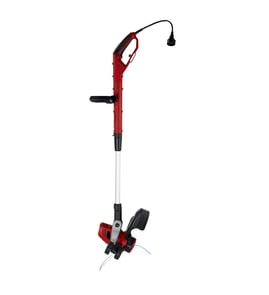



How does the auto feed work on a string trimmer?
On the Craftsman 358799140 electric line trimmer, the “auto feed” is a semi-automatic bump-feed head: with the motor running at full speed, you lightly tap the bottom of the cutting head on the ground to advance more line, and the line limiter blade trims it to the correct length (see the owner's manual).
How to advance the line (correct method)
- Plug in the trimmer and hold it in a normal trimming position.
- Squeeze the trigger switch so the head runs at full speed.
- Lightly tap the bottom of the cutting head on the ground.
- Let the head spin back up; repeat light taps as needed.
- Let the line limiter (blade on the debris shield) cut the line to the proper cutting length.
What “semi-automatic” means on this model
This head does not feed line continuously by itself. It feeds line when you “bump” the head while it is spinning.
| Feature | What you do | What the trimmer does |
|---|---|---|
| Semi-automatic (bump feed) | Tap head on ground at full speed | Releases more line |
| Line limiter | Nothing | Cuts line to proper length |
If the line will not advance
- Use only .065 in. diameter line.
- Make sure you have enough line outside the head (a common target is about 4 inches outside the head).
- Rewind the line tightly and evenly on the spool.
- Check that the line is routed correctly in the head.
- Clean dirt buildup from the cover so the spool can move freely.
Why it matters
Using the bump-feed correctly prevents line breakage, reduces excessive line use, and helps the head keep turning under load so trimming and edging stay consistent.
Last updated: February 2026
Can I use .095 trimmer line?
No. For the Craftsman 358799140 electric line trimmer, we recommend using only .065 inch (1.65 mm) trimmer line; .095 line is too heavy and can overload the motor, reduce cutting performance, and damage the trimmer head. See the line specifications and spool instructions in the owner's manual.
What line size to use (and why)
Using the correct diameter keeps the cutting head spinning at the right speed and prevents overheating.
- Use .065 inch (1.65 mm) line only
- Do not use .095 inch line (it is heavier and increases load)
- Never use wire, rope, or string (unsafe and can break into projectiles)
- Use the specified spool type for this model
What can happen if you use .095 line
Heavier line changes how the trimmer feeds and how hard the motor has to work.
| Line diameter | What you’ll notice | Risk level |
|---|---|---|
| .065 in (recommended) | Normal feed and cutting speed | Low |
| .095 in (not recommended) | Slower spin, poor feed, more vibration | High |
Quick checks if the line keeps jamming or breaking
If you are already having feed issues, line size and winding are the first things to correct.
- Pull the spool and clean the hub and spool area
- Rewind line evenly and tightly in the direction shown on the spool
- Make sure the line is routed through the exit hole correctly
- Leave about 3 to 5 inches of line unwound before reinstalling the spool
- After reinstalling, pull out about 4 inches of line outside the head
Why it matters
This model is designed around a specific line diameter. Staying with .065 inch line protects the motor, helps the tap-to-advance feed work correctly, and reduces nuisance problems like stalling, overheating, and premature spool wear.
Last updated: February 2026
How to start a 4 cycle string trimmer?
A true 4-cycle gas string trimmer starts with fuel, choke/primer steps, and a pull cord. The Craftsman 358799140 is an electric line trimmer, so it starts by connecting the correct extension cord and squeezing the trigger switch; there is no choke, primer, or pull-start. See the owner's manual for the exact operating steps and safety rules.
How to start the Craftsman 358799140 (electric)
- Inspect the trimmer before use; make sure handles, guard, and fasteners are secure.
- Use only the voltage supply specified on the unit.
- Choose the right extension cord gauge for the cord length.
- Attach the extension cord to the recessed plug and secure it through the cord hook/loop so it cannot pull loose.
- Stand in a stable position with the cutting head below waist level.
- Squeeze and hold the trigger switch to run the trimmer.
Extension cord gauge quick chart
| Cord length | Recommended gauge |
|---|---|
| 25 ft | 18 gauge |
| 50 ft | 16 gauge |
| 100 ft | 16 gauge |
If it will not start (quick checks)
- Confirm the outlet has power; reset the GFCI if the circuit is protected.
- Make sure the extension cord plug is fully seated in the recessed plug.
- Try a shorter, heavier-gauge cord (long, light-gauge cords can cause voltage drop).
- Inspect the cord for cuts or crushed spots; replace damaged cords.
- Verify the cutting head is assembled correctly and nothing is binding.
Why it matters
Electric trimmers like the Craftsman 358799140 rely on solid power delivery and safe cord routing. Using the correct extension cord gauge and securing the cord reduces nuisance shutoffs, overheating, and accidental unplugging while trimming or edging.
Last updated: February 2026
How to remove string trimmer head craftsman?
To remove the string trimmer head on your Craftsman electric line trimmer model 358799140, first unplug the trimmer, then remove the spool by pulling straight out on the tap button. Once the spool is out, you can access and remove the head components as shown in the 358799140 owner's manual.
Safety first (do this every time)
- Unplug the trimmer from the power source before touching the head
- Disconnect the extension cord from the recessed plug on the unit
- Wear eye protection and gloves
- Let the head fully stop spinning before handling it
- Keep fingers clear of the line limiter blade on the shield
Steps to remove the spool and open the head
- Unplug the unit and set it on a flat surface.
- Pull the spool out by firmly pulling on the tap button (this removes the spool from the semi-automatic head).
- Clean the hub and spool area so you can see the tabs, grooves, and line routing clearly.
- If you are servicing line feed issues, pull about 4 inches of line outside of the head before reassembling.
What you can and cannot remove on this model
On the 358799140, most routine “head removal” jobs are really spool removal and head disassembly for cleaning or restringing. Full head removal (separating the entire head assembly from the shaft) is less common and depends on the fastener style used on your specific unit; the 358799140 owner's manual shows the correct head and spool layout for this trimmer.
Common head-related tasks
| Task | What you remove | Typical reason |
|---|---|---|
| Replace line | Spool | Line breaks, won’t advance |
| Fix line welding | Spool and clean hub | Line fused from heat/friction |
| Fix head not turning | Spool, clear debris | Debris jam or line routing issue |
Why it matters
Removing the spool the right way prevents broken tabs, damaged spool teeth, and line feed problems. It also keeps the line limiter working correctly so the trimmer cuts line to the proper length.
Last updated: February 2026
What's the difference between a whipper, snipper, and a line trimmer?
A whipper, snipper, and line trimmer are the same tool; the different names are regional slang for a string trimmer that cuts grass and weeds with a spinning nylon line. Your Craftsman 358799140 is an electric line trimmer with a semi-automatic bump-feed head.
What each term usually means
These names typically refer to the same category of tool, with small differences based on how people use the words locally.
- Line trimmer (string trimmer): The most common generic term; uses nylon trimmer line on a rotating head.
- Whipper snipper: Common nickname (often used in Australia and New Zealand) for a line trimmer.
- Whipper / snipper: Shortened slang for the same tool.
- Brush cutter (not the same thing): Heavier-duty tool that may use a metal blade; not what this model is designed for.
How the Craftsman 358799140 works (quick operating basics)
From the owner's manual, this model is designed to cut using the tip of the line and to feed more line by tapping the head.
- Hold the trimmer head about 3 in. (8 cm) above the ground for trimming and scalping.
- Use the tip of the line to cut; do not force the line into heavy material.
- Advance line by tapping the bottom of the cutting head lightly on the ground while running at full speed.
- The shield’s line-cutting blade trims the line to the proper length.
- For edging, you can press the button and rotate the lower portion 180° into edging position.
Line size and replacement (what matters most)
Using the correct line size prevents overload and feed problems.
| Item | What to use | Why it matters |
|---|---|---|
| Trimmer line diameter | 0.065 in. (1.6 mm) | Heavier line can overload the motor and cause poor feeding |
| Spool option | Pre-wound spool (as listed in the manual) or re-wound line | Correct winding reduces tangles and line welding |
Why it matters
If you call it a whipper snipper or a line trimmer, the key is matching the right trimmer line diameter, using proper bump-feed technique, and avoiding “crowding” the line into the cut. That keeps the head spinning freely and reduces line breakage.
Last updated: February 2026