


What is the lifespan of a natural gas furnace?
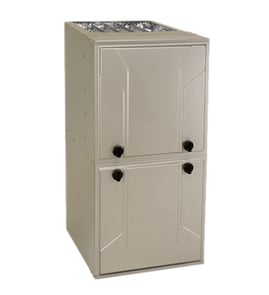
Most natural gas furnaces, including the Icp NUGE100BG01 gas furnace, last 15 to 20 years. After about 15 years, efficiency typically drops and repair frequency often increases, so that is the point when many homeowners start planning for replacement.
Typical lifespan and what changes over time
A furnace can still run past 20 years, but comfort, efficiency, and reliability usually decline as key components wear.
- 0 to 10 years: usually routine maintenance and minor repairs
- 10 to 15 years: more frequent service; airflow and ignition issues become more common
- 15 to 20 years: higher chance of major repairs; operating costs often rise
- 20+ years: replacement is typically the most cost-effective path
Parts that commonly affect “how long it lasts”
When these parts start failing repeatedly, it is a strong sign the furnace is reaching end-of-life.
- Draft/venting components (inducer system), such as the furnace inducer vent motor assembly 1006168
- Blower-side wear items, such as the furnace blower fan wheel 600587
- Electrical controls, such as the furnace fan control relay 1000742
- Safety devices, such as the limit switch 1013102
- Motor starting/running components, such as the capacitor 12907 or capacitor 12910
Quick “repair vs. replace” guide
| If your furnace is... | We typically recommend... |
|---|---|
| Under 10 years old with a single failed part | Repair is usually the best value |
| 10 to 15 years old with occasional repairs | Repair, then start budgeting for replacement |
| 15+ years old with repeated breakdowns or expensive parts | Consider replacement planning |
Why it matters
A furnace near the end of its lifespan can cost more to operate and can become less reliable during cold weather. Tracking age and repair history helps you decide when replacing a major part (like an inducer motor or blower wheel) makes sense.
Last updated: February 2026
What is the most expensive part to fix on a furnace?
The most expensive furnace repair is typically replacing the heat exchanger because it is labor-intensive and often drives a repair decision on older units. On an Icp gas furnace like model NUGE100BG01, other high-cost repairs commonly include the inducer assembly and blower motor.
Most expensive furnace repairs (typical)
These repairs usually cost the most because the parts are expensive, labor time is high, or both:
- Heat exchanger replacement (often the top-cost repair)
- Blower motor replacement (airflow and comfort depend on it)
- Control board or fan control issues (diagnosis and wiring time add up)
- Inducer vent motor assembly replacement (draft and safe venting)
- Major wiring or electrical troubleshooting (intermittent faults take time)
What this means for NUGE100BG01 parts
For this model, one of the priciest common replaceable assemblies is the furnace inducer vent motor assembly 1006168. If your furnace is failing to draft, won’t ignite reliably, or shuts down during the ignition sequence, the inducer system (motor, gasket, pressure switch circuit) is a frequent area to inspect.
Quick cost comparison (parts only)
| Repair category | Why it gets expensive | Example part on this model page |
|---|---|---|
| Heat exchanger | High labor; major disassembly | Not listed in available parts here |
| Inducer system | Assembly cost; venting diagnostics | Inducer vent motor assembly |
| Blower system | Motor cost; setup and wiring | Motor / blower wheel |
| Controls/electrical | Troubleshooting time; multiple components | Fan control relay / switches |
Why it matters
High-cost repairs usually involve safety-critical operation (drafting, temperature limits) or core performance (airflow). Knowing which category you’re in helps you decide whether you’re dealing with a straightforward part swap (like a relay or capacitor) or a major repair that needs deeper diagnosis.
Before you replace an expensive part
We recommend these checks first to avoid replacing the wrong component:
- Turn off power to the furnace before inspecting wiring or components
- Check for loose spade connectors, burnt terminals, or damaged wires
- Confirm the thermostat is calling for heat and the door switch is engaged
- If a motor hums but won’t start, test the run capacitor value (if equipped)
- If the unit starts then shuts down, check limit switch and venting-related safeties
For safe electrical testing practices, use our how to use a multimeter to test electrical parts video.
Last updated: February 2026
What is the most common part to fail on a furnace?
On an Icp gas furnace like model NUGE100BG01, the most common “failure point” is usually a maintenance-related item (a dirty air filter causing overheating) or a safety/ignition component that gets dirty or weak over time. In actual repairs, we also frequently see failures in the inducer circuit, blower circuit, and limit controls.
Most common furnace failures (what we see most often)
- Air filter restriction: Low airflow overheats the heat exchanger area and trips the high limit.
- Flame sensing/ignition issues: A dirty flame sensor or weak igniter causes no-heat or short cycling.
- Inducer draft problems: A failing inducer motor can prevent ignition because the furnace cannot prove draft.
- Overheat protection trips: A weak or failing limit switch can shut the burners down.
- Blower electrical issues: A bad run capacitor or relay can keep the blower from starting or running correctly.
Parts on NUGE100BG01 that commonly relate to these symptoms
If your furnace is not starting, starts then shuts off, or runs with no heat, these model-listed parts are common suspects:
- Furnace inducer vent motor assembly 1006168
- Limit switch 1013102
- Furnace fan control relay 1000742
- Capacitor 12907
- Capacitor 12910
Quick symptom-to-part checklist
| Symptom | What it often points to | Example part on this model |
|---|---|---|
| Inducer does not run; no ignition | Inducer motor issue, draft proving issue | Furnace inducer vent motor assembly |
| Burners light then shut off quickly | Flame sensing issue, airflow/limit trip | Limit switch (or airflow problem) |
| Blower hums, starts late, or will not start | Weak capacitor or control issue | Capacitor, fan control relay |
| Furnace cycles on and off frequently | Overheating from airflow restriction | Limit switch (plus filter/duct checks) |
Why it matters
Furnaces are built to shut down safely when they cannot prove airflow, draft, or flame. That means a simple airflow problem (filter, closed registers, blocked return) can look like a “bad part” because it triggers safeties like the limit switch.
Before you replace anything (fast checks)
- Replace the air filter and confirm return grilles are not blocked.
- Make sure supply registers are open and not covered.
- Verify the thermostat is calling for heat and the furnace switch is on.
- If you are testing electrical parts, use safe meter practices; see how to use a multimeter to test electrical parts video.
Last updated: February 2026
How much does a furnace cost for a 2000 square foot house?
For a 2,000 sq ft house, a new gas furnace typically costs about $4,000 to $9,000+ installed, with the final price driven by furnace efficiency (AFUE), required heating capacity (often 80,000 to 100,000 BTU for many homes this size), and whether venting or ductwork must be modified.
What drives the installed price most
- Efficiency (AFUE): higher AFUE usually increases equipment cost and may require different venting.
- Sizing and staging: single-stage vs two-stage vs modulating affects comfort and price.
- Venting changes: high-efficiency furnaces often use PVC intake and exhaust; that can add labor.
- Ductwork condition: undersized, leaky, or damaged ducts raise install time and materials.
- Electrical and controls: adding a new thermostat, condensate pump, or safety controls can add cost.
Typical cost ranges (what you are paying for)
| Cost bucket | Common range (installed) | What it usually includes |
|---|---|---|
| Budget replacement | $4,000 to $5,500 | Basic furnace swap, minimal venting or duct changes |
| Mid-range upgrade | $5,500 to $7,500 | Better efficiency, more labor, possible venting updates |
| High-efficiency upgrade | $7,500 to $9,000+ | 95%+ AFUE class, condensate handling, more venting work |
How this relates to your Icp NUGE100BG01
If you are repairing an Icp NUGE100BG01 gas furnace instead of replacing it, the total cost often depends on which component failed. Common repair-related parts on this model include the draft/inducer system, blower components, and safety controls.
Here are examples of parts we list for this model that can be involved in “repair vs replace” decisions:
- Furnace inducer vent motor assembly 1006168
- Limit switch 1013102
- Furnace fan control relay 1000742
- Capacitor 12907
Why it matters
A furnace that is properly sized and correctly vented for your home runs more efficiently, heats more evenly, and avoids nuisance shutdowns from safety devices like a limit switch. When costs climb, it is usually because the job is more than a simple equipment swap.
Last updated: February 2026