 Owner’s manual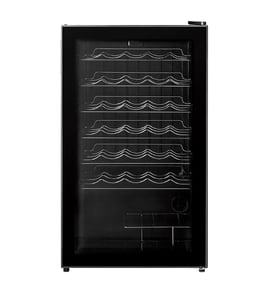





What is the life expectancy of a wine cooler?
Most wine coolers typically last 5 to 10 years. For a built-in under-counter unit like the KitchenAid KUWL214KSB00, steady ventilation, clean condenser airflow, and a tight door seal are the biggest factors that help it reach the upper end of that range; see the KUWL214KSB00 owner's manual for care and operating guidance.
What affects lifespan the most
- Heat and ventilation: Under-counter units run longer if airflow is restricted.
- Door seal condition: A leaking gasket forces longer run times and adds moisture.
- How often the door is opened: Frequent openings increase compressor and fan runtime.
- Room temperature: Warmer rooms make the motor run more.
- Cleaning and upkeep: Dust buildup and spills increase wear and odors.
Quick maintenance checklist (high impact)
- Keep the door closing fully and check for gaps around the gasket.
- Clean interior shelves and wipe up spills promptly.
- Keep the front grille area clear so air can move in and out.
- Use stable temperature settings and avoid constant adjustments.
- If you notice excess moisture or the unit runs constantly, troubleshoot early.
Common “wear items” vs. major repairs
| Item type | What you may notice | Example part for KUWL214KSB00 |
|---|---|---|
| Door sealing | Warm temps, moisture, longer run time | Sash gasket W11360666 |
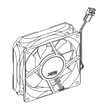
| Air movement | Uneven temps, warm spots | Fan motor as W11360536 |
| Cooling system (major) | Not cooling, loud or nonstop running | Compressor W11754545 |
Why it matters
A wine and beverage cooler is designed to hold tight temperature ranges (often in the 40 to mid-60 °F range depending on compartment and preset). When airflow is blocked or the door seal leaks, the system runs longer, which shortens compressor and fan life and can lead to temperature swings.
Last updated: February 2026
What is the difference between a wine cooler and a beverage cooler?
A wine cooler is built to hold wine at stable, wine-friendly temperatures (often with dual-zone control), while a beverage cooler is optimized for a wider mix of drinks and quick access. Your KitchenAid KUWL214KSB00 is designed around wine storage features like preset wine temperatures.
How temperature control differs
Wine storage is more sensitive to temperature swings, so wine coolers typically focus on steady, moderate set points. The KUWL214KSB00 includes preset temperatures such as Red wine 64°F, White wine 50°F, and Champagne 46°F, plus adjustable compartment ranges.
- Wine coolers commonly run in the low 40s°F to mid 60s°F
- Beverage coolers often target colder “ready-to-drink” temps for cans and bottles
- Wine coolers may offer upper and lower compartment control for different wine types
- Most units need about 24 hours to stabilize after a temperature change
Typical use-case comparison
| Feature | Wine cooler | Beverage cooler |
|---|---|---|
| Best for | Wine bottles | Cans, beer, soda, mixers |
| Temperature style | Stable, moderate | Often colder, frequent door openings |
| Presets | Wine-type presets are common | Less common |
| Storage layout | Wine racks, bottle support | Shelves for mixed sizes |
Why it matters
Wine tastes and ages best when temperature stays consistent. A beverage cooler is usually opened more often and stocked with mixed packaging, so it is designed more for convenience than long-term wine conditions.
Where to confirm KUWL214KSB00 settings
For the exact preset temperatures, compartment ranges, and control features (like Lock mode and °F/°C switching), use the owner's manual.
Last updated: February 2026
What is the most common problem with wine coolers?
The most common wine cooler problem is not cooling properly, and on the KitchenAid KUWL214KSB00 it is often caused by a simple airflow, power, or door-seal issue rather than a sealed-system failure. Start with power, control settings, and making sure the base grille is not blocked (see the KUWL214KSB00 owner's manual).
Quick checks we recommend first
- Confirm the unit is plugged into a grounded 3-prong outlet (no adapter, no extension cord).
- Test the outlet by plugging in a lamp.
- Check the home breaker or fuse and reset/replace if needed.
- Verify the controls are turned on and set correctly for your room conditions.
- Make sure the base grille is not blocked (do not install behind a cabinet door).
- Reduce door openings; frequent openings add warm, humid air and increase run time.
What “normal” can sound like (and why it matters)
Many customers think the cooler is failing because it runs longer or makes new noises. This model can run longer due to an efficient compressor and fans. You may also hear refrigerant movement or water draining during defrost, which is normal.
Common normal sounds vs. problem signs
| What you notice | Often normal | More likely a problem |
|---|---|---|
| High-pitched or pulsating sound | Compressor/fans adjusting | Loud grinding or squealing that persists |
| Gurgling at cycle end | Refrigerant flow | Clicking plus no cooling improvement |
| Water sound occasionally | Defrost drain pan filling | Water leaking outside the cabinet |
If cooling is weak: the most common causes
- Airflow restriction at the base grille (poor heat removal reduces cooling).
- Door not sealing because the gasket is dirty or sticky.
- High room temperature causing longer run times.
- Frequent door openings causing temperature swings.
Door gasket tip (fast fix)
Clean the gasket and the surface it touches; then apply a thin coat of paraffin wax to reduce sticking and improve sealing. If the gasket is torn or won’t seal, replacement is the fix (example: sash gasket W11360666).
Why this matters
A wine and beverage cooler depends on steady airflow and a tight door seal to hold temperature and manage humidity. Fixing those basics first prevents unnecessary part replacement and helps protect wine from temperature swings.
Last updated: February 2026
Is it worth fixing a wine cooler?
Yes; it’s worth fixing a KitchenAid KUWL214KSB00 wine and beverage cooler when the issue is airflow, a door seal problem, or a replaceable electrical part (fan or control). Those repairs restore stable temperature and humidity without replacing the entire unit.
Quick way we decide
Use these checkpoints before spending money on parts:
- Start with maintenance: Clean condenser coils and keep the base grille clear.
- Check the door seal: Moisture buildup, hard-to-open door, or poor closing points to a gasket or alignment issue.
- Listen for airflow problems: Weak circulation often ties to a fan issue.
- Watch for repeat symptoms: Frequent door openings and blocked airflow can mimic “bad cooling.”
- Flag sealed-system symptoms: Weak cooling even with clean coils and good airflow usually means compressor or refrigerant-circuit work.
What to check first (no parts required)
These steps align with the troubleshooting guidance in the owner's manual:
- Verify the controls are on and set correctly for room conditions.
- Confirm the door closes completely; limit frequent openings.
- Keep the base grille unblocked (do not block it with cabinetry).
- Clean condenser coils to reduce run time and improve cooling.
Common symptoms and best next step
| Symptom | Most likely cause | Best next step |
|---|---|---|
| Moisture inside, door won’t seal | Door gasket or door not closing | Inspect/replace gasket; check alignment |
| Runs a lot, temp warm | Dirty coils, blocked grille, frequent openings | Clean coils; clear airflow; adjust use |
| Warm temps, weak circulation | Fan problem | Consider replacing the fan motor |
| Little to no cooling | Sealed system or compressor | Get a professional diagnosis; compare costs |
Model-specific parts that often matter
- Fan motor as W11360536 for circulation and warm-temperature complaints
- Sash gasket W11360666 or sash gasket W11360665 for sealing, moisture, and closing issues
- Compressor W11754545 for sealed-system category repairs
Why it matters
This under-counter beverage center depends on steady airflow and a tight door seal; when either is compromised, the compressor runs longer, temperatures rise, and humidity increases.
Last updated: February 2026
Why is my KitchenAid wine cooler not cooling?
If your KitchenAid KUWL214KSB00 wine and beverage cooler is not cooling, the most common causes are Cool Off mode, a door that is not sealing, or blocked ventilation at the base grille. Start by turning cooling on, then confirm the door seal and airflow.
Quick checks (fastest fixes first)
- Press COOL ON for 3 seconds; when first plugged in, the control can be in Cool Off mode (see the KUWL214KSB00 owner’s manual).
- Confirm the set temperature is appropriate for the compartment you are using.
- Make sure the door closes fully and stays closed; remove bottles or racks that interfere.
- Clean the gasket sealing surface; wipe away crumbs, sticky residue, or dust.
- Keep the base grille and ventilation openings clear; under-counter units need steady airflow.
What to check next (air movement and refrigeration)
If the control is on and the door seals, cooling depends on air circulation and the sealed system.
- Listen for the compressor and fan; a running compressor with weak airflow often means a fan or airflow problem.
- Check for heavy frost or ice that could block airflow inside the cabinet.
- Verify the unit is level and not pushed too tightly into the opening (restricted intake or exhaust reduces cooling).
Symptoms guide
| What you notice | Likely cause | What to do |
|---|---|---|
| Display shows Cool Off | Cooling disabled | Turn Cool On; recheck set temp |
| Door feels loose at the end of closing | Air leak at gasket or alignment | Clean gasket; inspect for gaps; replace if torn |
| Runs a lot but stays warm | Airflow restriction or sealed-system issue | Clear grille, check fan, then schedule service if needed |
Parts that commonly relate to “not cooling”
- Fan motor as W11360536 (moves cold air through the cabinet)
- Sash gasket W11360666 (helps prevent warm air leaks at the door)
Why it matters
Wine and beverage coolers rely on a tight seal and clear ventilation to hold a stable temperature. A small air leak or blocked grille can keep KUWL214KSB00 running constantly without reaching the set point.
Last updated: February 2026