 Installation guide
 Owner’s manual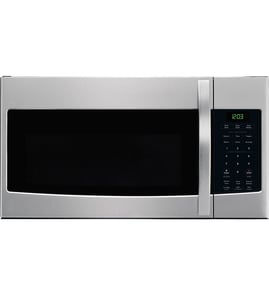

Are Kenmore microwaves good?
Yes. Kenmore microwaves are a strong choice for everyday cooking because they balance practical features, solid heating performance, and serviceable design. For Kenmore model 40180099700, long-term results depend on correct installation, routine filter care, and fixing door or heating symptoms early using the 40180099700 owner's manual.
What “good” means for a microwave/hood combo
A microwave/hood combo has two jobs: cook consistently and vent grease and smoke. We judge “good” by:
- Even, predictable heating at high and lower power levels
- Reliable door closing and safety interlock operation
- Responsive keypad and stable display
- Strong airflow when the vent fan is on
- Easy maintenance (filters, light, common wear parts)
Strengths and common tradeoffs
| Area | Strengths | Tradeoffs | Best practice |
|---|---|---|---|
| Value | Good feature-to-cost balance | Fewer premium finishes | Maintain it and use correct cookware |
| Durability | Runs for years with basic care | Switches and electronics wear over time | Replace worn parts promptly |
| Venting | Works well with clean filters | Airflow drops with clogged filters | Clean or replace filters on schedule |
Maintenance that keeps performance high
- Clean the grease filter regularly; heavy stovetop cooking needs more frequent cleaning
- Replace the charcoal filter on recirculating setups when odors linger
- Wipe the cavity after splatters to reduce arcing and hot spots
- Do not run the microwave empty
If it stops heating or will not start
Use symptom-based troubleshooting from why is my microwave not heating. Common part areas for this model include:
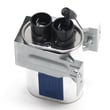
- Runs but no heat: microwave high-voltage diode DE91-70063D or microwave high-voltage capacitor 2501-001016
- Starts only when the door is pushed: microwave door interlock switch 3405-001034
- Poor venting or greasy buildup: microwave grease filter DE63-00196A
Why it matters
Microwaves rely on door interlocks and high-voltage components; keeping filters clean and addressing early symptoms protects cooking performance and helps prevent repeat failures.
Last updated: February 2026
How big is a Kenmore microwave model 40180099700 in inches?
The Kenmore microwave/hood combo model 40180099700 measures 29 7/8 inches wide x 16 13/16 inches high x 16 inches deep (outer dimensions). We list these dimensions in the specifications section of the owner's manual.
Dimensions at a glance
- Width: 29 7/8 in.
- Height: 16 13/16 in.
- Depth: 16 in.
- Type: Over-the-range microwave/hood combo
What “outer dimensions” means
Outer dimensions describe the overall cabinet size of the microwave/hood combo, not the interior cooking cavity. These measurements are the ones you use for:
- Checking fit between cabinets
- Confirming clearance above the range
- Planning venting and mounting location
Quick spec table (model 40180099700)
| Spec | Value |
|---|---|
| Outer dimensions (W x H x D) | 29 7/8 x 16 13/16 x 16 in. |
| Cavity volume | 2.0 cu. ft. |
| Cooking power | 1,100W (IEC 60705) |
| Electrical | 110-120V, 60 Hz |
Why it matters
Over-the-range microwaves are sized to align with standard 30-inch range openings. Using the exact width, height, and depth helps prevent installation issues like cabinet interference, improper vent alignment, or a mounting bracket that does not land on solid framing.
If you are planning a new install or re-install, follow the mounting and venting requirements in the installation guide. You can also find replacement mounting hardware and other parts for this model on the parts list for 40180099700, or search by model on Sears PartsDirect.
Last updated: February 2026
What size fuse for Kenmore microwave?
For Kenmore microwave/hood combo model 40180099700, the line fuse is typically a 20-amp, 250-volt ceramic microwave fuse. Use the exact fuse type and rating listed for your unit in the 40180099700 owner's manual; installing the wrong fuse can cause repeat blowing or damage.
How to confirm you have the right fuse
We recommend matching amperage, voltage, and fuse style (ceramic vs. glass, fast-blow vs. time-delay) before ordering.
- Unplug the microwave or shut off the breaker before checking anything.
- Look for the fuse rating printed on the fuse body or end cap (for example, “20A 250V”).
- Match the fuse physical size (common microwave fuses are 1-1/4 inch long, but verify yours).
- If the fuse is blown, also check for the underlying cause (door switch, shorted high-voltage part).
- Use the wiring and safety guidance in the installation guide when accessing the unit.
Common symptoms of a blown microwave fuse
A blown fuse usually shows up as a total loss of power, but other issues can look similar.
| Symptom | What it often points to | What to check next |
|---|---|---|
| Display dead, no lights, no fan | Blown line fuse or no power supply | Outlet, breaker, fuse |
| Runs but does not heat | High-voltage circuit problem | Diode, capacitor, transformer |
| Blows fuse when door closes or Start is pressed | Door interlock switch issue | Switches, latch alignment |
Why the fuse blows (and what matters most)
In model 40180099700, a fuse usually blows because something drew too much current. Replacing only the fuse without fixing the cause often leads to another blown fuse.
Most common causes include:
- Shorted high-voltage component such as the microwave high-voltage diode DE91-70063D
- Failed door safety switch such as the microwave door interlock switch 3405-001034
- Overheating protection opening due to airflow or venting issues (thermostat or thermal cut-off)
Ordering the right replacement parts
We recommend ordering by model number 40180099700 so the fuse and related parts match your exact Kenmore microwave/hood combo. You can shop the parts list for this model, or search by model on Sears PartsDirect.
Last updated: February 2026


