Owner’s manual
 Error Codes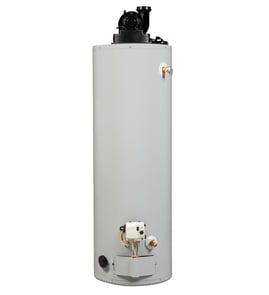



How do I read my water heater model number?
On your Kenmore gas water heater model 153559500, the model number is printed on the rating plate (data sticker) attached to the tank. Read the model number exactly as shown, including any dashes or extra digits, and use that full number when looking up parts or the manual.
Most Kenmore tank-style gas water heaters place the rating plate on the outside of the tank. Check these common spots:
- On the front of the tank, above the gas control valve
- On the side of the tank near the middle
- Near the bottom of the tank, close to the burner access/manifold door
- Behind an outer jacket panel (less common)
If the label is dirty or faded, wipe it gently with a damp cloth and take a photo so you can zoom in.
For parts lookup and documentation, these are the fields that matter most:
- Model number (this identifies the exact unit)
- Serial number (helps identify production details)
- Fuel type (gas) and basic rating info (helpful for service)
You can usually ignore most of the technical lines (like long certification text) when your goal is simply identifying the model.
| Item | What it’s used for | Example on the label |
|---|---|---|
| Model number | Matching parts and diagrams | 153559500 |
| Serial number | Manufacturing/production tracking | Letters and numbers |
Kenmore water heater parts can look similar across models, but small differences affect fit and safety. Using the exact model number helps you match the correct items, such as the water heater pilot assembly 100093972 or the water heater temperature and pressure relief valve 100108279.
For label location diagrams and model identification tips specific to your unit, use the owner's manual.
Last updated: February 2026
What is the most common problem with gas water heaters?
The most common gas water heater problem is the burner not heating water reliably, usually because the pilot will not stay lit or the gas control system is not sensing flame correctly. On Kenmore model 153559500, pilot and burner issues are the top starting point for “no hot water” complaints.
- Water stays lukewarm or turns cold during use
- Pilot light goes out repeatedly
- You hear rumbling or popping (sediment in the tank)
- Hot water runs out faster than it used to
- Water appears rusty or has an odor
- Confirm gas supply: Make sure the gas shutoff valve is fully open.
- Check the pilot: If it will not stay lit, the thermocouple or pilot assembly is often involved.
- Look for airflow/venting problems: A blocked vent or poor draft can cause shutdowns; inspect the draft hood and vent connection.
- Check for leaks at valves and fittings: Inspect the drain valve and the temperature and pressure relief valve discharge tube area.
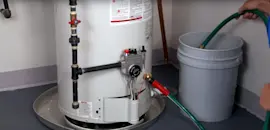
- Flush sediment if noise or reduced capacity: Sediment buildup can reduce heating efficiency and cause noise.
If troubleshooting points to ignition or flame-sensing, these are common replacements for this model:
| Symptom | Likely area | Example part for model 153559500 |
|---|---|---|
| Pilot will not stay lit | Pilot/thermocouple circuit | Water heater pilot assembly 100093972 |
| Water leaks from side outlet or discharge | Safety relief | Water heater temperature and pressure relief valve 100108279 |
| Slow draining or leaking at drain | Drain valve | Water heater drain valve 100108361 |
Pilot and combustion-related problems can stop heating completely, while sediment and small leaks usually get worse over time. Catching the symptom early helps protect the tank, improves recovery time, and reduces nuisance shutdowns.
For lighting instructions, safety steps, and control settings for Kenmore 153559500, use the owner's manual. For diagnostic flashes or status codes (if your unit uses them), use Kenmore gas water heater error codes.
Last updated: February 2026
How long should a thermocouple last on a water heater?
On a Kenmore 153559500 gas water heater, a thermocouple typically lasts 5 to 10 years. If your pilot won’t stay lit or the burner shuts off unexpectedly, a weak thermocouple is a common cause and replacement is usually the most reliable fix.
Most gas water heater thermocouples fall into this range:
| Usage and conditions | Typical lifespan | What you’ll notice first |
|---|---|---|
| Normal household use, clean combustion | 7 to 10 years | Occasional pilot dropouts |
| Dusty/dirty burner area, frequent cycling | 5 to 7 years | Pilot won’t stay lit after releasing the knob |
| Poor draft or burner/pilot issues | 1 to 5 years | Repeated shutdowns, soot, weak pilot flame |
Look for these common symptoms on a gas water heater:
- Pilot lights but goes out when you release the gas control knob
- Pilot stays lit sometimes, then drops out randomly
- Burner won’t stay on long enough to heat water
- You have to relight the pilot more often than normal
- The pilot flame looks weak or doesn’t fully engulf the sensor tip
These quick checks often point to the real cause and help you avoid repeat failures:
- Make sure the pilot flame is steady and aimed at the thermocouple tip
- Check for lint, dust, or debris around the burner and pilot area
- Confirm the draft hood and venting are intact and drafting properly
- Inspect the thermocouple lead for kinks, corrosion, or a loose connection at the gas control
- If the pilot assembly is worn or damaged, replace the full pilot assembly instead of only the thermocouple
If you’re already seeing pilot reliability problems, replacing the full water heater pilot assembly 100093972 is often the cleanest repair path.
A weak thermocouple can shut off gas to the pilot and burner, which means no hot water and repeated relighting. Replacing the failing component restores safe, consistent burner operation and helps prevent nuisance shutdowns.
For model-specific lighting and shutdown steps, follow the owner's manual.
Last updated: February 2026
What are the parts on a gas water heater?
A Kenmore gas water heater like model 153559500 is built around a storage tank and a gas burner system, with safety and plumbing components that control temperature, vent combustion gases, and relieve excess pressure. Many common service parts are replaceable when they leak, clog, or stop heating.
- Tank (stores hot water; insulated steel)
- Gas control valve/thermostat (regulates gas flow and water temperature)
- Burner and combustion chamber (heats the tank from below)
- Pilot/igniter and thermocouple/thermopile (lights burner and proves flame)
- Flue and draft hood (moves exhaust up the vent)
- Cold water inlet and hot water outlet (plumbing connections)
- Dip tube (directs incoming cold water to the bottom)
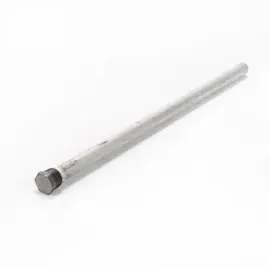
- Anode rod (helps protect the tank from corrosion)
- Drain valve (used for draining and flushing sediment)
- Temperature and pressure (T&P) relief valve (critical safety valve)
| Part | What it does | Common symptom when it fails |
|---|---|---|
| Water heater temperature and pressure relief valve 100108279 | Opens to relieve excess temperature/pressure | Dripping or discharge from relief line |
| Water heater pilot assembly 100093972 | Maintains pilot and flame sensing | Pilot will not stay lit |
| Water heater drain valve 100108361 | Drains tank for service | Leaks at valve, won’t open/close |
| Anode rod 100109594 | Corrosion protection | Rusty odor, faster tank corrosion |
| Draft hood 100111362 | Helps vent combustion gases | Poor draft, venting concerns |
Knowing the major components helps you troubleshoot safely and order the right replacement part. For example, a leaking T&P valve is a safety issue, while a leaking drain valve is usually a serviceability issue.
We recommend matching what you see on your unit to the diagrams and part names in the owner's manual.
Last updated: February 2026
What is the life expectancy of a Kenmore water heater?
A Kenmore gas water heater like model 153559500 typically lasts 8 to 12 years. Regular maintenance (flushing sediment, checking the anode rod, and testing safety valves) helps you reach the high end of that range and reduces the chance of early tank failure.
Most tank-style gas water heaters fall into a predictable lifespan range, and a few conditions make the biggest difference:
- Water quality and sediment: Hard water speeds sediment buildup and can overheat the tank bottom.
- Maintenance frequency: Periodic draining and flushing slows corrosion and improves efficiency.
- Anode rod condition: A depleted anode rod lets the tank corrode faster.
- Operating temperature: Higher set temperatures increase wear and mineral scaling.
- Leak history: Ongoing small leaks often lead to premature tank damage.
Use your owner's manual for the exact procedure and safety steps for your Kenmore 153559500.
- Drain a few gallons periodically to reduce sediment
- Inspect and replace the anode rod when it is heavily worn
- Test the temperature and pressure relief valve for proper operation
- Check the draft hood and venting for safe exhaust flow
- Watch for rust-colored water, popping noises, or moisture at the base
If you are doing maintenance on this model, these parts are commonly involved:
| Maintenance item | What it does | Example part for model 153559500 |
|---|---|---|
| Anode protection | Slows tank corrosion | Anode rod 100109594 |
| Overpressure safety | Releases pressure/temperature safely | Water heater temperature and pressure relief valve 100108279 |
| Sediment draining | Lets you drain/flush the tank | Water heater drain valve 100108361 |
Once a tank begins leaking from internal corrosion, replacement is the practical fix. Staying on top of sediment control and corrosion protection is the most reliable way to keep your Kenmore water heater running safely and avoid unexpected loss of hot water.
Last updated: February 2026