Owner’s manual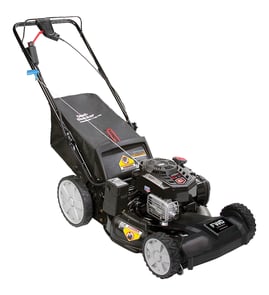



Are walks behind mowers good on hills?
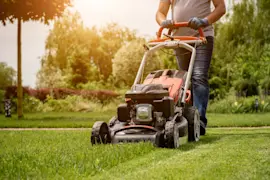
Yes. A walk-behind mower like the Senix LSSGBS-H is typically a good choice for hills because it has a lower center of gravity than a riding mower, which helps stability and control when you mow slopes. For safe operation, follow the slope limits and mowing direction in the LSSGBS-H owner’s manual.
- Lower center of gravity than most riding mowers
- You can step away from the machine if you lose footing
- Easier to control speed and line choice on uneven ground
- Less risk of turf damage from heavy weight and tight turns
- Better access to narrow or terraced areas
- Mow across the face of the slope, not straight up and down, unless your manual specifically says otherwise.
- Keep the grass a bit higher on hills; shorter cuts can reduce traction.
- Avoid wet grass; it increases slipping risk for you and the mower.
- Make slower turns; quick pivots can cause sliding and scalping.
- If the mower is self-propelled, use a steady pace; do not “pull” it uphill by the handle.
| Feature | Walk-behind mower | Riding mower |
|---|---|---|
| Stability on slopes | Typically better | Typically worse |
| Traction needs | Your footing matters most | Tire traction and weight shift matter |
| Risk if traction is lost | You can step away | Harder to bail out quickly |
| Maneuvering | Easier in tight areas | Harder in tight areas |
Hills are where most mowing problems show up first: loss of traction, uneven cutting, and safety risks. Using the right mowing direction and keeping the drive system and wheels in good shape helps the LSSGBS-H track straighter and cut more evenly.
If the mower starts slipping or feels hard to control, inspect the wheels and drive components for wear. A worn wheel 207150100024 (or the opposite-side wheel 207150100023) can reduce traction and make hillside mowing harder.
Last updated: January 2026
Can you spray WD-40 on mower blades?
Yes. On a Senix LSSGBS-H gas walk-behind mower, we recommend using WD-40 sparingly on the blade and the underside of the deck to help reduce grass sticking and surface rust, but only after the engine is off, the spark plug wire is disconnected, and the blade has fully stopped.
- Shut the mower off and let hot parts cool.
- Disconnect the spark plug wire so the engine cannot start.
- Tip the mower only as your LSSGBS-H manual describes (to avoid fuel or oil issues).
- Clean off packed grass first (plastic scraper works well).
- Lightly mist WD-40 on the blade and deck underside; wipe off excess.
- Reconnect the spark plug wire only when you are done.
WD-40 is most useful as a light moisture barrier and cleanup aid. It is not a substitute for sharpening or balancing a blade.
| Goal | WD-40 is a good fit? | Better primary fix |
|---|---|---|
| Reduce grass clumping under deck | Sometimes | Mow when grass is dry; clean deck often |
| Prevent light surface rust | Yes | Store dry; clean after use |
| Fix poor cut quality | No | Sharpen/replace blade; check blade adapter |
| Reduce vibration | No | Inspect blade, adapter, and mounting hardware |
If you take the blade off for cleaning or sharpening, inspect the mounting parts for wear or damage:
- Blade mounting interface and keyways
- Cracks or rounding on the blade hub area
- Loose fasteners (tighten to the spec in the manual)
- The blade adapter (common wear point)
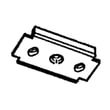
If the blade seems to slip, wobble, or will not tighten correctly, the lawn mower blade adapter 201101000060 is one of the components to check for this model.
A clean deck and properly mounted blade improve airflow, bagging/mulching performance, and cut quality. Over-spraying oily products can attract dust and debris, so a light coat and wipe-down is the best approach.
Last updated: January 2026
Is it cheaper to repair or replace a lawnmower?
For the Senix LSSGBS-H gas walk-behind mower, it’s usually cheaper to repair when the problem is a normal wear item (belt, cable, wheel, blade hardware). Replace the mower when repair cost is over about 50% of the price of a comparable new mower, or when the engine or drive system has major damage.
- Repair if the mower is otherwise in good shape and the issue is isolated
- Repair if you can fix it with common parts and basic tools
- Replace if the engine has low compression, heavy internal damage, or severe oil burning
- Replace if the deck is cracked/rotted or the handle structure is unsafe
- Replace if multiple systems are failing at once (engine + drive + deck)
These are the kinds of fixes that often restore performance without “totaling” the mower:
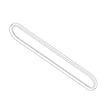
- Self-propel or blade drive issues: inspect/replace the Senix lawn mower blade drive belt 207130100003
- Control or engagement problems: inspect/replace the Senix lawn mower cable assembly 199081000131
- Wobble, poor tracking, or uneven rolling: check wheels and gears for wear
- Bagging or discharge problems: inspect the bag and discharge components
| Situation | Typical best choice | Why |
|---|---|---|
| One worn wear-part (belt/cable/wheel) | Repair | Low parts cost, high success rate |
| Repeated stalling, hard starting, surging | Repair first | Often fuel/ignition maintenance |
| Major engine failure or severe deck damage | Replace | Repair can approach new-mower cost |
A walk-behind mower like the Senix LSSGBS-H is designed for serviceable wear parts. Fixing a belt or cable can restore cutting and drive performance quickly, while major engine or structural repairs can turn into a poor value.
- For safety steps, maintenance intervals, and part identification, use the LSSGBS-H owner’s manual.
Last updated: January 2026
Should I use 87 or 89 gas for lawn mower?
For the Senix LSSGBS-H walk-behind mower, use fresh regular unleaded gasoline with a minimum of 87 octane unless your LSSGBS-H owner's manual specifies a higher requirement. Using 89 is fine, but it typically will not improve power, starting, or engine life in most 4-cycle mower engines.
- Use 87 octane (minimum) for normal mowing.
- Use 89 octane only if the manual calls for it or you hear persistent knocking under load.
- Avoid E15 and E85; higher ethanol blends can contribute to hard starting and fuel-system problems.
- Use fresh fuel from a clean, sealed container to reduce moisture contamination.
- If fuel will sit, add fuel stabilizer and follow the stabilizer label directions.
Old fuel is a more common cause of starting and running issues than octane choice.
| Fuel situation | Typical small-engine guidance | Best practice |
|---|---|---|
| Pump gas, no stabilizer | Use within about 30 days | Buy smaller amounts more often |
| Gas with stabilizer | Often usable for 3 to 6 months | Store sealed, cool, and dry |
| Sour smell, dark color, water/debris | Unreliable | Drain and refill with fresh fuel |
Octane is mainly about knock resistance, not “more power.” For the LSSGBS-H, reliability usually depends more on fuel freshness, correct oil level, and clean air and fuel delivery.
- Drain the tank and refill with fresh 87 octane.
- Check the air filter and spark plug condition.
- Make sure the fuel cap vent is open.
- If it surges or bogs, the carburetor may need cleaning.
Last updated: January 2026
Who makes SENIX brand?
Senix outdoor power equipment, including the Senix LSSGBS-H gas walk-behind mower, is made under the Senix Tools brand, which is associated with YAT USA, Inc. (part of Zhejiang YAT Electrical Appliance Co., Ltd.). For model-specific brand and operating details, use the LSSGBS-H owner’s manual.
The name “Senix” is used by more than one company. For lawn mowers and other outdoor power tools, you want Senix Tools (the outdoor power equipment brand), not the industrial sensor company.
- Senix Tools: outdoor power equipment (mowers, trimmers, blowers)
- Senix (industrial sensors): ultrasonic level and distance measurement products
- The easiest way to confirm you have the outdoor power equipment brand is the mower labeling and the model number LSSGBS-H
Matching the correct brand and model keeps you from buying the wrong components for your mower’s deck and drive system.
Common part categories that must match the exact mower model include:
- Blade drive and self-propel components
- Wheels, gears, and wheel hardware
- Control cables and safety controls
- Grass bagging and discharge parts
| What you’re checking | What to look for on your mower | Why it helps |
|---|---|---|
| Model identification | Model number LSSGBS-H | Confirms the correct parts list |
| Documentation | LSSGBS-H owner’s manual | Confirms operation and maintenance info |
| Brand labeling | Senix Tools branding on decals | Distinguishes from industrial “Senix” |
Last updated: January 2026