Installation guide
 Owner’s manual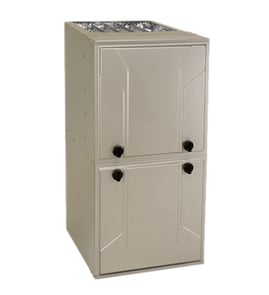

How to buy Carrier parts?
For your Carrier furnace model 58CVA090---10016, we recommend ordering replacement parts directly from the parts list for this model so you get the correct match for your unit’s series and serial. Use the installation guide to confirm the exact part group (ignition, blower, limit switches) before you buy.
Having the right identifiers prevents wrong-part returns and repeat breakdowns.
- Locate the unit rating plate and write down the model and serial number.
- Identify the failing system: ignition, gas control, inducer, blower, or safety limits.
- Compare your symptoms to the sequence of operation in the installation guide.
- Match the part by description and identifier, not by “looks similar.”
- If the furnace is shutting down on safety, correct airflow or venting issues before replacing parts.
These are frequent wear items on induced-combustion, variable-speed furnaces like this one.
| Symptom | Likely area | Example part on this model page |
|---|---|---|
| No ignition, retries, then locks out | Ignition system | Furnace burner igniter LH33ZS004 |
| Furnace starts then shuts off quickly | High-limit safety opening | Furnace temperature limit switch HH18HA495 |
| Weak airflow or noisy blower | Blower assembly | Wheel blwr LA11XA048 |
| No heat, control diagnostics indicate board issue | Controls | Control board HK42FZ035 |
Your 58CVA090---10016 uses multiple safety circuits (limit switch(es), door switch, pressure switch) and a specific control strategy. Buying the exact matched part helps keep ignition timing, blower performance, and overheat protection working as designed.
Last updated: February 2026
How much is it to replace a blower motor on a Carrier furnace?
For a Carrier furnace like model 58CVA090---10016, blower motor replacement typically runs $300 to $700 total (parts plus labor). If your furnace uses a communicating or variable-speed style motor, the part cost alone can be much higher, so the final total can exceed that range.
- Motor type: single-speed and multi-speed motors usually cost less than ECM or communicating motors
- Labor time: access, venting layout, and wiring routing can add time
- Related parts: a failing blower wheel, loose set screw, or damaged wiring can add parts and labor
- Diagnosis time: confirming whether the motor, control module, or control board is at fault
- Local labor rates: HVAC labor varies widely by region
Your installation guide for the 58CVA090---10016 includes blower assembly service steps and torque specs, which is a good indicator that access and reassembly details matter for labor time. Use the installation guide to confirm the correct disassembly sequence and wiring reconnection points before pricing the job.
The troubleshooting flow in the documentation points to several issues that can mimic a bad motor:
- Rubbing blower wheel
- Loose blower wheel
- Wiring problems between the furnace control and blower motor
- A failed blower control module attached to the motor (on some designs)
| Scenario | Typical parts cost | Typical total installed |
|---|---|---|
| Standard PSC motor replacement | $150 to $400 | $300 to $700 |
| ECM or communicating motor replacement | $600 to $1,500+ | $900 to $2,000+ |
A blower motor that is slow to start, noisy, or faulting can cause overheating trips (limit switch events), poor airflow, and repeated shutdowns. Getting the diagnosis right prevents replacing an expensive motor when the real issue is wiring, a loose wheel, or a control problem.
Last updated: February 2026
Where is the reset button on a Carrier furnace?
On the Carrier 58CVA090---10016 furnace, there typically is not a single universal “reset button” like you’d find on some appliances. Most resets are done by cycling power at the furnace (or using the thermostat to stop the heat call), and some safety switches are manual-reset depending on the fault. See the reset and safety-switch details in the installation guide.
- Set the thermostat from HEAT to OFF (or lower the setpoint below room temperature).
- Turn 115-volt power to the furnace OFF, then ON again (this is the most common “reset”).
- Make sure the blower compartment door is fully installed; the door switch must be closed for the furnace to run.
- Look through the sight glass for the control board LED status code (this points to the exact circuit that needs attention).
- If the furnace is in a repeated fault, check the air filter and supply/return vents for airflow restrictions.
The installation information for this furnace describes reset actions in these common situations:
| Situation | What you’ll see | What “reset” means |
|---|---|---|
| Control board lockout (after certain faults) | Furnace stops heating; LED shows a status code | Stop the heat call at the thermostat, then cycle 115-volt power OFF then ON |
| Limit circuit fault (limit, rollout, draft safeguard, blocked vent switch) | Blower may run; heating stops | Some switches auto-reset when cooled; manual-reset switches must be checked for continuity |
| Blower door switch open | No operation | Reinstall blower door so the switch closes |
A furnace “reset” is really a safety step that clears a lockout so the control can try a normal ignition sequence again. If the underlying issue is still present (overheating, venting problem, pressure switch issue, blown 3-amp fuse), the furnace will fault again and protect the system.
If you’re seeing repeated overheating or limit-related faults, a failed limit switch is a common cause. For this model’s parts list, examples include the furnace temperature limit switch HH18HA495, furnace temperature limit switch HH18HA493, and furnace temperature limit switch HH18HA502.
Last updated: February 2026
What is the most expensive part to fix on a furnace?
On a Carrier 58CVA090---10016 furnace, the most expensive repair is typically a major core component replacement, most often the heat exchanger or a blower motor. These repairs cost the most because the parts are expensive and the labor is more involved; follow the safety steps in the installation guide before any service.
These are the repairs that most often drive the highest total bill (parts plus labor):
- Heat exchanger: highest-cost component on many furnaces
- Blower motor: expensive part and can require significant disassembly
- Control board: the furnace’s “brain”; diagnosis and replacement can be time-consuming
- Draft inducer assembly (if equipped): can be a high-cost motorized component
- Gas valve: less common, but can be costly when it fails
For the Carrier 58CVA090---10016, these examples from the parts list show how quickly costs can add up:
| Component type | Example part on this model | Why it gets expensive |
|---|---|---|
| Heat exchanger | Furnace heat exchanger (part number 326600-751) | High part cost; major teardown to replace |
| Blower motor | Blower motor 58MV660006 | High part cost; setup and wiring must be correct |
| Control board | Control board HK42FZ035 | Diagnosis plus careful transfer of wiring/connectors |
High-cost furnace repairs usually involve components tied to safe combustion and airflow. Your installation information also stresses turning off gas and electrical power and using lockout/tagout before service, because mistakes can create shock, fire, or carbon monoxide hazards.
We recommend these practical steps to reduce the chance of expensive failures:
- Replace or clean the air filter regularly; airflow problems can overheat the furnace and trip limit switches.
- Keep the area around the furnace free of chemicals and vapors (some household products can contribute to corrosion).
- If the furnace short-cycles or overheats, check for blocked returns, closed registers, or a dirty filter first.
- If you see repeated limit trips, investigate airflow and blower performance before replacing parts.
- After replacing any component, verify the correct operating sequence (as outlined in the service/troubleshooting flow in the guide).
Last updated: February 2026