
How many square feet will a 90,000 BTU furnace heat?
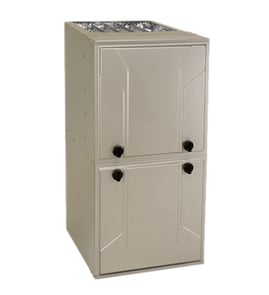
A 90,000 BTU furnace typically heats about 1,800 to 2,500 sq. ft. in many homes, but the real coverage depends on climate, insulation, air leakage, and ceiling height. For a Cozy 90N75 gas floor furnace, we recommend sizing by heat-loss, not square footage alone.
Use these as planning numbers; your home can land above or below them.
- Warm climates / tight, well-insulated homes: ~2,200 to 2,800 sq. ft.
- Moderate climates / average insulation: ~1,800 to 2,500 sq. ft.
- Cold climates / older or drafty homes: ~1,400 to 2,000 sq. ft.
- High ceilings (9 ft.+): reduce coverage by roughly 10% to 20%
- Many large windows or poor insulation: reduce coverage further
These factors usually matter more than the BTU number on the label:
- Local winter design temperature (your climate zone)
- Insulation levels in attic, walls, and floors
- Window type and total window area
- Air sealing (drafts, leaky ducting, unsealed penetrations)
- Ceiling height and open floor plans
- Furnace efficiency (AFUE) and how the heat is delivered
A common shortcut is 30 to 50 BTU per sq. ft. depending on conditions.
| Home condition | Typical BTU per sq. ft. | 90,000 BTU rough coverage |
|---|---|---|
| Tight, well-insulated | 30 to 35 | ~2,600 to 3,000 sq. ft. |
| Average | 35 to 45 | ~2,000 to 2,600 sq. ft. |
| Drafty / cold climate | 45 to 60 | ~1,500 to 2,000 sq. ft. |
Oversizing can cause short cycling (more on/off), uneven comfort, and wasted fuel; undersizing can leave rooms cold during the coldest weather. For the best result, we size to your home’s heat loss and then match the Cozy 90N75 furnace output to that need.
For help confirming your exact model number before ordering furnace parts, use how to find your appliance model number (and what it means for parts).
Last updated: February 2026
What is the most reliable furnace brand?
The most reliable furnace brand is the one that is correctly sized, installed, and maintained; in real-world use, brands like Trane, American Standard, Lennox, Carrier, and Rheem are commonly regarded as strong choices. If you already own a Cozy 90N75 gas floor furnace, reliability improves most through proper upkeep and correct replacement parts.
Reliability is usually a mix of fewer breakdowns, easier service, and consistent heat output over many seasons.
- Correct installation (gas pressure, venting, combustion air)
- Proper sizing for the home (avoids short-cycling and overheating)
- Simple, proven controls (less complexity can mean fewer failures)
- Routine maintenance (cleaning, inspection, safety checks)
- Parts availability and technician familiarity
These are common market perceptions for residential gas furnaces; specific model lines vary.
| Brand | Typical strengths | What to watch for |
|---|---|---|
| Trane / American Standard | Strong build quality, good long-term track record | Installation quality matters most |
| Carrier | Broad dealer network, solid mid-to-high tier options | Higher-end models can be more complex |
| Lennox | High efficiency options, quiet operation | Some models use more proprietary components |
| Rheem | Good value, widely serviced | Match the model to your climate and ducting |
| Goodman | Budget-friendly, common parts | Installer skill is the difference-maker |
When comparing brands or replacing an older unit, we recommend focusing on these decision points first:
- Choose a qualified installer who performs a load calculation (not guesswork)
- Pick a furnace type that matches your setup (upflow, downflow, horizontal, or floor furnace)
- Favor a longer parts warranty and straightforward service access
- Avoid oversizing; it increases wear and comfort problems
- Plan annual maintenance (especially before the heating season)
A furnace can be a “top brand” and still be unreliable if it is oversized, vented incorrectly, or not maintained. For a Cozy 90N75 gas floor furnace, consistent maintenance and correct replacement components are the biggest drivers of dependable heat.
For help identifying the exact model number on the rating plate before ordering parts, use how to find your appliance model number (and what it means for parts).
Last updated: February 2026
What is the most common part to fail on a furnace?
The most common furnace “failure” we see is actually a maintenance item: a dirty air filter restricting airflow. On a Cozy 90N75 gas floor furnace, restricted airflow can overheat the system and trip safety controls, making it seem like a part failed.
These are the items that most often stop heat production or cause short-cycling:
- Air filter: clogged filter reduces airflow and triggers high-limit shutdowns.
- Flame sensor (or pilot/ignition sensing): dirty sensor causes the burners to light briefly, then shut off.
- Ignition system: hot surface igniter or spark igniter wear can prevent burner ignition.
- Thermostat or low-voltage wiring: weak batteries, loose connections, or miswiring can stop heat calls.
- Blower motor or capacitor (if equipped): weak start components cause poor airflow and overheating.
- Safety switches (limit switch, rollout switch): trip when overheating or venting issues occur.
Before any hands-on work, set the thermostat to OFF.
- Replace the air filter with the correct size and airflow direction.
- Confirm the thermostat is set to HEAT and the temperature is set above room temp.
- Check the electrical panel for a tripped breaker and reset once.
- If the furnace has a service switch, make sure it is ON.
- Look for obvious loose wires at the thermostat (power off first).
| Symptom | Most likely cause | What to do first |
|---|---|---|
| Blower runs, no heat | Ignition or flame sensing issue | Clean flame sensor (if accessible) and check ignition sequence |
| Heat starts then stops quickly | Dirty filter or limit switch tripping | Replace filter, verify vents/registers are open |
| Nothing happens at all | Thermostat, power, or control issue | Check thermostat settings, breaker, and service switch |
| Repeated clicking, no flame | Ignition failure or gas supply issue | Stop and have a technician check ignition and gas supply |
On gas furnaces, airflow and flame sensing are tied directly to safety shutdowns. A simple restriction (like a clogged filter) can repeatedly trip limits, stress components, and shorten the life of the igniter, blower, and controls.
For basic electrical troubleshooting steps and safe testing, use our guide: how to use a multimeter to test electrical parts video.
Last updated: February 2026
How much does a 90% furnace cost?
A 90% AFUE gas furnace typically costs about $3,500 to $9,000 installed. For a Cozy 90N75 gas floor furnace, the installed price depends most on whether you are replacing it with another floor furnace or converting to a different furnace type, plus venting and condensate-drain work.
- Furnace type and fit: floor furnace replacement vs. conversion to a different style
- Capacity and features: BTU output, blower type, control board features
- Venting changes: routing new intake and exhaust (often PVC on 90% units)
- Condensate handling: drain location, pump needs, freeze protection
- Labor and access: tight closets, crawlspaces, or floor cutout modifications
- Code items: gas shutoff, sediment trap, electrical disconnect, permits
| Scenario | Typical installed range | What usually changes the price |
|---|---|---|
| Standard 90% furnace replacement (like-for-like) | $3,500 to $7,000 | Equipment size, basic venting and drain tie-in |
| Higher-complexity install (vent reroute, drain pump, access issues) | $6,000 to $9,000 | Longer vent runs, carpentry, electrical or gas line updates |
- Confirm whether your current unit is a gas floor furnace and whether the replacement will be the same style.
- Measure available space and note where the existing vent/flue runs.
- Identify a nearby drain location for condensate (or plan for a pump).
- Write down your exact model number (90N75) before comparing equipment and parts.
A 90% (high-efficiency) furnace can lower fuel use, but it adds venting and condensate requirements. Those installation details often cost more than the furnace itself.
For help confirming the exact model number you have before pricing replacements or parts, use how to find your appliance model number (and what it means for parts).
Last updated: February 2026
Is a 95% furnace worth the extra money?
Yes; a 95% AFUE furnace is worth the extra money when you will run it for many heating seasons because it uses less gas for the same heat output. For a Cozy 90N75 gas floor furnace, the deciding factor is whether your venting and condensate-drain setup can support a high-efficiency upgrade.
AFUE is the percentage of fuel energy that becomes usable heat over a season. A higher AFUE means less heat is lost through the vent.
- 80% AFUE: about 80% becomes heat; about 20% goes up the vent.
- 95% AFUE: about 95% becomes heat; about 5% goes up the vent.
- Fuel-use difference (same heat delivered): a 95% unit needs 80/95 = 0.842 as much fuel as an 80% unit.
- That equals about a 15.8% reduction in fuel use compared with 80% (1 - 0.842 = 0.158).
- Savings grow with colder climates, higher gas prices, and longer run time.
| Topic | 80% AFUE furnace | 95% AFUE furnace |
|---|---|---|
| Venting | Metal vent or chimney common | PVC intake/exhaust common |
| Condensate | None | Condensate drain (sometimes a pump) |
| Operating cost | Higher | Lower |
| Best fit | Simple replacements | Homes that can accommodate venting and drain needs |
- Vent routing for intake and exhaust
- Condensate drain location and freeze protection
- Combustion air requirements (often sealed combustion)
- Electrical and control compatibility
- Floor-furnace conversion complexity (ducting, framing, clearances)
A 95% furnace only delivers its efficiency advantage when venting and condensate handling are installed correctly; if those upgrades are difficult, the added install cost can outweigh the fuel savings.
For safety planning before any HVAC work, use are diy appliance repairs safe.
Last updated: February 2026