Owner’s manual
 Error Codes



What is the average life of a gas hot water heater?
A Kenmore gas water heater like model 153336551 typically lasts 8 to 12 years. With consistent maintenance (especially flushing sediment and keeping the burner area clean), many units reach 12 to 15 years before performance drops or leaks become more likely.
Typical lifespan and what affects it
Most gas water heaters fall into a predictable range, but these factors move the needle:
- Water quality: hard water speeds up scale and sediment buildup
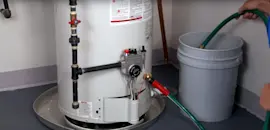
- Maintenance: periodic tank flushing helps reduce sediment and noise
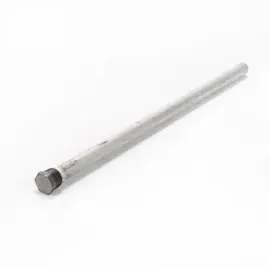
- Anode rod condition: the anode protects the tank from corrosion; removing it leaves the tank unprotected
- Venting and combustion air: good venting and proper combustion air help the heater operate correctly
- Sizing and usage: an undersized heater can run more and may show more condensation
Quick lifespan guide
| Heater condition | What you’ll notice | What we recommend |
|---|---|---|
| 0 to 5 years | Usually steady hot water | Keep up with basic maintenance |
| 6 to 10 years | More sediment noise, slower recovery | Inspect anode rod, flush tank |
| 11 to 15 years | More frequent pilot issues, rust signs | Plan for replacement if problems stack up |
| 15+ years | Higher leak risk | Replace proactively to avoid downtime |
Signs your water heater is nearing end of life
If your Kenmore 153336551 is in the 10+ year range, watch for:
- Rusty or discolored hot water
- Popping or rumbling from sediment
- Moisture around the base (after the tank has had time to fully warm up)
- Pilot problems or burner performance issues
- Reduced hot water capacity
For model-specific safety, venting, and operating guidance, follow the 153336551 owner’s manual.
Why it matters
A gas water heater can fail gradually (less hot water, more noise) or suddenly (leaks). Staying ahead of corrosion protection and sediment buildup helps you get the full expected service life and avoid unexpected loss of hot water.
Last updated: January 2026
How to check a water heater model?
To check the model on your Kenmore gas water heater model 153336551, look for the model rating plate on the tank. For this series, the manual specifies the rating plate is located above the gas control valve, and it lists the model number and key specs. See the 153336551 owner's manual for the exact label location and what each field means.
Where to find the model rating plate
On Kenmore Power Miser 6 gas water heaters like 153336551, the model rating plate is typically on the front of the unit near the lower access area.
- Look above the gas control valve (this is the primary location called out in the manual).
- Use a flashlight; the label can be hard to read in low light.
- Write down the model number and serial number exactly as shown.
- Note the gas type listed (natural gas vs. LP/propane) before buying parts.
- If the label is worn, take a close-up photo and zoom in to read it.
What information to record (and why)
When ordering parts or troubleshooting, we recommend recording these items from the rating plate.
| Rating plate item | What it’s used for |
|---|---|
| Model number (example: 153336551) | Ensures parts and instructions match your exact unit |
| Serial number / manufacture date | Helps identify production version and age |
| Gas type | Prevents installing parts meant for the wrong fuel |
| Input rating (BTU/hr) | Helps match safety components like the relief valve |
Why it matters
The model rating plate is the fastest way to confirm you have the correct Kenmore water heater model before you buy a pilot assembly, thermocouple, burner tube, or other gas control components. It also helps you confirm the correct gas type, which is critical for safe operation.
Last updated: January 2026
What is the average labor cost to install a 50 gallon gas water heater?
For a 50-gallon Kenmore gas water heater like model 153336551, average labor-only installation typically runs $400 to $1,000. A simple replacement in an accessible location costs less; labor goes up when venting, gas piping, or code-required upgrades are needed. See the 153336551 owner's manual for installation requirements that can affect labor time.
What drives labor cost up or down
Labor pricing is mostly about time on site and how much rework is required around gas, venting, and water piping.
- Swap vs. rework: replacing an existing 50-gallon unit in the same spot is faster
- Venting changes: resizing or rerouting vent pipe adds time
- Gas line work: new shutoff, sediment trap, or line modifications increase labor
- Water piping updates: corroded shutoffs, rigid piping, or tight clearances slow the job
- Location access: attic, crawlspace, or tight closet installs cost more than a garage/basement
- Startup and safety checks: leak testing, draft verification, and burner operation checks add time
Typical labor scenarios (labor only)
| Install scenario | What it usually includes | Typical labor range |
|---|---|---|
| Straight swap (same location) | Disconnect, set tank, reconnect water/gas/vent, test | $400 to $700 |
| Moderate complexity | Minor vent or piping changes, added fittings | $700 to $1,000 |
| High complexity | Significant venting changes, new gas run, difficult access | $1,000+ |
Parts and materials that often get replaced during install
Even when you are only asking about labor, installers commonly recommend replacing wear items or safety components while the tank is drained and disconnected.
- Temperature and pressure relief valve (T&P valve) and discharge piping
- Gas connector and shutoff valve (as required by local code)
- Water shutoff valve and flexible connectors
- Drain pan and drain line (when installed above finished space)
- Pilot and burner components if the heater has ignition issues (for example, the pilot 100109070)
Why it matters
A gas water heater install is not just “hook it up”; correct venting, gas piping, and safety checks help prevent nuisance shutdowns and ensure stable hot water recovery. The installation checklist and venting/gas piping sections in the manual are often what determine whether a job stays “basic” or becomes “complex.”
Last updated: January 2026
How to tell if a thermocouple is bad on a water heater?
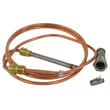
On the Kenmore 153336551 power miser 6 gas water heater, a bad thermocouple most often shows up as a pilot light that will not stay lit after you release the gas control knob. When the pilot will not stay proven, the gas valve closes and the burner cannot heat water. Confirm safe lighting steps in the 153336551 owner's manual.
Common symptoms
- Pilot lights only while you hold the knob down, then goes out when released
- Pilot goes out intermittently during normal operation
- Burner will not stay on because the pilot is not staying lit
- Little or no hot water even though the control is set to ON
- Soot or carbon around the pilot flame area
Quick checks before replacing parts
Turn the gas control to OFF and allow time for any gas to clear before inspecting.
- Make sure the pilot flame is steady and hitting the thermocouple tip
- Tighten the thermocouple connection at the gas control valve (snug, not over-tight)
- Check for moisture at the burner area; the manual notes condensation can cause sizzling and may lead to pilot outage until the tank warms (about 1 to 2 hours)
- Look for drafts or a disturbed flame pattern around the burner compartment
What you see vs what it usually means
| What you observe | Most likely cause | Next step |
|---|---|---|
| Pilot stays lit and water heats | Thermocouple likely OK | Check temperature setting and hot water demand |
| Pilot drops out right after releasing knob | Weak pilot flame or failing thermocouple | Clean/inspect pilot flame, then replace thermocouple if needed |
| Pilot drops out during long runs | Condensation or venting draft | Let tank warm 1 to 2 hours; inspect venting and burner area |
If you are servicing the pilot system
If the pilot flame is weak or unstable, servicing the pilot assembly can solve the same symptoms a “bad thermocouple” causes. For this model, the pilot 100109070 is a common pilot-system replacement part.
Why it matters
The thermocouple is a safety device that proves the pilot flame. If it cannot sense flame reliably, the gas valve shuts off gas to prevent unsafe operation, and you lose hot water.
Last updated: January 2026