 Owner’s manual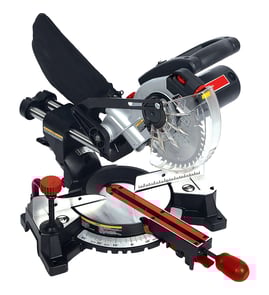

What should you never cut with a miter saw?
You should never cut anything you cannot control safely on a Craftsman miter saw model 315212500, especially stock that is too small to clamp, stacked workpieces, or anything you are tempted to cut free-hand. These situations commonly lead to kickback and hand-to-blade contact.
Never cut these items or setups
- Tiny pieces you cannot clamp; if it is too small to clamp, do not hand-hold it.
- More than one piece at a time; never stack multiple workpieces on the saw table.
- Anything cut free-hand; always keep the workpiece against the fence as a backstop.
- A workpiece with the “scrap end” restrained; never bind or hold the free scrap end.
- Material that requires removing guards; never operate with blade guards removed.
Safe alternatives that work
Use these methods instead of forcing an unsafe cut:
- Clamp the workpiece and keep it firmly against the fence.
- Use a stop block only when it is set up correctly (same side as the clamp).
- Use the correct blade for the material and keep it sharp and clean.
- Let the blade reach full speed before starting the cut.
- Release the switch and wait for a complete stop before raising the blade.
Quick “do this, not that” guide
| Situation | Never do this | Do this instead |
|---|---|---|
| Short/narrow stock | Hand-hold near the blade | Clamp it securely and keep hands out of the cutting path |
| Repetitive cuts | Use a length stop on the free scrap end | Set clamp and stop on the same side |
| Multiple parts | Stack boards to save time | Cut one workpiece at a time |
| Any cut | Free-hand the cut | Keep the workpiece flat on the table and tight to the fence |
Why it matters
Most miter saw injuries happen when the workpiece shifts, lifts, or kicks back. The 315212500 manual emphasizes clamping, using the fence, keeping hands away from the cutting area, and never performing free-hand operations. Review the safety section in the 315212500 owner's manual before your next project.
If you need replacement parts for your Craftsman 315212500 miter saw, start with the parts list for this model, or search by model number on Sears PartsDirect.
Last updated: February 2026
Which Mitre saw is the most accurate?
The most accurate miter saw is the one that holds its factory alignment and can be tuned back to dead-square cuts. Your Craftsman 315212500 compound miter saw is designed for very accurate cuts when the fence, miter table, and bevel settings are checked and adjusted as needed (especially after shipping and over time). See the 315212500 owner's manual for the exact squaring and adjustment steps.
What “most accurate” means on a miter saw
Accuracy is a combination of repeatability and alignment. The saw that stays consistent cut after cut is the “most accurate” for real-world work.
- Miter accuracy: the miter table reads true at 0°, 45°, etc.
- Bevel accuracy: the bevel scale and stops match the blade angle
- Fence squareness: the fence is square to the blade at 0° miter
- Minimal deflection: tight pivots and a solid arm reduce flex
- Clean support: work stays flat to the table and tight to the fence
How to get maximum accuracy from the Craftsman 315212500
The manual calls out that components can be jarred out of alignment during shipping and that readjustment becomes necessary with wear. These steps are what make a saw “accurate” in practice.
- Unplug the saw before any adjustment.
- Square the miter table to the fence at 0° using a framing square.
- Verify the blade is square to the fence at 0° miter (adjust if needed).
- Use a zero clearance throat plate slot to reduce tear-out and improve cut quality.
- Clamp the workpiece; never cut freehand (movement ruins accuracy and increases kickback risk).
Quick accuracy checklist (what to check first)
| Symptom | Most common cause | Best first fix |
|---|---|---|
| Cuts not square at 0° | Fence or miter table out of square | Re-square miter table to fence |
| 45° miters don’t close | Miter pointer/stop off, table not locking | Recalibrate and tighten miter lock |
| Crown molding gaps | Compound settings slightly off | Make trial cuts and fine-tune |
| Tear-out on face | No zero-clearance support | Use/refresh zero-clearance throat plate |
Why it matters
For trim, framing, and crown molding, tiny angle errors stack up into visible gaps. A properly squared and clamped setup gives you tight joints, safer cuts, and less wasted material.
If you need replacement parts for the Craftsman 315212500, start with the parts list for this model, or search by model number on Sears PartsDirect.
Last updated: February 2026
Is it miter or mitre saw?
In the U.S., the standard spelling is miter saw; mitre saw is the common spelling in the U.K. and other regions. For your Craftsman 315212500 compound miter saw, we use “miter” because it matches U.S. tool terminology and the manual.
Which spelling should I use when searching parts and instructions?
Use miter saw for the best results on U.S. parts diagrams, manuals, and repair content for Craftsman model 315212500.
- Use miter when searching U.S. sites, parts lists, and diagrams
- Use mitre when reading U.K. woodworking plans or tool guides
- Both words refer to the same tool: a saw designed to make accurate angle cuts
- “Compound miter saw” means it can cut miter angles and bevel angles
Why the spelling difference exists
“Miter” and “mitre” are regional spellings of the same word. In woodworking, both describe an angled joint and the angled cuts used to make it.
Quick comparison
| Term you see | Most common region | Meaning in woodworking | What it refers to on this model |
|---|---|---|---|
| miter saw | United States | Angle cut across the width of a board | The miter table and miter fence used for angle cuts |
| mitre saw | United Kingdom | Same as “miter” | Same tool and same type of cuts |
Why it matters for your Craftsman 315212500
Using the U.S. spelling helps you find the right documentation and the right terminology for adjustments and safe operation (for example, miter table positive stops, bevel lock knob, and the “no hands zone”). For model-specific terms and features, rely on the 315212500 owner's manual.
Ordering help
If you do not see what you need in the model’s parts list, search by the full model number 315212500 on Sears PartsDirect to locate compatible diagrams and replacement parts.
Last updated: February 2026
What are the parts of a miter saw?
On the Craftsman 315212500 miter saw, the main parts include the saw blade and guards, the miter table and fence system, and the controls that lock your miter angle. These parts work together to support the workpiece, set the cut angle, and protect your hands during cutting.
Core parts you will see on this model
- Saw blade (10-inch max capacity): does the cutting; using the correct blade size helps the guard and washers fit properly.
- Self-retracting lower blade guard: clear plastic guard that retracts as you lower the saw into the workpiece.
- Miter table (base): the rotating table that sets left and right miter angles.
- Miter lock handle: locks the table at the selected miter angle.
- Fence (including sliding fence feature): supports the workpiece; the sliding feature provides clearance for bevel and compound cuts.
- Zero clearance throat plate: insert in the miter table that the blade cuts a slot into; helps minimize tear-out.
- No hands zone markings: labeled area on the base that helps you keep hands away from the blade path.
Common accessories included (not “built-in” parts)
These typically come with the saw and support setup and adjustments:
| Accessory | What it’s for | When you use it |
|---|---|---|
| Dust guide (and dust bag, if equipped) | Directs sawdust away from the cut | During cutting |
| Blade wrench / hex keys | Blade changes and adjustments | Maintenance and setup |
| Laser guide (if equipped) | Helps align the cut line | Setup and cutting |
Why it matters
Knowing the names and functions of the miter fence, miter lock handle, throat plate, and blade guard helps you set angles correctly, reduce tear-out, and work safer, especially when making bevel or compound cuts.
Where to confirm names and diagrams
For the exact part names and locations used for the Craftsman 315212500, we recommend using the exploded views and terminology in the 315212500 owner's manual. You can also search the model number on Sears PartsDirect if you are trying to match a description to a replacement part.
Last updated: February 2026
How deep can a 255mm mitre saw cut?
A 255 mm (10 in.) miter saw typically cuts about 2-9/16 in. deep at a 0° miter and 0° bevel. For the Craftsman 315212500 specifically, our specs list a maximum thickness of 2-9/16 in. in standard crosscuts, with reduced depth when you bevel the head.
Cutting depth for Craftsman 315212500 (10 in. blade)
These are the model’s published maximum cutting capacities; “depth” is the maximum thickness the blade can cut through.
| Saw setting | Max cut (width x thickness) | What that means for depth |
|---|---|---|
| Miter 0° / Bevel 0° | 5-7/16 in. x 2-9/16 in. | Up to 2-9/16 in. thick |
| Miter 45° / Bevel 0° | 3-7/8 in. x 2-9/16 in. | Up to 2-9/16 in. thick |
| Miter 0° / Bevel 45° | 5-7/16 in. x 1-9/16 in. | Up to 1-9/16 in. thick |
| Miter 45° / Bevel 45° | 3-7/8 in. x 1-1/2 in. | Up to 1-1/2 in. thick |
For the full spec table and setup notes, use the 315212500 owner's manual.
Quick tips to get the full cutting depth
If your cut seems shallower than expected, these checks usually fix it:
- Use a true 10 in. blade with a 5/8 in. arbor (the model’s spec).
- Confirm the workpiece is flat on the miter table and tight to the fence.
- Make sure the depth stop is not limiting blade travel (it should be factory set for full capacity).
- If you installed a different blade, verify blade-to-table clearance before cutting.
- Let the blade reach full speed before entering the cut; this reduces bogging and wandering.
Why it matters
Cut depth changes with miter and bevel angles. Knowing the thickness limit helps you choose the right cut method (standard crosscut vs. bevel cut) and prevents binding, kickback, and inaccurate joints.
Ordering parts and manuals
We list parts and diagrams for Craftsman 315212500 on this model page; you can also search by model number on Sears PartsDirect if you are sourcing additional items.
Last updated: February 2026