Owner’s manual
 Error Codes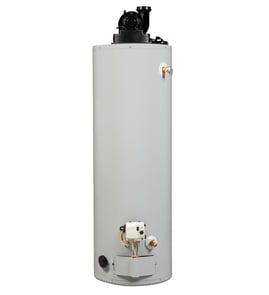



What is the life expectancy of a Kenmore water heater?
Most Kenmore gas tank water heaters, including model 153331830, last 8 to 12 years. Regular maintenance (especially anode rod inspection and sediment control) helps you reach the high end of that range and reduces the chance of early tank leakage; see the 153331830 owner's manual.
A tank-style gas water heater’s service life is mainly driven by water quality, maintenance, and operating conditions.
- Hard water and sediment speed up corrosion and reduce efficiency
- High temperature settings increase stress on the tank and components
- Infrequent maintenance shortens life (anode rod, flushing)
- Leaks around fittings can mimic a tank leak and should be corrected early
- Venting and combustion issues can cause nuisance shutdowns and poor performance
The Kenmore manual calls out specific maintenance items that directly impact longevity.
| Maintenance item | When to do it | Why it matters |
|---|---|---|
| Inspect anode rod | Within 3 years, then yearly | A depleted anode rod lets the tank corrode faster |
| Operate the T&P relief valve | At least once a year | Helps confirm the safety valve is working |
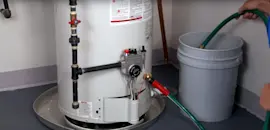
| Drain some water to reduce sediment | Periodically (as needed) | Sediment buildup can overheat the tank bottom |
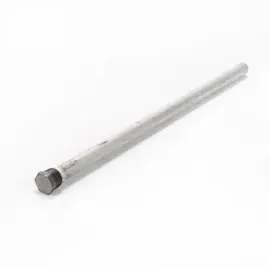
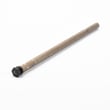
If your anode rod is due, replacing the water heater anode rod 100109434 is one of the most effective ways to extend tank life.
- Rust-colored water or metallic odor at hot taps
- Moisture or corrosion at the tank bottom or around the burner access area
- Rumbling or popping sounds from heavy sediment
- Pilot problems that keep returning after basic cleaning and adjustment
A water heater that is nearing the end of its expected lifespan is more likely to leak “without warning.” Planning maintenance and watching for early symptoms helps prevent property damage and unexpected loss of hot water.
Last updated: February 2026
How old is my water heater by the serial number?
To estimate the age of your Kenmore gas water heater model 153331830, we use the serial number from the rating plate and decode the manufacture date (month and year). Then we compare that date to today to get the unit’s approximate age; confirm details in the 153331830 owner's manual.
On most Kenmore gas water heaters, the rating plate is on the side of the tank near the gas control area.
Check these common locations:
- Side of the tank, mid-height (most common)
- Near the burner access opening or lower front area
- Near the gas valve and temperature control assembly
- On a label that also lists model number, gas type, and capacity
Kenmore water heaters were commonly built by a manufacturer that encodes the date into the serial number. The exact pattern can vary by production run, so we decode it by matching your serial format to the correct scheme.
Typical date-code patterns we see:
- First 2 digits = year, next 2 digits = week (YYWW)
- First 2 digits = week, next 2 digits = year (WWYY)
- A letter for month plus digits for year (less common)
- Write the serial number exactly as shown (include letters).
- Identify whether it starts with 4 digits that look like a date code.
- Look for a week number (01-52) paired with a year.
If the serial number decodes to week 18 of 2016, the water heater was made around late April or early May 2016.
| What you decode | What it means | Approx. build date |
|---|---|---|
| YYWW | Year + week | Week within that year |
| WWYY | Week + year | Week within that year |
| Month code + year | Month + year | That month of that year |
Knowing the manufacture date helps us choose the right repair approach for your 153331830, especially for ignition and safety components like the water heater pilot assembly 100112330 and water heater thermocouple 100112327, and it also helps you plan maintenance (such as inspecting the anode rod).
Last updated: February 2026
What are the parts on a gas water heater?
On the Kenmore 153331830 gas water heater, the main parts include the tank and water connections plus the gas control and burner system (pilot, thermocouple, manifold, and burner access components). These parts work together to heat water safely and vent combustion gases.
- Tank (stores heated water)
- Gas control valve/thermostat (regulates gas flow and water temperature)
- Pilot and ignition components (lights the main burner)
- Burner and combustion chamber components (creates heat)
- Venting components (moves exhaust safely out)
- Safety and service valves (drain valve, T&P relief valve)
These are some of the most frequently replaced items we see on this model:
| Part (what it does) | Example part for this model | When it’s commonly needed |
|---|---|---|
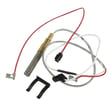
| Lights and proves flame | Water heater pilot assembly 100112330 | Pilot will not stay lit, weak pilot flame |
| Flame-sensing safety device | Water heater thermocouple 100112327 | Pilot drops out after releasing the knob |
| Controls gas and temperature | American water heaters water heater gas valve and temperature control assembly 100112336 | No burner operation, temperature control issues |
| Overpressure safety valve | Water heater temperature and pressure relief valve 100108279 | Dripping at valve outlet, won’t reseat |
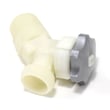
| Tank draining connection | Water heater drain valve 100108778 | Drain valve leaks, won’t open/close |
Knowing the major components helps you troubleshoot symptoms faster (no hot water, pilot outage, leaks) and order the correct replacement part. For gas models, correct reassembly and leak checks are critical for safe operation.
Before lighting or re-lighting a gas water heater, we use the same core checks called out in the 153331830 owner’s manual:
- Confirm the tank is completely filled with water before lighting
- Verify the gas type matches the rating plate (natural gas vs propane)
- Make sure the gas line has a shut-off valve, union, and drip leg
- Use approved pipe joint compound or gas-rated Teflon tape on gas piping
- Check all gas connections with a noncorrosive leak-detection solution (soap and water works)
Last updated: February 2026
How do I read my water heater model number?
Your Kenmore water heater model number is printed on the rating plate (data label) on the tank. For model 153331830, use that full number exactly when ordering parts, checking the gas type, or looking up operating and lighting instructions in the 153331830 owner's manual.
On Kenmore gas water heaters like 153331830, the rating plate is a key identification label. It typically lists:
- Model number (example: 153331830)
- Serial number (unique to your unit)
- Tank capacity (example shown in the manual: 40 gallon for 153.331830)
- Gas type (natural gas or propane) and other fuel information
- Safety and certification information
We recommend copying the model number exactly as shown on the rating plate because one digit can change the parts list.
Common places you will use it:
- Ordering replacement parts like a pilot assembly or thermocouple
- Matching the correct lighting procedure and control settings
- Confirming the correct gas type before operating
- Finding diagrams and maintenance steps
| What you’re doing | What to enter | Why it matters |
|---|---|---|
| Looking up parts | 153331830 | Ensures correct fit and compatibility |
| Checking fuel | Rating plate gas type | Prevents unsafe operation |
| Following procedures | Manual for 153331830 | Matches your control valve and ignition steps |
Before you shop, we suggest writing down the same items the manual calls out for service and parts identification:
- Model number
- Serial number
- Gas type (natural or propane)
- Part description (example: pilot assembly, gas valve)
If you’re troubleshooting a pilot that will not stay lit, the parts most often involved are the water heater pilot assembly 100112330 and the water heater thermocouple 100112327.
Using the exact model number from the rating plate helps us match the correct Kenmore water heater parts and prevents ordering a component that looks similar but will not connect to your gas control valve, manifold, or burner assembly.
Last updated: February 2026
Why did my gas water heater suddenly stop working?
On Kenmore gas water heater model 153331830, a sudden shutdown is usually caused by the pilot going out, the safety system shutting gas off (thermal switch or ECO over-temperature), or poor combustion air and venting that makes the flame unstable. Use the lighting and diagnostic steps in the 153331830 owner's manual.
- Look through the sight glass to see whether the pilot flame is present.
- If the unit tried to light several times and stopped, verify the gas supply is on.
- Check the installed area for lint, dust, or dirt buildup; a dirty base-ring filter can overheat the combustion chamber.
- Confirm the heater has adequate make-up air (especially in closets or tight utility rooms).
- If the status/diagnostic light is flashing, note the flash count before resetting anything.
| What you notice | Most likely cause | What we do next |
|---|---|---|
| Pilot is out | Pilot outage or weak pilot | Follow relight steps; inspect pilot assembly and connections |
| Pilot is on but burner will not run | Weak pilot not heating thermopile/thermocouple enough, loose wiring | Check flame strength and wiring; replace the sensing part if needed |
| Diagnostic light shows over-temp (often 4 flashes) | ECO (energy cut off) tripped due to high water temperature | Turn gas supply OFF and schedule service |
| Unit ran, then stopped and will not relight | Thermal switch opened from overheating due to airflow/venting issues | Correct venting/air supply issues before reset attempts |
If the pilot will not stay lit or the flame is weak, these model-matched parts are common solutions:
- Water heater pilot assembly 100112330 (pilot flame and ignition components)
- Water heater thermocouple 100112327 (flame sensing that keeps gas valve open)
- American water heaters water heater gas valve and temperature control assembly 100112336 (gas control and temperature regulation)
When a gas water heater shuts down, it is often doing it for safety. Issues like insufficient combustion air, improper venting, or an over-temperature condition can repeatedly trip safety devices and keep the burner off until the root cause is corrected.
Last updated: February 2026
Can you replace parts on a hot water heater?
Yes, you can replace many service parts on the Kenmore 153331830 gas water heater to restore heating and extend service life, especially common wear items like the pilot/thermocouple, drain valve, and T&P relief valve. For any gas-control or safety-related issue, follow the 153331830 owner's manual and use a qualified technician when required.
These repairs are often straightforward when the tank is sound and there is no gas odor:
- Pilot and ignition components (no pilot, weak pilot)
- Flame-sensing components such as a thermocouple/thermopile (pilot won’t stay lit)
- Drain valve (leaking or won’t close)
- Anode rod (helps reduce tank corrosion)
- Temperature and pressure (T&P) relief valve (dripping or leaking)
Model-matched examples for 153331830
| Symptom | Likely part to check | Model-matched part example |
|---|---|---|
| Pilot won’t stay lit | Thermocouple/thermopile circuit, pilot assembly | Water heater thermocouple 100112327 |
| No pilot flame or unreliable ignition | Pilot assembly, gas supply to pilot | Water heater pilot assembly 100112330 |
| Water leaking at drain outlet | Drain valve | Water heater drain valve 100108778 |
| T&P valve leaking | T&P relief valve | Water heater temperature and pressure relief valve 100108279 |
The manual’s safety guidance matters here. Before any service:
- If you smell gas: do not light the appliance or touch switches; contact your gas supplier.
- Turn the gas control/temperature knob to OFF and wait the recommended time before relighting.
- Keep combustion air openings clear; do not store flammables near the heater.
- If the unit has been under water, replace the water heater (do not repair).
Replacing the right part can fix “no hot water” or “pilot won’t stay lit” quickly, but gas water heaters also have safety devices (thermal switch, ECO limit) that must operate correctly. Using the correct Kenmore 153331830 parts and procedures helps prevent nuisance shutdowns and unsafe operation.
Last updated: February 2026
What is the most common problem with gas water heaters?
The most common gas water heater problem is loss of hot water because the burner is not staying lit or the heater is not heating efficiently. On Kenmore model 153331830, this often ties back to pilot/ignition issues, restricted combustion air, or venting problems.
- Pilot will not stay lit: burner shuts off, no hot water, repeated relighting attempts
- Slow hot water recovery: hot water runs out quickly, long reheat times (often linked to insufficient combustion air or a blocked flue/vent)
- Temperature complaints: water too hot or not hot enough (thermostat dial setting and calibration)
- Condensation mistaken for a leak: water appears under the heater during cold months, then stops after the tank warms (about 1 to 2 hours)
- Relief valve dripping: small drips can happen with thermal expansion or high water pressure
- Sooting: black soot around the burner area or venting (not normal and needs correction before further use)
- Confirm the gas control/temperature knob is set appropriately (a common starting point is 120°F at the “HOT” setting; see the 153331830 owner’s manual).
- Look for signs of venting trouble: loose vent connections, blockage, rust flakes, or soot.
- If recovery is slow, check for restricted airflow and lint or dust buildup around the base-ring filter area.
- If the pilot will not stay lit, the ignition safety components are common suspects.
| Symptom | Part that commonly relates | Example part for this model |
|---|---|---|
| Pilot will not stay lit | Pilot assembly | Water heater pilot assembly 100112330 |
| Pilot lights then goes out | Thermocouple | Water heater thermocouple 100112327 |
| Temperature control problems | Gas valve/temperature control | American water heaters water heater gas valve and temperature control assembly 100112336 |
| Drips at drain outlet | Drain valve | Water heater drain valve 100108778 |
Gas water heaters rely on correct combustion air and safe venting to operate properly. Problems like sooting or vent blockage can reduce heating performance and create unsafe operating conditions, so addressing the root cause protects both comfort and equipment.
Last updated: February 2026