



What is the lifespan of a whirlpool microwave?
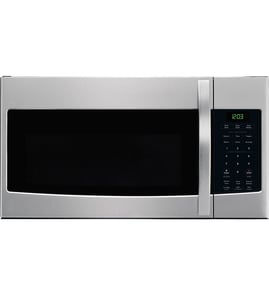
Most Whirlpool microwaves last 7 to 10 years with normal household use; your Whirlpool WML55011HB07 microwave/hood combo typically falls in that same range. Heavy daily cooking, poor ventilation, and power surges shorten life, while routine cleaning and good airflow help it reach the high end.
What affects microwave lifespan most
- Daily run time (reheating once a day vs. cooking multiple meals)
- Ventilation and grease buildup in a microwave/hood combo
- Door and latch alignment (a misaligned door can stop heating or prevent starting)
- Electrical conditions (surges, loose outlet, tripped breaker)
- Overheating events (blocked vents, running empty)
Signs your microwave is nearing end of life
These symptoms often point to a failing high-voltage circuit, control, or safety protection.
| Symptom | What it usually indicates | What we recommend first |
|---|---|---|
| Runs but does not heat | High-voltage component issue | Stop using and have it serviced; high voltage is dangerous |
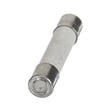
| Dead display, no response | Power issue or internal fuse | Check outlet and breaker; then consider the microwave fuse W11707984 |
| Loud buzzing or burning smell | Magnetron or high-voltage issue | Stop using; consider professional diagnosis; magnetron replacement may be needed |
| Intermittent power, resets | Loose connection, failing fuse, control issue | Inspect power supply; check for heat or arcing signs |
Practical ways to extend the life of a Whirlpool microwave
- Keep the grease filter clean so airflow stays strong; replace if damaged (see grease filter W11213913)
- Wipe the cavity and door edges regularly to prevent steam and grease from affecting switches
- Use microwave-safe cookware; avoid running the unit empty
- Make sure the hood fan and vents are not blocked; heat buildup is a common life-shortener
- If heating becomes uneven, stop using it and address the cause early to prevent bigger failures
Why it matters
A microwave/hood combo like the WML55011HB07 depends on steady airflow and reliable safety circuits. Simple maintenance (especially filtration and cleaning) reduces heat stress on key components and helps you get the full 7 to 10 years.
Last updated: February 2026
How can I tell what size my microwave is?
For your Whirlpool WML55011HB07 microwave/hood combo, “size” usually means two things: the outside dimensions (to confirm it fits your cabinet space) and the inside capacity (how much food it holds). We recommend measuring the exterior width, height, and depth, then comparing those measurements to your installation space.
What to measure (and how)
Use a tape measure and record measurements in inches.
- Exterior width: left edge to right edge across the front
- Exterior height: bottom of the microwave to the top of the case
- Exterior depth: front face to the back (exclude the power cord)
- Interior cavity (optional): width, height, depth inside the cooking box (door open)
- Clearances: space above and around the unit for safe airflow and door swing
“Size” terms you will see
Microwaves are commonly described by either exterior width or interior capacity.
| What it describes | What you measure | Why it matters |
|---|---|---|
| Exterior width class | Outside width (often around 24 or 30 inches) | Fit in the cabinet opening and align with the range below |
| Interior capacity | Cavity volume (cubic feet) | How large a dish fits and how much you can cook at once |
| Turntable diameter | Glass tray diameter | Whether plates and cookware rotate without hitting the walls |
Quick capacity estimate (optional)
If you want a rough interior capacity estimate, measure the interior cavity (in inches) and use:
- Capacity (cu ft) = (width × height × depth) ÷ 1728
Why it matters
Getting the size right prevents installation headaches (cabinet fit, venting alignment) and helps you choose cookware that rotates properly on the turntable. If your tray is missing or broken, matching the correct replacement also depends on the exact tray size.
Parts that relate to “microwave size” issues
If you are checking size because items are not rotating or the tray does not fit, these model-matched parts can help:
Last updated: February 2026
What is the disadvantage of a low profile microwave?
A low-profile microwave (like the Whirlpool WML55011HB07 microwave/hood combo style) saves cabinet space and improves sightlines, but the main disadvantage is reduced interior height and overall capacity, so tall items and large cookware fit poorly and can heat less evenly.
Common disadvantages to expect
- Smaller usable cavity: limited height for tall mugs, large bowls, and some covered dishes.
- More compromises in cooking: lower clearance can force you to use flatter containers, which can affect reheating results.
- Ventilation tradeoffs: low-profile units often prioritize slim design over maximum hood capture area.
- Installation can be less forgiving: tight clearances mean the wall plate and cabinet cutouts must be precise.
- Service access can be harder: compact layouts can make internal components more crowded.
How it compares to a standard over-the-range microwave
| Feature | Low-profile microwave | Standard OTR microwave |
|---|---|---|
| Interior height | Lower | Higher |
| Best for | Reheating, defrosting, small cookware | Larger dishes, taller containers |
| Venting performance | Often adequate, sometimes less effective | Often stronger capture area |
| Fit and install | Tight tolerances | More forgiving |
Why it matters
Most owners choose low-profile models for the cleaner look and extra space above the range. The tradeoff is day-to-day usability: if you regularly heat tall containers or large plates, the reduced cavity height becomes the limiting factor.
Tips to reduce frustration with a low-profile unit
- Measure your most-used dishes (especially height with a cover) before committing.
- Use wider, lower microwave-safe containers for soups and leftovers.
- Keep the grease filters clean to help airflow; replace them if they are bent or clogged (see grease filter W11213913).
- If the unit is already installed and seems to vent poorly, confirm the vent path is not restricted and the damper opens freely.
- For electrical troubleshooting (no power, dead display), start with the line fuse and basic checks (see microwave fuse W11707984).
Last updated: February 2026
What are common problems with whirlpool microwaves?
Common problems with Whirlpool microwaves like model WML55011HB07 include not heating, not starting, a dead display, sparking, or loud buzzing and grinding noises. Many issues trace back to power supply, door interlocks, airflow restrictions, or worn internal components; heating failures often involve high-voltage parts.
Most common symptoms and what they usually mean
- Runs but does not heat: high-voltage circuit problem (often the magnetron W11402082 or microwave high-voltage diode W11256462)
- Completely dead (no lights, no display): blown line fuse, outlet or breaker issue (see microwave fuse W11707984)
- Starts then stops, or won’t start: door not closing fully, latch or interlock switch issue, or control problem
- Sparking or arcing inside: metal in the cavity, damaged rack or waveguide cover, or food splatter causing arcing
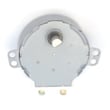
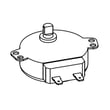
- Turntable not rotating: drive coupling or motor/driver issue (see driver, turntable W11452278 and turntable W11367904)
- Fan runs loud or venting seems weak: grease buildup, blocked vent path, or a dirty hood filter (see grease filter W11213913)
Quick checks we recommend before replacing parts
- Reset power: unplug for 2 minutes (or switch breaker off then on).
- Confirm the door closes firmly: remove debris around the latch area.
- Check control lock and settings: make sure a lock feature is not enabled.
- Test heating with a cup of water: 1 minute on High; water should noticeably warm.
- Inspect and clean airflow paths: clean the hood intake area and grease filter.
Parts that commonly solve these problems (by symptom)
| Symptom | Common part involved | Example part on this model |
|---|---|---|
| No power / dead display | Line fuse | Microwave fuse (W11707984) |
| No heat | Magnetron or HV diode | Magnetron (W11402082), HV diode (W11256462) |
| Turntable not moving | Turntable driver or tray | Driver (W11452278), turntable (W11367904) |
| Poor venting / greasy airflow | Grease filter | Grease filter (W11213913) |
Why it matters
Microwave/hood combos combine cooking and ventilation; a simple airflow restriction can cause overheating and shutdowns, while heating failures can involve high-voltage components. For safety, we recommend leaving high-voltage testing and replacement to a qualified technician.
Last updated: February 2026