Owner’s manual
 View engine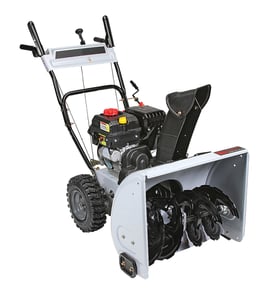



What is the typical lifespan of a gas snowblower?
A gas snowblower like the Briggs 1696619-00 typically lasts 10 to 20 years. With consistent seasonal maintenance (oil service, correct fuel storage, and routine hardware checks), many units reach the upper end of that range while staying safe and reliable; see the 1696619-00 operator’s manual.
- Maintenance frequency: regular engine care and inspections extend life.
- Fuel habits: stale fuel and poor off-season storage shorten carburetor and starting-system life.
- Operating conditions: heavy, wet snow and gravel driveways increase wear on the auger housing and wear parts.
- Wear-part replacement: replacing items like shear pins and scraper components prevents bigger damage.
- Safe servicing practices: shutting off the engine and disconnecting the spark plug wire before service helps prevent accidents and rushed, improper repairs.
| Use pattern | Typical lifespan | What usually wears first |
|---|---|---|
| Light (few storms/season) | 15 to 20 years | belts, cables, friction wheel |
| Moderate (regular driveway use) | 12 to 18 years | friction wheel, scraper bar, skid shoes |
| Heavy (long runs, deep/wet snow) | 10 to 15 years | friction wheel, auger drive components, chute parts |
- Change engine oil on schedule and keep the correct oil level.
- Before storage, treat fuel with stabilizer and run the engine as directed in the manual.
- Check fasteners and hardware tightness periodically (especially around the auger housing).
- Inspect and replace shear pins when damaged; they are designed to fail to protect the auger/gearcase.
- Keep the scraper bar and skid shoes adjusted so the housing is not grinding into the surface.
A snowblower’s lifespan is mostly determined by how well we prevent wear and corrosion and how quickly we replace sacrificial parts. For example, running with worn skid shoes or a damaged scraper bar can accelerate housing wear and reduce throwing performance; the snowblower scraper bar kit 707551 is a common wear-item category for this type of machine.
Last updated: February 2026
How to find snowblower model number?
For your Briggs 1696619-00 gas snowblower, the model number is typically printed on a sticker or stamped on a metal ID plate on the main machine (not the engine). Check the frame near the engine, behind the handle, or on the auger housing; then match it to the parts list.
Most snowblowers place the equipment ID label in one of these spots:
- On the frame near the engine (often on the side rail)
- Behind the handlebar area, near the control panel
- On the side of the auger housing (front bucket)
- Near the wheels or axle area
- Under or near the engine shroud (label may be partially hidden by grime)
If the label is dirty or faded, wipe it clean and use a flashlight; a phone camera zoom often makes faint stamping easier to read.
Snowblowers often have more than one identification number.
| What you’re reading | What it’s used for | Example of where it appears |
|---|---|---|
| Snowblower model number | Correct chassis, auger, chute, drive, and control parts | Frame, handle area, auger housing |
| Engine model/type/code | Engine-specific parts and tune-up specs | Engine shroud, valve cover area |
For parts ordering on this unit, start with the snowblower model number (1696619-00). Use the engine numbers only when you are shopping for engine parts.
Using the exact model number prevents mismatched parts, especially for wear items like skid shoes, scraper bars, cables, and chute components that can vary by production run.
Use the diagrams and identification info in the 1696619-00 owner's manual to confirm label location and how the controls and assemblies are named (traction drive, auger control, chute, skid shoes).
Last updated: February 2026
Is sae 30 the same as 5W30 for snowblower?
No. SAE 30 and 5W-30 are different oils, and for a Briggs model 1696619-00 snowthrower used in cold weather, 5W-30 is the better match because it flows faster at startup; SAE 30 is thicker and can make cold starts harder and increase wear.
- SAE 30 is a single-weight oil; it stays relatively thick as temperatures drop.
- 5W-30 is a multi-viscosity oil; the “5W” rating helps it flow in winter conditions, then it protects like a 30-weight when warm.
- In snowblower use, cold-start lubrication is the priority; that is where 5W-30 helps most.
Use the oil type and viscosity listed in the 1696619-00 owner's manual. If you are choosing between these two oils for typical snow season temperatures, 5W-30 is the correct pick.
- Use 5W-30 for most cold-weather operation
- Avoid SAE 30 for freezing conditions
- Check oil level before each use and keep it at the safe mark
- Change oil on schedule (fresh oil helps starting and engine life)
- Never overfill; overfilling can cause smoking and poor running
| Oil type | Cold start flow | Best use case | Snowblower-friendly? |
|---|---|---|---|
| SAE 30 | Poor in cold | Warm-weather small engines | Not for winter use |
| 5W-30 | Good in cold | Cold-weather operation | Yes |
Your snowthrower uses a 4-cycle Briggs & Stratton Snow Series engine; it relies on oil to lubricate internal parts immediately at startup. In cold temperatures, oil that is too thick can delay lubrication, which increases wear and can make recoil or electric starting more difficult.
Last updated: February 2026
Is it cheaper to repair or replace a snowblower?
For the Briggs 1696619-00 gas snowblower, it’s cheaper to repair when the problem is a normal wear item (shear pins, cables, scraper bar) and the total repair stays well below the cost of a comparable new snowblower. Replace when the engine or drive system needs major work or repeated repairs.
A reliable guideline is:
- Repair when the total repair cost is under 50% of the price of a comparable new unit.
- Replace when repairs are 50% or more, especially if you are also seeing frequent breakdowns.
| Situation | Usually best choice | Why |
|---|---|---|
| Worn wear parts (scraper bar, shear pins, cables) | Repair | Lower parts cost, restores performance |
| Unit won’t move well (slipping, poor traction) | Repair first | Often a friction wheel or linkage issue |
| Engine has low compression, heavy smoking, or won’t stay running after tune-up | Replace | Major engine work rarely pays back |
| Multiple systems failing in one season | Replace | Repair costs stack up fast |
These are the kinds of fixes that usually make financial sense on this model:
- Replace broken shear pins to restore auger function (use the correct type and quantity)
- Replace a worn scraper bar to improve clearing down to the surface
- Adjust or replace traction or chute control cables when controls feel loose or don’t respond
- Tighten and recheck hardware regularly (shear bolts and other fasteners)
If you need part examples for this model, common wear items include the Briggs & stratton snowblower scraper bar kit 707551 and the Briggs & stratton snowblower auger shear pin 707555.
A snowblower that is vibrating abnormally, has loose hardware, or has damaged controls can become unsafe quickly. Our operator guidance also calls out shutting the engine OFF and disconnecting the spark plug wire before maintenance or repairs. For model-specific procedures and safety steps, use the 1696619-00 operator’s manual.
Last updated: February 2026