 Owner’s manual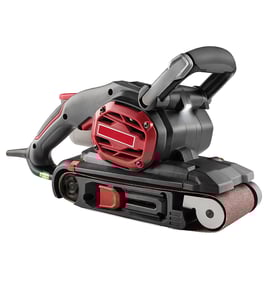

Which type of orbital sander is best?
For most woodworking, the best “orbital sander” type depends on your goal: a random-orbit sander is best for fast, swirl-free finish sanding on flat surfaces, while a Craftsman 315215700 oscillating sander is best for smooth sanding on curved or irregular shapes using sanding sleeves. See the owner's manual for the sanding sleeve sizes and setup details.
Quick pick: which sander type fits the job?
- Random-orbit sander (ROS): best all-around for flat panels, doors, tabletops
- Finish/orbital (sheet) sander: best for light finishing and sanding between coats
- Oscillating spindle sander (like model 315215700): best for inside curves, cutouts, and shaped edges
- Belt sander: best for aggressive stock removal and leveling (not final finish)
What your Craftsman 315215700 does best
This model is designed for fast, smooth sanding of curved and irregular shaped wood surfaces. It uses sanding sleeves and an oscillating spindle motion (the spindle rises and falls as it rotates) to reduce burning and help spread wear across the abrasive.
Model-specific sanding sleeve capacity
| Item | Craftsman 315215700 spec |
|---|---|
| Accepted sanding sleeve diameters | 1/2 in. through 3 in. |
| Sanding sleeve height | 4-1/2 in. |
| Max workpiece thickness you can sand | 3-11/16 in. |
| Oscillating range | 5/8 in. |
How to choose “best” for your shop
| If you mostly sand... | Best choice | Why |
|---|---|---|
| Flat surfaces | Random-orbit sander | Fast removal with fewer visible swirl marks |
| Tight inside curves | Oscillating spindle sander | Sleeves match radii and the oscillation helps smooth the cut |
| Between coats | Finish/orbital sheet sander | Gentle, controlled sanding |
Why it matters
Choosing the right sander type saves time and abrasives, and it prevents common problems like swirl marks on flat panels or uneven sanding on curved edges.
Last updated: February 2026
What are the parts of a sander?
On the Craftsman 315215700 oscillating sander, the main “parts” are the sanding system (spindle, sanding sleeve, rubber spindle, throat plate, washer, and hex nut), the drive system (motor and oscillating mechanism), and the support features (table/cabinet, switch, and dust port). See the owner's manual for the exact included accessories and safe setup.
Core parts you will see on this model
These are the most common components you will handle during normal use and setup:
- Sanding sleeve (different diameters and grits; the tool ships with an 80-grit sleeve installed)
- Spindle (the shaft the sleeve mounts to)
- Rubber spindle (expands to grip larger sanding sleeves when tightened)
- Throat plate (must match the sanding sleeve size to prevent pinching and pull-down)
- Upper spindle washer and hex nut (clamp the sleeve and rubber spindle in place)
- Dust exhaust port (standard 2-1/4 in. port for a vacuum hose connection)
How the sanding assembly works (quick reference)
On the 315215700, the 1/2 in. sanding sleeve mounts differently than the larger sleeves.
| Sanding sleeve size | Uses rubber spindle? | What holds it tight? | What else must match? |
|---|---|---|---|
| 1/2 in. sleeve | No | Washer + hex nut on top of spindle | Throat plate sized for 1/2 in. sleeve |
| Larger sleeves (up to 3 in.) | Yes | Rubber spindle expands when hex nut is tightened | Throat plate and sleeve size must match |
Why it matters
Using the correct throat plate, sanding sleeve, and rubber spindle combination helps prevent finger pinch points, reduces the chance of the workpiece being pulled down between the throat plate and sleeve, and keeps sanding smooth and controlled.
Related parts categories (common across many sanders)
Depending on the sander style, you may also see these assemblies:
- Motor brushes and power cord
- Switch and safety key
- Bearings and bushings
- Fan/blower for cooling and dust movement
- Housings, handles, and fasteners
Last updated: February 2026
What is a power sander?
A power sander is a motor-driven tool that sands faster and more evenly than hand sanding by moving an abrasive surface against the material. For the Craftsman 315215700 oscillating sander, the sanding spindle both rotates and moves up and down (oscillates) to smooth curved or irregular wood and plastic surfaces.
How the Craftsman 315215700 power sander works
This model is an oscillating spindle sander. The spindle rises and falls as it rotates, which helps reduce swirl marks and spreads wear across the sanding sleeve.
- Uses sanding sleeves (abrasive cylinders) that fit over rubber spindles
- Accepts 1/2 in. through 3 in. sanding sleeves that are 4-1/2 in. tall
- Oscillating range is 5/8 in.
- Designed for fast, smooth sanding on curved and irregular shapes
- Runs on 120 volts, 60 Hz, AC household power
What you can sand (and what you should not)
The 315215700 is intended for specific materials and safe-use limits.
- Sand: wood surfaces
- Sand: plastics
- Do not sand: metals (sparks can ignite dust)
- Do not wet sand (shock risk)
- Avoid extended sanding on fiberglass, wallboard, spackling compounds, or plaster (abrasive dust accelerates wear)
Quick selection guide: sanding sleeve grit
Choosing the right grit controls speed and finish quality.
| Grit range | Best for | Typical result |
|---|---|---|
| Coarse | Heavy stock removal, leveling rough spots | Fast removal, visible scratches |
| Medium | Smoothing after coarse grit | Reduces coarse scratches |
| Fine | Final finishing passes | Smoothest surface |
Why it matters
Using the correct sanding sleeve size and grit helps you get a cleaner finish, reduces burning and chatter, and prevents damage to the rubber spindle (never run the sander without a sanding sleeve installed).
For operating features, sleeve sizes, and safety rules specific to this model, use the owner's manual.
Last updated: February 2026
Can you replace the pad on a sander?
Yes. On the Craftsman 315215700 oscillating sander, you can replace worn or damaged sanding pads and other wear items as part of normal maintenance. Always unplug the sander first and follow the disassembly and reassembly steps in the owner's manual.
What “pad” means on this model
This model uses several parts people commonly call a “pad,” depending on where the wear is:
- Sanding sleeve (the abrasive sleeve that actually sands)
- Rubber spindle (the expandable drum under most sleeve sizes)
- Throat plate (the insert around the sanding area)
- Spindle washers and hex nut (the hardware that clamps the sleeve)
Basic replacement steps (typical)
Use these steps as a safe, model-appropriate overview; match the exact order and parts for your sleeve size in the owner's manual.
- Switch OFF, remove the switch key (if equipped), and unplug the tool
- Remove the hex nut and upper spindle washer
- Remove the sanding sleeve; then remove the rubber spindle and throat plate (as applicable)
- Clean sawdust from the throat plate area and under the lower spindle washer
- Reinstall parts in the correct order; tighten the hex nut snugly (do not overtighten)
Important fit and assembly notes
The manual calls out a few details that prevent poor sanding and oscillation problems:
| Item | What to do | Why it matters |
|---|---|---|
| Lower spindle washer | Install with the fin side down | Fins help push dust out; buildup can stop oscillation |
| Throat plate | Use the smallest opening that clears the sleeve | Reduces snagging and improves control |
| 1/2-in. sanding sleeves | Sleeve mounts directly to the spindle shaft (no rubber spindle) | Correct fit and proper clamping |
Why it matters
A worn sleeve or damaged rubber spindle can cause slipping, vibration, burning, and poor finish quality. Keeping the throat plate area clean also helps maintain the oscillating motion and dust exhaust performance.
Last updated: February 2026
How many watts is a random orbital sander?
Most random orbital sanders are in the 200 to 500 watt range, with heavy-duty models above 500 watts. For the Craftsman model 315215700 (an oscillating sander), the electrical label and specs show 3.5 amps at 110 to 120 volts, which equals about 385 to 420 watts. See the owner's manual for the exact rating.
Converting amps to watts (what the label means)
Many sanders list amps instead of watts. Use this quick estimate:
- Watts (W) = volts (V) × amps (A)
- Use 120V for a standard household circuit
- This is input power draw, not the exact sanding power at the sleeve
- Low voltage from long extension cords reduces performance
| What you have | Example | What it tells you |
|---|---|---|
| Amps and volts | 3.5A at 110 to 120V | About 385 to 420W input |
| Watts listed | 300W | Same idea; input power draw |
What wattage affects in real sanding
Higher wattage (or higher amps at the same voltage) helps the motor hold speed when sanding.
- Better for hardwoods and aggressive grits
- Less stalling when you apply pressure
- More consistent finish on larger workpieces
- Works best when dust collection is clear and sleeves are not clogged
Why it matters
Matching power to the job helps prevent stalling, burning the wood, and overheating the motor. For the Craftsman 315215700 oscillating sander, keeping the dust exhaust port clear and using the correct sanding sleeve size helps it perform at its rated input.
Last updated: February 2026