Owner’s manual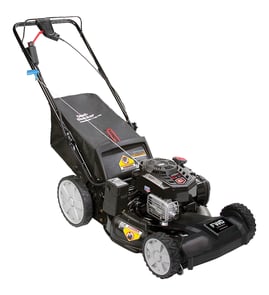



Who makes the engines for Senix lawn mowers?
For the Senix LSSG-M1 gas walk-behind mower, the engine is made by Briggs & Stratton. The model’s operator manual lists the engine as Briggs & Stratton and also specifies unleaded gasoline and SAE 30 engine oil for operation and maintenance (see the LSSG-M1 operator’s manual).
Use these quick checks to verify what you have in your yard:
- Check the engine shroud decal for the Briggs & Stratton name and engine family
- Match the mower model number to LSSG-M1 on the product label
- Review the “Product specifications” section in the manual
- Use the engine model and type numbers when ordering engine-specific parts (spark plug, air filter)
Because the LSSG-M1 uses a Briggs & Stratton engine, many tune-up and fuel-system items are selected by the engine model/type, not just the mower model.
| Item you’re servicing | What to match it to | Example |
|---|---|---|
| Spark plug, air filter, carburetor parts | Engine model/type numbers | Briggs & Stratton engine label |
| Blade, deck hardware, wheels, drive parts | Mower model LSSG-M1 | Senix mower parts listing |
Knowing the engine manufacturer helps you get the right maintenance parts and procedures, especially for starting, fuel, and oil requirements. It also speeds up troubleshooting when the mower will not start or runs rough.
Last updated: February 2026
Where are Senix lawn mowers made?
Senix lawn mowers, including the Senix LSSG-M1 gas walk-behind mower, are manufactured in China and designed for the North American market. For the most accurate model-specific details, we recommend confirming the identification information in your LSSG-M1 operator’s manual.
Use the model and serial information on your mower to match parts, manuals, and maintenance specs.
- Check the model number label and confirm it reads LSSG-M1
- Record the serial number and date of purchase for warranty and service
- Match the engine type listed in the manual (this model uses a Briggs & Stratton engine)
- Use the manual’s maintenance section for oil and fuel guidance (engine oil is listed as SAE 30)
Even when a mower is manufactured in one country, parts sourcing and service procedures are typically standardized for the market it is designed for.
| What you’re checking | Why it matters | Where to look |
|---|---|---|
| Model number (LSSG-M1) | Ensures correct parts diagrams and fit | Mower ID label, manual cover |
| Engine brand/model | Determines tune-up parts and procedures | Engine label, engine manual |
| Fuel and oil specs | Prevents starting and performance problems | Operator’s manual and engine manual |
Knowing where the mower is made is helpful, but matching the exact model number and engine information is what prevents wrong-part orders and avoids issues like hard starting, poor cutting performance, or excessive vibration.
Last updated: February 2026
Is Senix a good brand for lawn mowers?
Senix is a solid choice for many homeowners who want a straightforward, easy-to-maintain walk-behind mower. For the Senix LSSG-M1, the operator’s manual calls out a Briggs & Stratton engine and a 2-year limited warranty, which are strong indicators of a dependable, mainstream design when it’s maintained correctly (oil, fuel, blade care). See the LSSG-M1 operator’s manual for the exact maintenance schedule and safety rules.
A good mower is one that starts reliably, cuts cleanly, and stays safe and controllable over time.
- Starts consistently with proper fuel and fresh oil (the manual specifies SAE 30 engine oil)
- Cuts evenly with a sharp, balanced blade (reduces vibration and deck wear)
- Has clear safety controls (blade control handle, safe starting procedure)
- Is easy to service seasonally (oil change, cleaning, storage steps)
- Has parts support for wear items (blade hardware, fasteners, drive components)
Based on the manual excerpts for model LSSG-M1, here are the key ownership factors.
| Feature | What it tells you | Why it matters |
|---|---|---|
| Briggs & Stratton engine | Common, widely serviced engine platform | Easier routine maintenance and troubleshooting |
| SAE 30 oil specified | Standard small-engine oil spec | Helps protect the engine in warm-season mowing |
| 2-year limited warranty | Manufacturer coverage window | Adds confidence for typical homeowner use |
Most “brand quality” comes down to upkeep and correct operation.
- Use fresh unleaded gasoline; don’t store old fuel in the tank during off-season
- Change oil while the engine is warm before storage
- Keep the underside of the deck clean to maintain airflow and cut quality
- Sharpen and balance the blade; an unbalanced blade causes vibration and can damage the mower
- Tighten blade hardware to the manual’s torque spec when reinstalling
Helpful DIY reading: how to winterize a lawn mower, how to sharpen a lawn mower blade.
A mower that’s easy to maintain and has a common engine platform typically delivers better real-world reliability than a “premium” mower that’s neglected. Following the LSSG-M1 manual’s fuel, oil, and blade guidance prevents hard starting, rough running, and excessive vibration.
Last updated: February 2026
How do I start my SENIX lawn mower?
To start your Senix LSSG-M1 gas walk-behind mower, you hold the blade control handle against the upper handle, then pull the recoil starter rope with a rapid, continuous stroke until the engine starts. Before starting, make sure the engine has the correct oil and fresh unleaded gasoline (per the LSSG-M1 operator’s manual).
- Move the mower outdoors to a well-ventilated area.
- Check engine oil level; add the recommended oil type if needed.
- Fill with fresh unleaded gasoline.
- Stand behind the mower in the operator position.
- Pull the blade control handle back against the upper handle and keep holding it.
- Pull the recoil starter handle quickly; let the rope rewind slowly.
- Repeat pulls until the engine starts.
| Control | Where it is | What it does |
|---|---|---|
| Blade control handle | Upper handle | Must be held against the handle to start and keep the engine running; releasing it stops the engine. |
| Recoil starter rope/handle | On the engine | Spins the engine fast enough to start when pulled. |
| Drive control | Upper handle | Engages self-propelled drive when pushed forward; releasing returns to neutral. |
- Confirm you are holding the blade control handle fully against the upper handle while pulling.
- Use a fast, full-arm pull; do not “short pull” the rope.
- Use fresh fuel; old gas can prevent starting.
- Check the spark plug connection and condition.
- Verify the mower is on level ground and the blade area is clear of heavy grass buildup.
On the LSSG-M1, the blade control handle is a safety interlock; the engine is designed not to run unless that handle is held. Correct oil and fuel also prevent hard starting and reduce engine wear.
Last updated: February 2026
How to add oil to SENIX lawn mower?
To add oil to your Senix LSSG-M1 gas walk-behind mower, set the mower on level ground, remove the oil fill cap/dipstick, and add the correct engine oil slowly until the dipstick shows the proper level. The mower ships without oil, so fill it before starting.
- Shut the engine off and let it cool.
- Park on a flat, level surface so the dipstick reading is accurate.
- Keep the mower upright; do not tip it more than necessary.
- Wipe dirt away from the oil fill area so debris does not fall into the engine.
- Remove the oil fill cap/dipstick (oil tank cap).
- Insert a clean funnel into the oil fill opening.
- Pour in a small amount of oil, then wait a few seconds for it to settle.
- Reinsert the dipstick fully, remove it, and check the level.
- Repeat until the oil reaches the “full” mark on the dipstick; do not overfill.
- Reinstall the cap/dipstick securely and wipe up any spills.
For oil type and capacity, follow the engine-specific instructions in the LSSG-M1 owner’s manual.
- Overfilled oil: Can cause smoking, hard starting, or oil in the air filter.
- Underfilled oil: Can quickly damage the engine.
- Wrong oil viscosity: Can make starting harder in cold weather or reduce protection in heat.
| Check | What “good” looks like | What to do if it’s not right |
|---|---|---|
| Dipstick reading | Oil at the full mark | Add small amounts and recheck |
| Cap/dipstick fit | Tight and seated | Reseat and tighten |
| Spills on deck | None | Wipe clean before running |
The LSSG-M1 is shipped without gasoline or oil in the engine, and running it low on oil can damage the engine fast. Filling to the correct level helps the mower start easier and protects internal engine parts.
Last updated: February 2026
What is a SENIX lawn mower?
A Senix lawn mower is a walk-behind mower made by Senix for cutting grass in residential yards; the Senix LSSG-M1 is a 21-inch gas model designed for routine mowing, with features like multiple cutting heights and bagging, mulching, or side-discharge options (see the LSSG-M1 operator’s manual).
Senix built the LSSG-M1 to cover the core mowing jobs most homeowners need:
- Cut grass with 6 height settings (about 1.25 in. to 3.75 in.)
- Mulch by default (shipped as a mulcher)
- Bag clippings using the grass catcher
- Side-discharge clippings using the side discharge cover
- Provide self-propelled drive engagement using the drive control on the handle
Here are the model-specific highlights pulled from the manual.
| Item | What it means for you |
|---|---|
| Fuel type | Unleaded gasoline |
| Engine oil | SAE 30 |
| Engine brand | Briggs & Stratton |
| Cutting height range | 1.25 in. to 3.75 in. (6 positions) |
Knowing whether you have a gas or cordless Senix mower helps you buy the right maintenance items (oil, fuel stabilizer, blade hardware) and follow the correct starting and storage steps. For the LSSG-M1, correct fuel and SAE 30 oil use are essential for reliable starts and long engine life.
These guides match common walk-behind mower needs:
- How to sharpen a lawn mower blade
- How to winterize a lawn mower
- How to keep lawn mower gas from going bad
Last updated: February 2026
What are the most common lawn mower repairs?
The most common repairs on the Senix LSSG-M1 gas walk-behind mower involve basic tune-up and safety-related items: getting the engine to start, restoring power, stopping surging, fixing drive issues, and correcting vibration after hitting debris. Our LSSG-M1 owner's manual outlines key safety steps and routine maintenance that prevent many of these problems.
- Won’t start: old fuel, fouled spark plug, dirty air filter, or a stuck starter rope.
- Runs rough or surges: fuel restriction (stale gas, dirty carburetor passages) or airflow issues.
- Loss of power: clogged air filter, dull blade loading the engine, heavy or wet grass.
- Excessive vibration: bent blade or loose fasteners, often after striking a foreign object.
- Self-propel won’t move: drive control/cable out of adjustment, worn belt or transmission components.
- Shut it down safely: stop the engine, disconnect the spark plug wire, and ground it against the engine before service (per the manual).
- Inspect for impact damage: if you hit a rock or stick, check the blade, deck, and fasteners; repair damage before restarting.
- Confirm controls work: releasing the blade control and drive control should stop the engine and blade.
- Check maintenance basics: keep the engine area clear of grass and debris; tighten nuts and bolts.
| Symptom | Most likely area | Best first action |
|---|---|---|
| Won’t start | Fuel, spark, air | Drain/refill fresh fuel; check spark plug; clean air path |
| Surging | Fuel delivery | Refresh fuel; clean carburetor; verify choke operation |
| Poor cut, bogging | Blade, deck buildup | Sharpen blade; clean underside of deck |
| Vibration | Blade/fasteners | Inspect blade; tighten hardware; replace damaged parts |
Many “repairs” are really safety and maintenance corrections. The manual stresses keeping fasteners tight, never tampering with safety devices, and inspecting the mower after striking objects because vibration and thrown debris can become a serious hazard.
- How to sharpen a lawn mower blade
- Lawn mower wont start troubleshooting video spark plug and ignition
Last updated: February 2026