Owner’s manual



What is the typical lifespan of a gas snowblower?
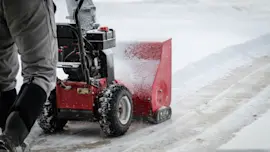
A gas snowblower like the Briggs 1696619-04 typically lasts 10 to 20 years with normal residential use and consistent maintenance. Most early “end-of-life” failures come from neglected fuel storage, worn belts, and wear items at the housing edge, not the engine itself.
What most affects lifespan
- Off-season storage: stale fuel and varnish in the carburetor shorten life fast.
- Oil changes: clean oil protects the engine under cold-load operation.
- Wear parts: scraper bar and skid shoes take constant abrasion.
- Belt and drive condition: slipping belts overheat and reduce throwing performance.
- Corrosion control: salt and wet storage accelerate rust on fasteners and housings.
Maintenance schedule that keeps a snowblower in the 10 to 20 year range
Use the intervals in your owner's manual. As a practical baseline:
| Task | Typical interval | What you’re preventing |
|---|---|---|
| Change engine oil | Every season (or ~25 hours) | Premature engine wear |
| Stabilize or drain fuel | Every off-season | Hard starting, carb issues |
| Inspect/adjust belts | Every season | Auger/drive slip and heat damage |
| Check scraper bar/skid shoes | Mid-season and end of season | Housing wear, poor scraping |
Common “it’s wearing out” signs (and what to check first)
- It won’t throw snow far: inspect the auger drive belt and auger engagement.
- It leaves a thick layer of snow: check the scraper bar and skid shoe height.
- It pulls to one side: skid shoes unevenly worn or misadjusted.
- It vibrates or clunks: auger hardware loosened or auger components worn.
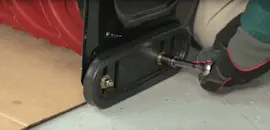
If you’re replacing wear items, we often see customers start with the snowblower scraper bar kit 84003859 and the snowblower skid shoe 84003710 to restore scraping and protect the housing.
Why it matters
A snowblower’s engine can run for many years, but worn wear parts and poor storage make the machine feel “old” long before it truly is. Keeping the scraper edge set correctly and the fuel system protected usually delivers the biggest lifespan gains for the least cost.
Last updated: February 2026
Is sae 30 the same as 5W30 for snowblower?
No. SAE 30 and 5W-30 are not the same oil for your Briggs 1696619-04 gas snowblower; 5W-30 is a multi-viscosity oil that flows better for cold starts, while SAE 30 is a single-weight oil that gets too thick in freezing temperatures and can make starting harder.
What the numbers mean (SAE 30 vs 5W-30)
- SAE 30: single-grade oil; it behaves like a “30 weight” all the time.
- 5W-30: multi-grade oil; it behaves like a 5 weight when cold (the “W” is for winter) and like a 30 weight when hot.
- In snowblower use, cold-flow matters because the engine is started and loaded in low temperatures.
| Oil type | Cold starting | Cold lubrication | Typical snowblower use |
|---|---|---|---|
| SAE 30 | Poor in cold weather | Slower oil flow at startup | Better for warm conditions |
| 5W-30 | Strong in cold weather | Faster oil flow at startup | Better for winter operation |
What we recommend for winter operation
For most snowblower engines, 5W-30 is the better choice for cold weather because it circulates quickly at startup and helps reduce wear during the first minute of running.
Use these quick checks before you fill:
- Confirm the exact oil recommendation and temperature range in the owner's manual.
- Check the oil level with the machine on a level surface.
- Do not overfill; too much oil can cause smoking and performance issues.
- If you switch oil types, drain the old oil fully (warm engine drains faster).
Why it matters
Oil that is too thick in the cold can delay lubrication to critical moving parts (crankshaft, cam, bearings). That can mean harder starting, rough running right after startup, and faster wear over time.
Last updated: February 2026
How to find snowblower model number?
For your Briggs snowblower, the model number is typically on an identification label or stamped into the frame or auger housing. For this unit, the model number you will use to look up parts and diagrams is 1696619-04; confirm it against the tag and then reference the owner's manual.
Where to look on a snowblower
Check these common locations first (wipe off snow, salt, and grime so the numbers are readable):
- Frame near the engine (often on the main chassis rail)
- Rear of the unit near the axle area or between the wheels
- Side of the auger housing (front bucket area)
- Under the handle area on the base frame
- Stamped metal near the engine mount plate (use a flashlight)
Model number vs. engine numbers (what you actually need)
Snowblowers often have more than one ID. Use this quick guide:
| What you’re identifying | What it’s used for | Where it’s usually found |
|---|---|---|
| Snowblower model number (example: 1696619-04) | Correct parts diagrams for the machine (auger, chute, drive, controls) | Frame or auger housing tag |
| Engine model/type/code | Engine-specific parts (carburetor, ignition, recoil starter) | Engine shroud, valve cover area, or recoil housing |
Tips to read the tag correctly
- Copy the full model number exactly, including dashes (use 1696619-04, not a shortened version).
- Record the serial number too; it can help match production variations.
- If the label is damaged, look for a stamped number on the frame nearby.
Why it matters
Using the correct model number prevents ordering the wrong parts for wear items and repairs, such as a snowblower scraper bar kit 84003859, snowblower skid shoe 84003710, or snowblower auger drive belt 770796 that must match your exact build.
Last updated: February 2026
Is it cheaper to repair or replace a snowblower?
It’s cheaper to repair your Briggs 1696619-04 gas snowblower when the fix is a normal wear item and the total repair cost stays under about half the price of a comparable new snowblower. Replacement makes more sense when you’re facing repeated breakdowns or major drivetrain or engine work.
A practical decision rule (cost vs. value)
Use this quick rule to decide:
- Repair when the issue is a wear part (belt, cable, skid shoes, scraper bar) and the machine is otherwise solid.
- Replace when the repair estimate is 50% or more of the cost of a similar new unit.
- Replace when you have multiple problems at once (for example: auger drive plus chute rotation plus gearbox leak).
- Replace when the frame, auger housing, or key structural areas are badly worn or bent.
- Repair when you can restore safe operation with a straightforward parts swap and basic adjustments.
For model-specific maintenance intervals, adjustments, and safety checks, follow the owner's manual.
Common “repair” scenarios for this model
These are the types of repairs that usually stay cost-effective because they’re targeted and predictable:
- Worn skid shoes: replace the snowblower skid shoe 84003710
- Worn scraper edge: replace the snowblower scraper bar kit 84003859
- Auger won’t engage or slips: inspect/replace the snowblower auger drive belt 770796
- Chute rotation binds or skips: inspect the snowblower chute rotation bevel gear 770070
Quick comparison
| Situation | Usually cheaper choice | Why |
|---|---|---|
| One worn wear-part (belt, skid shoe, scraper bar) | Repair | Low parts cost, fast install |
| One-time failure with otherwise good condition | Repair | Restores full function |
| Multiple systems failing in one season | Replace | Costs add up quickly |
| Major engine or gearbox damage | Replace | High labor and parts cost |
Why it matters
A snowblower that’s properly scraping and feeding snow (scraper bar, skid shoes, auger drive) clears faster, throws farther, and is less likely to clog or surge. Fixing wear parts early also helps protect higher-cost components like the auger gearbox and drive system.
Last updated: February 2026