
What should you never cut with a miter saw?
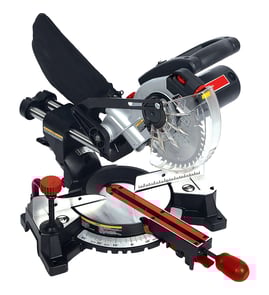
On a Ryobi TSS-220 compound miter saw, never cut tiny loose pieces near the blade, never rip-cut boards (cutting with the grain), and never cut materials the saw is not designed for (such as steel, iron, brick, or concrete). These cuts raise the risk of kickback, binding, and loss of control.
Materials and cuts to avoid
- Small, short offcuts that cannot be clamped securely
- Rip cuts (use a table saw or circular saw setup instead)
- Ferrous metals (steel, iron) unless your saw is specifically equipped and rated for metal cutting
- Masonry (brick, tile, concrete, stone)
- Freehand cuts without the fence support and proper work holding
- Warped, twisted, or bowed stock that rocks on the table or won’t sit flat against the fence
Safer alternatives (what to do instead)
Use the tool that matches the material and the cut:
| Task or material | Better choice than a miter saw | Why it’s safer |
|---|---|---|
| Rip-cutting lumber | Table saw, track saw, or circular saw with a guide | Controls long cuts and reduces binding |
| Very small parts | Cut a longer piece first, then trim with a stop block and clamp | Keeps hands away from the blade path |
| Steel or iron | Metal-cutting chop saw or band saw | Correct blade speed and guarding |
| Brick, tile, concrete | Masonry saw or angle grinder with masonry wheel | Correct abrasive wheel and dust control |
Setup rules that prevent dangerous cuts
- Keep the workpiece flat on the table and tight to the fence.
- Clamp whenever the piece is short, narrow, or prone to shifting.
- Let the blade reach full speed before entering the cut; don’t force the feed.
- Support long boards so they don’t lift, twist, or pinch the blade.
- Stop immediately if you feel binding, chatter, or the workpiece starts to move.
Why it matters
A miter saw is built for controlled crosscuts and miter/bevel cuts with the work supported by the fence and table. When the material can’t be held securely or the blade isn’t designed for it, the saw can grab the work and throw it (kickback) or pull your hands toward the blade.
For general shop safety habits that apply to DIY repairs and tool use, see are diy appliance repairs safe.
Last updated: February 2026
Is it worth getting a double bevel mitre saw?
Yes, a double bevel miter saw is worth it when you regularly cut crown molding, complex trim, or lots of opposing bevels because it lets you bevel left and right without flipping the workpiece. For occasional DIY cuts, a single bevel saw is usually the better value.
What “double bevel” really buys you
A double bevel (dual bevel) saw tilts both directions, so you keep the same face of the board against the fence and table for matching cuts.
- Faster workflow on paired cuts (left and right corners)
- Fewer handling errors because you do not flip long stock
- More consistent fit on trim and crown molding
- Less time re-clamping and re-checking your layout lines
- Better control when the workpiece is awkward or heavy
When it is worth the extra cost
Double bevel is a strong upgrade if most of your projects include any of the following:
- Crown molding (nested or sprung) and decorative profiles
- Baseboard and door/window casing with frequent inside and outside corners
- Repetitive production cuts where speed matters
- Long boards where flipping is inconvenient or unsafe
When a single bevel is enough
If your work is mostly framing, decking, or simple crosscuts, single bevel is typically all you need.
| Your typical work | Single bevel | Double bevel |
|---|---|---|
| Basic crosscuts, 90° cuts | Best value | Nice but not necessary |
| Occasional trim | Works fine | Saves time sometimes |
| Frequent trim and crown | Slower, more flipping | Best choice |
| Long/heavy stock | More repositioning | Less handling |
Why it matters for your Ryobi TSS-220
Your Ryobi TSS-220 compound miter saw can handle many common miter and bevel tasks, but a double bevel design mainly reduces the number of times you must flip or reorient the board to mirror a cut. That convenience is what you are paying for.
Practical buying checklist (quick decision)
- If you cut crown or trim weekly: choose double bevel
- If you cut trim a few times a year: single bevel is enough
- If you often work alone with long boards: double bevel helps
- If budget is tight: spend first on a quality blade and stable stand
For more help using our site tools and features when shopping by model number, see how to enjoy all the online benefits we offer on our Sears PartsDirect.
Last updated: February 2026
What's the difference between a compound mitre saw and a sliding mitre saw?
A compound miter saw like the Ryobi TSS-220 tilts for bevel cuts and pivots for miter cuts; a sliding miter saw adds rails so the saw head can travel forward and back to cut wider boards. A sliding compound miter saw combines both for maximum capacity and versatility.
Quick comparison
| Feature | Compound miter saw (non-sliding) | Sliding miter saw | Sliding compound miter saw | |---|---|---| | Miter cuts (left/right) | Yes | Yes | Yes | | Bevel cuts (tilt) | Yes | Sometimes (often yes) | Yes | | Crosscut width capacity | Moderate | High | High | | Footprint and weight | Smaller, lighter | Larger, heavier | Largest, heaviest | | Best for | Trim, molding, framing blocks | Wider boards, shelving, decking | Wide boards plus angled trim work |
How it affects what you can cut
- Compound (non-sliding): Great for crown molding, baseboards, and most trim because it handles common miter and bevel angles accurately.
- Sliding: Better when you routinely crosscut wider stock (for example, wider shelving boards) because the blade can travel through the cut.
- Sliding compound: Best when you need both wide crosscuts and frequent bevel plus miter combinations.
What to consider before choosing
- Cut capacity: If you often cut wide boards, sliding is the practical upgrade.
- Accuracy and repeatability: Non-sliding compound saws are typically simpler to set and lock, which helps with repeat cuts.
- Shop space: Sliding saws need more clearance behind the fence for the rails.
- Maintenance: Sliding rails add moving parts; keeping them clean and aligned matters.
- Portability: If you move the saw job-to-job, a non-sliding compound saw is usually easier to transport.
Why it matters
Choosing the right style helps you avoid forcing wide stock through a saw that is at its limit, and it reduces rework on trim where tight miter and bevel accuracy is noticeable.
For more DIY safety basics before repairs or adjustments, see are diy appliance repairs safe.
Last updated: February 2026
Which Mitre saw is the most accurate?
The most accurate miter saw is the one that holds calibration and makes repeatable cuts after setup. For most users, a well-built 10 to 12-inch compound miter saw (often a non-slider for maximum rigidity) paired with a sharp, high-tooth-count blade delivers the best real-world accuracy.
What “most accurate” means in practice
Accuracy comes from repeatability and alignment, not just the brand name.
- Returns to the same miter and bevel angles every time (tight detents and locks)
- Blade is square to the table and fence at 0 degrees
- Minimal flex in the arm, pivot, and slide mechanism under load
- Fence stays flat and does not shift after adjustment
- Clean cuts from the right blade for the material
What tends to be most accurate (quick comparison)
| Tool setup | Accuracy potential | Best for | Main tradeoff |
|---|---|---|---|
| Non-sliding compound miter saw | Very high | Trim, smaller stock | Less crosscut capacity |
| Sliding compound miter saw | High | Wider boards | More parts that can develop play |
| Table saw with a sled | Very high | Joinery, repeat cuts | Slower for angle trim work |
Getting maximum accuracy from a Ryobi TSS-220
On a Ryobi TSS-220 compound miter saw, accuracy improves most when you tune the basics and address wear.
- Install a quality crosscut blade; replace any blade that wobbles or burns
- Square the fence to the blade with a reliable square
- Set the 0 degree bevel stop so the blade is truly vertical
- Confirm miter detents at 0, 45 left, and 45 right; adjust the pointer if needed
- Check for play in the pivot, table, or slide; tighten fasteners and replace worn components
Why it matters
A saw that is square but not repeatable still leaves gaps in miters. Tight detents, a rigid fence, and a sharp blade reduce re-cuts and help joints close cleanly on casing, frames, and trim.
If you are matching parts to your exact saw version, use how to find your appliance model number (and what it means for parts).
Last updated: February 2026
Where can I buy replacement parts for Ryobi?
For your Ryobi TSS-220 compound miter saw, the most reliable way to buy the correct replacement parts is to search by the exact model number TSS-220 on Sears PartsDirect. Matching the model number helps you avoid ordering look-alike parts that do not fit or mount correctly.
How we recommend finding the right part
- Confirm the model number on the saw’s data label: TSS-220
- Identify the failed area (blade guard, switch, motor, arbor, fence, base, or power cord)
- Match the part description to your saw’s configuration (mounting points, connector style, hardware)
- Compare your original part’s markings (stamped numbers, terminal layout, dimensions)
- Order related wear items (springs, screws, washers) if they are bent, stripped, or missing
Common Ryobi miter saw parts people replace
Even when you are still narrowing down the exact item, these are frequent replacement categories for a corded compound miter saw like the TSS-220:
| Part type | What it affects | Common symptom |
|---|---|---|
| Power switch | Start/stop control | Saw will not start or cuts out |
| Carbon brushes (universal motor) | Motor power delivery | Weak power, heavy sparking, intermittent run |
| Blade guard components | Safety and blade coverage | Guard sticks or does not return |
| Arbor hardware | Blade mounting | Blade wobble or loosening |
| Power cord/strain relief | Electrical connection | Intermittent power, visible damage |
Before you order: quick checks that prevent wrong-part returns
- Verify blade diameter and arbor size printed on the blade and saw label
- If the saw is dead, test the outlet and extension cord first
- Inspect the cord and plug for cuts, melted spots, or loose prongs
- Unplug the saw before inspecting the switch, cord connections, or brush caps
Why it matters
Ryobi tools often have similar-looking versions across production runs. Using the exact TSS-220 model number keeps the repair focused on parts that match your saw’s fit, wiring, and mounting points.
Last updated: February 2026