Owner’s manual
 Error Codes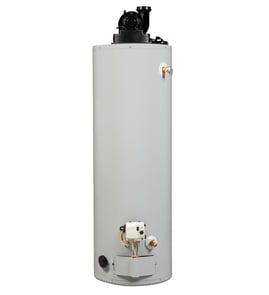




How long does an A. O. Smith 50 gallon water heater last?
An A. O. Smith 50-gallon gas water heater like model GVR50-200 typically lasts 10 to 12 years. With consistent maintenance (especially sediment flushing and anode rod checks) and stable water quality, it commonly reaches the upper end of that range.
Typical lifespan and what affects it
The biggest factors are water quality, how hard the heater works, and whether corrosion protection is maintained.
- Water hardness and sediment: more buildup means more stress on the tank and burner.
- Anode rod condition: a depleted anode speeds up tank corrosion.
- Temperature setting: higher settings increase wear and scale.
- Thermal expansion: pressure swings can cause nuisance relief-valve discharge.
- Installation quality: correct venting and gas combustion setup reduce long-term issues.
Maintenance that helps you reach the full lifespan
Use the schedule and procedures in the GVR50-200 owner's manual.
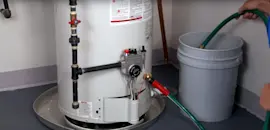
- Flush a few gallons from the tank periodically to reduce sediment.
- Inspect and replace the anode rod when it is heavily worn.
- Keep the burner area clean and the access door sealed.
- Watch for small, repeated discharge from the T&P valve and address expansion issues.
- Check for slow leaks at fittings and nipples before they become major.
Common replacement parts that support longevity
| What it helps with | Part you may need | When it matters most |
|---|---|---|
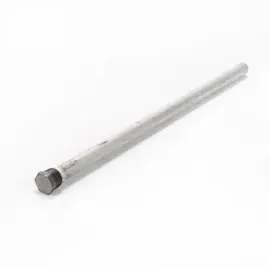
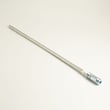
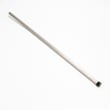
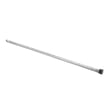
| Corrosion protection | Water heater magnesium anode rod 100108660 | Older tanks, aggressive water |
| Pilot reliability | Water heater thermocouple 100108267 | Pilot will not stay lit |
| Safe pressure relief | Water heater temperature and pressure relief valve 100108455 | Dripping, weeping, or age-related wear |
Why it matters
Once a tank begins to corrode internally, failure can happen quickly. Staying ahead of sediment and anode-rod wear is the most practical way to get the full service life from a 50-gallon gas water heater.
Last updated: February 2026
What is the average cost of a 50 gallon gas water heater?
A typical 50-gallon gas water heater usually runs about $600 to $1,200+ for the tank, and $900 to $3,100+ installed once you include labor, venting changes, gas piping, and code-required items. For your Ao Smith GVR50-200, the exact total depends most on installation complexity and what parts need replacement.
What drives the installed price most
- Venting type and changes (draft hood vs. power vent, chimney liner needs, clearances)
- Gas line sizing or modifications (pipe length and BTU load affect sizing)
- Water shutoff and piping updates (dielectric fittings, valves, connectors)
- Expansion control in closed systems (often an expansion tank)
- Permits and local code requirements
Typical cost ranges (what you can expect)
| Cost item | Common range | Notes |
|---|---|---|
| Water heater unit (50-gal gas) | $600 to $1,200+ | Higher for premium efficiency and specialty venting |
| Professional installation labor | $300 to $1,500+ | Varies by access, region, and complexity |
| Extra materials and upgrades | $0 to $800+ | Venting, gas piping, valves, expansion tank, disposal |
| Total installed cost | $900 to $3,100+ | Wide range because installs vary a lot |
Model-specific notes for the GVR50-200
- The gas input rating is listed on the water heater data plate; installers use it to confirm gas pipe sizing and capacity.
- If you have a closed water supply system, periodic dripping from the relief valve can be caused by thermal expansion; the manual recommends a diaphragm-type expansion tank sized at minimum 1.5 gallons per 50 gallons stored.
For operating, lighting, and installation-related details that can affect labor time and materials, use the GVR50-200 owner's manual.
Why it matters
Installed cost is mostly about safety and compatibility: correct venting, correct gas supply, and pressure control help prevent nuisance shutdowns, poor performance, and premature part wear (for example, on the gas control valve or pilot components).
Last updated: February 2026
What are signs of a failing water heater?
For the Ao Smith GVR50-200 gas water heater, the clearest failure warnings are water leaking at the tank or connections, persistent rumbling from sediment buildup, worsening hot-water performance, and water quality changes (rusty or sulfur odor). Use the GVR50-200 owner's manual to separate normal operating noises from problems.
Signs that need attention soon
- Water pooling under the heater, damp fittings, or corrosion streaks on the jacket
- Persistent rumbling or knocking during burner operation (sediment buildup)
- Hot water runs out fast, heats slowly, or swings from hot to lukewarm
- Rusty, gritty, or foul-smelling hot water (often anode rod or tank corrosion)
- Temperature and pressure relief valve weeping or discharging
- Pilot will not stay lit or goes out repeatedly
Normal vs. not normal (sounds and odors)
The manual describes some noises as normal (metal expansion and condensation sizzling). Ongoing loud rumbling is different; it points to sediment that can shorten tank life.
| Symptom | Normal? | What it points to |
|---|---|---|
| Light ticking during heat-up/cool-down | Yes | Metal expansion/contraction |
| Brief sizzling/popping near burner | Yes | Condensation in burner area |
| Persistent rumbling/knocking | No | Sediment buildup; drain and flush |
| Rotten egg smell in hot water | No | Anode rod reaction; water chemistry |
Parts commonly tied to these symptoms
- Water heater temperature and pressure relief valve 100108455 (leaking or discharging)
- Water heater thermocouple 100108267 (pilot will not stay lit)
- Water heater pilot assembly 100111380 (pilot and ignition issues)
- Water heater magnesium anode rod 100108660 (odor, discoloration, tank protection)
Why it matters
Leaks worsen over time, and sediment buildup can cause premature tank failure. Catching these symptoms early helps prevent property damage and keeps the burner and safety controls operating correctly.
Last updated: February 2026