
How often should you replace an edger blade?
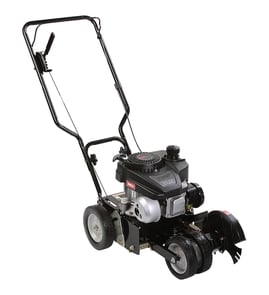
For a Mcclane edge trimmer (model 3), replace the edger blade when it stops cutting cleanly, shows chips or cracks, or has worn down noticeably. For most homeowners, that is typically once per season; heavy or commercial use can require replacement much more often.
Quick replacement guidelines
- Replace the blade if the edge looks rounded and the edger starts tearing turf instead of slicing.
- Replace immediately if you see cracks, missing chunks, or bending.
- Replace if the blade has worn down enough that it no longer reaches full edging depth.
- Replace after repeated rock or curb strikes that cause vibration.
- Replace if sharpening no longer restores a clean cut after one touch-up.
What changes the replacement interval?
| Usage pattern | Typical blade life | What you will notice first |
|---|---|---|
| Light homeowner use (weekly edging) | 1 season | Ragged edge, more passes needed |
| Moderate use (large yard, frequent edging) | 1 to 3 months | Slower cutting, more vibration |
| Heavy or pro use (daily) | Weekly to monthly | Poor cut quality, fast wear |
Replace vs. sharpen
In most cases, we recommend replacing an edger blade rather than repeatedly sharpening it.
- Sharpening can help briefly, but it also reduces blade diameter faster.
- A smaller blade can change cutting depth and edging consistency.
- A damaged blade (cracked, bent, heavily nicked) should always be replaced.
Why it matters
A worn blade makes the edger work harder, increases vibration, and can leave a jagged trench along sidewalks and driveways. Replacing the blade on schedule helps protect the spindle, bearings, and belt or drive components from unnecessary stress.
For help confirming you have the correct model identification before ordering parts, use how to find your appliance model number (and what it means for parts).
Last updated: February 2026
How to replace the blade on an edger?
To replace the blade on your Mcclane edger model 3, shut the engine off, disconnect the spark plug wire, then remove the blade retaining hardware (many edgers use a reverse-thread nut). Install the new blade in the same orientation and tighten securely.
Safety first
- Turn the engine off and let the muffler and blade area cool
- Disconnect the spark plug wire to prevent accidental starting
- Wear heavy gloves; edger blades are sharp
- Block the wheel or support the edger so it cannot roll or tip
- Work on a flat, stable surface
Blade replacement steps (typical Mcclane-style edger)
- Access the blade: Remove any debris shield or guard if it blocks the blade nut.
- Lock the blade: Hold the blade from turning (a block of wood against the blade works well).
- Remove the nut and washer:
- Many edgers use a reverse-thread (left-hand) nut, so you loosen it by turning clockwise.
- If yours is standard thread, it loosens counterclockwise.
- Remove the old blade and note the exact orientation (which side faces out).
- Install the new blade in the same orientation.
- Reinstall washer and nut, then tighten firmly.
- Reconnect the spark plug wire, then test-run briefly and recheck tightness.
Quick direction guide (most common)
| Fastener type | To loosen | To tighten |
|---|---|---|
| Reverse-thread (left-hand) nut | Clockwise | Counterclockwise |
| Standard-thread (right-hand) nut | Counterclockwise | Clockwise |
Why it matters
A correctly installed blade (proper orientation and tight hardware) cuts a clean edge, reduces vibration, and helps protect the spindle and bearings from damage.
Helpful tip for getting the right blade
If you are unsure which blade fits, confirm the full model identification on the edger and match it before ordering. Our guide, how to find your appliance model number (and what it means for parts), shows where to look and how to use it for parts selection.
Last updated: February 2026
Do I need to sharpen new edger blades?
No. For a Mcclane edge trimmer like model 3, a new edger blade is ready to use as-is; normal edging quickly “breaks in” the cutting edge, and the blade will develop a working edge after a short period of use.
What to do before the first use
- Confirm the blade is installed in the correct direction (rotation matches the edger’s drive).
- Tighten the blade hardware securely; recheck after the first few minutes of edging.
- Set cutting depth conservatively for the first pass (shallow cut reduces kickback and stalling).
- Clear the edging path of rocks, wire, and roots that can nick a new blade.
- Wear eye protection and gloves; debris can eject from the trench.
When sharpening actually helps (and when it does not)
Sharpening is only useful when the blade is dull from wear. It does not improve performance on a brand-new blade that already has a usable edge profile.
| Situation | Best action | Why |
|---|---|---|
| Brand-new blade | Use it without sharpening | The edge “seats” quickly in soil and turf |
| Blade is rounded and won’t cut cleanly | Lightly sharpen or replace | Restores bite and reduces bouncing |
| Blade is chipped, bent, or cracked | Replace the blade | Damage causes vibration and unsafe operation |
Why it matters
Over-sharpening a new edger blade can remove material unnecessarily and shorten blade life. A properly installed blade, correct depth setting, and steady pace usually make a bigger difference than a razor-sharp edge.
Helpful related guidance
If you are unsure you have the correct model identification before ordering a blade, use how to find your appliance model number (and what it means for parts).
Last updated: February 2026
What size blade does a McLane edger use?
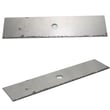
Most McLane walk-behind lawn edgers that use the 35-H7 style setup take a rectangular blade that’s about 2 inches wide by 9 inches long, commonly with a 1/2-inch center mounting hole. The sure match is the blade currently on your edger; measure it and match the mounting hole before ordering.
How to confirm the correct blade for your McLane 35-H7 edger
Use the existing blade as your template so the new blade clears the guard and fits the spindle correctly.
- Shut the engine off, let it cool, and disconnect the spark plug wire
- Measure blade length end-to-end (often 9 inches)
- Measure blade width (often 2 inches)
- Measure the center mounting hole diameter (often 1/2 inch)
- Check blade thickness so it seats flat and tight
- Note whether the blade is single-edge or double-edge
Quick spec checklist
| What to measure | Common size you’ll see | Why it matters |
|---|---|---|
| Length | 9 in. | Prevents guard contact and vibration |
| Width | 2 in. | Affects trench width and stability |
| Center hole | 1/2 in. | Must match the spindle/bolt |
Why it matters
A blade that’s too long, too wide, or drilled for the wrong center hole can wobble, cut poorly, or strike the guard. Matching the blade dimensions protects the spindle, belt drive, and engine crankshaft while keeping edging clean.
Make sure you’re using the full model identifier
Outdoor power equipment tags often show a longer model ID than what’s printed in a short heading. Use how to find your appliance model number (and what it means for parts) to locate the complete model information on the edger’s ID tag before selecting parts.
Last updated: February 2026