Owner’s manual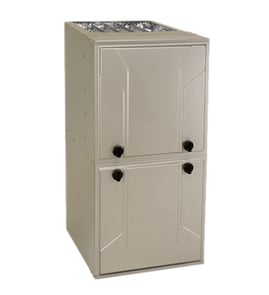

How much does it cost to replace a 60,000 BTU furnace?
Replacing a 60,000 BTU gas furnace typically costs $3,500 to $8,500 installed in the U.S., depending on efficiency level, venting changes, and labor in your area. For your Goodman GMPN060-3, confirm the exact input rating and setup details in the owner's manual.
What drives the total replacement cost
A furnace replacement price is usually a bundle of equipment plus installation work. The biggest cost swings come from:
- Efficiency tier (AFUE): higher-efficiency units often need more complex venting and condensate handling
- Venting and flue changes: reusing an existing vent is cheaper than reworking PVC or metal vent runs
- Gas line and shutoff updates: may be required to meet current code and sizing needs
- Electrical and thermostat work: new control wiring, new thermostat, or adding a common wire
- Ductwork modifications: transitions, plenums, or correcting airflow restrictions
- Permits and inspections: varies by location
Typical cost ranges (installed)
| Replacement scenario | What it usually includes | Typical installed cost |
|---|---|---|
| Basic like-for-like swap | Similar efficiency, minimal vent/duct changes | $3,500 to $5,500 |
| Mid-efficiency upgrade | Some venting or duct transitions | $5,000 to $7,000 |
| High-efficiency with venting changes | New PVC venting, condensate drain, more labor | $6,500 to $8,500 |
Model-specific notes for GMPN060-3
Your furnace documentation includes procedures for rating the furnace input and timing the gas meter, which are used to confirm the unit is firing at the correct BTU rate after setup or conversion. That matters when you replace a furnace because the installer must match:
- Input BTU (60,000 BTU class) and proper gas orifice sizing
- Altitude requirements (the manual references adjustments above 2,000 feet)
- Airflow and filtration (running without filters can cause nuisance limit trips)
Why it matters
A low bid can turn expensive if the new furnace needs venting, condensate drainage, or ductwork corrections to prevent short cycling, limit switch trips, and comfort problems. A properly sized and correctly vented 60,000 BTU furnace runs safer, quieter, and more efficiently.
Last updated: February 2026
What's the average lifespan of a Goodman furnace?
A Goodman gas furnace like model GMPN060-3 typically lasts 15 to 20 years. Consistent filter changes, keeping the blower compartment clean, and correcting overheating or ignition issues quickly are the biggest factors that help you reach the high end of that range.
Typical lifespan and what affects it
Most furnaces fail early due to airflow restrictions, repeated overheating, or neglected maintenance. For a condensing gas furnace, drainage and venting condition also matter.
- Airflow: Dirty filters or blocked returns can overheat the heat exchanger.
- Venting and drainage: Condensing furnaces must drain properly; freezing or a clogged trap can cause shutdowns.
- Electrical controls: Weak connections or failing boards can cause intermittent heat.
- Burner and ignition wear: Ignitor and flame sensing issues can increase cycling.
- Installation clearances: Tight installs make service harder and can contribute to heat buildup.
Maintenance that extends furnace life
Use the maintenance schedule and safety guidance in the owner's manual.
- Replace or clean the air filter on a regular schedule.
- Keep the area around the furnace clear; do not store combustibles near the cabinet.
- Make sure the condensate drain and trap stay clear and protected from freezing.
- Listen for blower changes (rubbing, vibration) that can signal wheel or motor issues.
- Schedule a yearly inspection of burners, flame signal, and venting.
Quick reference: lifespan vs. what you’re seeing
| What you notice | Common cause | What we recommend |
|---|---|---|
| Short cycling, frequent limit trips | Overheating from low airflow | Check filter, vents, blower cleanliness; verify limit switch operation |
| No ignition or intermittent heat | Control/ignition problem | Inspect wiring and ignitor circuit; test components safely |
| Loud blower, poor airflow | Dirty or damaged blower wheel | Clean blower area; replace worn blower components if needed |
| Water around furnace | Drain or trap issue | Clear trap, confirm proper routing and freeze protection |
Why it matters
A furnace that is overheating or short cycling can wear out major components faster (heat exchanger, blower, controls). Addressing airflow, venting, and condensate drainage early helps your GMPN060-3 run more efficiently and last closer to 20 years.
Last updated: February 2026
What does code 3 mean on a furnace?
On a Goodman GMPN060-3 gas furnace, code 3 (often 3 flashes) commonly points to a pressure switch problem (the switch is not proving draft). That usually means the furnace is not sensing proper venting through the inducer and vent system; use the fault chart and wiring diagram in the owner's manual to confirm the exact definition for your control.
What to check first (safe homeowner checks)
- Replace or clean the air filter; restricted airflow can contribute to nuisance shutdowns.
- Make sure supply registers and return grilles are open and not blocked.
- Check the vent/intake terminations outside for snow, ice, leaves, or nests.
- Look for a loose, cracked, or water-filled pressure switch hose.
- If your system has condensate drainage, make sure the drain path is open and not backed up.
What the furnace is trying to verify
The pressure switch is a safety device that confirms the inducer is moving combustion gases correctly before ignition. If the switch does not close (or opens during a heat call), the control stops the ignition sequence to prevent unsafe operation.
| What you observe | Most likely area | Typical next step |
|---|---|---|
| Inducer never starts | Control, power, door switch | Verify door is seated; check for loose wiring |
| Inducer runs, then code 3 | Venting, pressure hose, pressure switch | Clear vent restriction; inspect hose routing |
| Starts, then trips later | Condensate/vent icing, intermittent draft | Check drains and outdoor terminations |
Parts that are often involved (when diagnosis confirms)
If testing shows the ignition control is not handling the sequence correctly, the model-specific replacement is the furnace hot-surface ignition control board B1809913S.
Why it matters
A pressure switch related fault is tied to combustion air and venting. Running the furnace with a venting problem risks repeated shutdowns and unsafe combustion conditions. The manual also emphasizes proper grounding and correct venting practices for reliable operation.
Last updated: February 2026
What size house will a 60,000 BTU furnace heat?
A 60,000 BTU Goodman gas furnace like model GMPN060-3 typically heats about 1,200 to 2,400 sq. ft., depending on climate, insulation, air leakage, and ductwork. For the most accurate sizing, we use a room-by-room load calculation and confirm the furnace input on the rating plate in the owner's manual.
Typical coverage range (quick guide)
Use these ranges as a practical starting point for a 60,000 BTU input furnace:
- Warm climates / efficient homes: ~1,800 to 2,400 sq. ft.
- Moderate climates / average insulation: ~1,400 to 2,000 sq. ft.
- Cold climates / older or leaky homes: ~1,200 to 1,600 sq. ft.
- High ceilings, lots of glass, or poor insulation: expect the lower end
- Tight, well-insulated homes: expect the higher end
Why the square footage varies so much
BTU sizing is not just “house size”; it is heat loss. These factors change the required BTUs dramatically:
- Outdoor design temperature (your winter lows)
- Insulation levels in attic, walls, and floors
- Window type and total window area
- Air leakage (drafts, unsealed penetrations)
- Duct losses (ducts in attic or crawlspace)
- Ceiling height and open floor plans
What to check on the furnace (model GMPN060-3)
Your furnace’s actual firing rate can differ from the “60,000 BTU” you expect if gas input is off (especially after gas conversions or altitude changes). The manual includes guidance for checking input and adjusting for altitude.
- Confirm the input BTU on the furnace rating plate
- If installed above 2,000 ft, input is typically reduced to prevent overfiring
- After any orifice change, input should be checked (gas meter timing method)
Minimum filter sizing (from the manual)
A restricted filter can cause overheating and nuisance limit trips, which can look like “not enough heat.” For 60,000 BTU, the manual lists this minimum filter area:
| Furnace input | Minimum filter area | Filter type |
|---|---|---|
| 60,000 BTU | 480 / 240 sq. in. | Disposable or permanent |
Why it matters (right-sizing)
- Oversized furnaces short-cycle, feel drafty, and can wear parts faster.
- Undersized furnaces run constantly and may not maintain set temperature.
If your GMPN060-3 is short-cycling or not keeping up, common culprits include airflow issues (filter, blower wheel, duct restrictions) or ignition/control problems. For ignition-related symptoms, the furnace hot-surface ignition control board B1809913S is one of the model-specific parts used in the ignition sequence.
Last updated: February 2026