Owner’s manual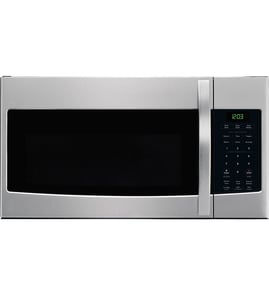

Are 4 in 1 microwaves worth it?
A “4-in-1” microwave is worth it when you will regularly use true extra cooking modes (such as convection baking/roasting, grilling, or air frying) and want one appliance to replace several. The Vissani MCO160UQ is an over-the-range microwave with convenience features like auto cook pads, two-stage cooking, and keep warm, not a 4-in-1 unit.
A 4-in-1 model combines multiple heat methods; a standard microwave focuses on microwave heating plus programmed shortcuts.
- 4-in-1 typical modes: microwave + convection + grill/broil + combination cooking
- MCO160UQ typical features: auto cook pads (beverage, baked potato, frozen pizza), time cook with power levels, auto defrost, two-stage cooking, keep warm
- Best reason to choose MCO160UQ: saves counter space and adds hood ventilation while covering everyday microwave tasks
Choose a 4-in-1 when you want crisping and browning without using a full-size oven.
- You bake or roast small portions often (convection)
- You want browning/crisping (grill or air fry)
- You want one appliance instead of a microwave plus toaster oven/air fryer
- You are willing to learn more settings and do a bit more cleaning
This is where models like the Vissani MCO160UQ shine.
- You mostly reheat, defrost, and cook convenience foods
- You want simple, repeatable results using preset pads
- You want to free up counter space with an over-the-range install
- You do not need crisping or oven-style baking performance
| What you want most | Best fit | What you gain |
|---|---|---|
| Fast reheating and defrosting | Standard microwave (like MCO160UQ) | Simpler controls, fewer modes to maintain |
| Crisping, browning, baking | 4-in-1 microwave | More cooking styles in one appliance |
| Space-saving plus ventilation | Over-the-range microwave | More counter space, built-in hood function |
Paying extra for “4-in-1” only makes sense if you will use those extra heat modes. If your day-to-day cooking is reheating, defrosting, and presets, a standard over-the-range microwave delivers the best value.
For the exact feature list and how to use pads like beverage, frozen pizza, and two-stage cooking, follow the MCO160UQ owner's manual.
Last updated: February 2026
What are people replacing microwaves with?
Many people replace a microwave with a countertop convection toaster oven or air fryer for crisp reheating, or with a “speed oven” style combo unit (microwave + convection) for faster cooking with better browning. If you have a Vissani MCO160UQ over-the-range microwave, the best replacement depends on whether you still need built-in venting and under-cabinet lighting; check the owner's manual for your current setup details.
- Air fryer: best for crisping leftovers (pizza, fries, nuggets) without sogginess.
- Convection toaster oven: more even reheating and browning; good for small bakes.
- Countertop convection oven: larger capacity than a toaster oven; closer to a full oven.
- Speed oven (microwave + convection): keeps microwave speed but adds browning.
- Stovetop reheating: skillet or saucepan reheats many foods with better texture.
| Option | Best for | Tradeoff vs microwave |
|---|---|---|
| Air fryer | Crisp texture | Slower for soups and drinks |
| Convection toaster oven | Reheating and browning | Takes preheat time |
| Speed oven | Speed + browning | Higher cost, more complex install |
| Stovetop | Texture control | More hands-on, more dishes |
Over-the-range models like the MCO160UQ often serve two jobs: cooking plus ventilation.
- Confirm whether your current setup is vented outside or recirculating.
- Measure the cabinet opening and note the mounting style.
- Plan for a replacement hood if you remove the microwave.
- Keep clearance and airflow in mind so heat can dissipate properly.
Microwaves excel at fast reheating, but many alternatives improve texture and browning. For an over-the-range unit, the bigger decision is maintaining safe ventilation and a practical cooking workflow in the same space.
Last updated: February 2026
What does 160 mean?
On the Vissani MCO160UQ over-the-range microwave, “160” is part of the model number and is typically used by manufacturers to identify a specific series or feature set; it is not a cooking setting, error code, or a single spec you can adjust on the control panel. For model-specific identifiers and ratings, use the owner's manual.
“160” can show up in a few places, and the meaning depends on where you’re seeing it:
- Model number (MCO160UQ): product identification for parts lookup and documentation
- Cooking instructions: power levels are shown as 1 to 10, not “160”
- Auto cook weights: the display may show numbers like 8, 10, 16, 20 (ounces) for preset programs
- Electrical/safety labeling: separate from the model number; used for installation and safety compliance
Based on how this microwave operates, “160” is not used as a control setting.
| Item on the microwave | What you’ll actually see | What it means |
|---|---|---|
| Power level cooking | 10 (High), 7 (Medium), etc. | Percent of cooking time at full power |
| Beeps/tones | short beeps, long beeps | Keypress feedback and end-of-cycle signals |
| Fan behavior | fan may turn on automatically | Overheat protection for the hood/microwave area |
Using the correct identifier prevents ordering the wrong parts and helps you follow the right operating and safety instructions. For example, the manual emphasizes not operating the unit if the door, hinges/latches, or seals are damaged and recommends qualified service for adjustments or repairs.
When searching, use the full model number MCO160UQ exactly as shown on the rating label and in the owner's manual.
Last updated: February 2026
What is the best type of microwave oven to buy?
For most kitchens, the best microwave type is the one that fits your space and cooking habits: countertop models are the simplest and most flexible, while an over-the-range microwave like the Vissani MCO160UQ saves counter space and adds a built-in vent hood for everyday cooking and reheating.
| Microwave type | Best for | Main tradeoff |
|---|---|---|
| Countertop | Renters, quick setup, easy replacement | Uses counter space |
| Over-the-range (OTR) | Saving counter space, built-in hood/lighting | More involved install, must fit cabinet and range width |
| Built-in | Seamless look, wall or cabinet integration | Higher cost, needs a dedicated cutout |
| Drawer | Easy access, modern kitchens | Higher cost, cabinet modifications |
- Wattage and performance: Most everyday microwaves run roughly 900 to 1200 watts; higher wattage usually heats faster and more evenly.
- Turntable and cooking results: A turntable helps even heating; we follow the guidance in the owner's manual to avoid operating without the glass turntable.
- Power levels: Multiple power levels help prevent boil-overs and improve texture (lower power cooks more gently).
- Vent hood needs (OTR models): Match the airflow and venting style (recirculating vs. outside vent) to your kitchen setup.
- Size and fit: Confirm interior capacity for your dishes and exterior dimensions for your cabinet opening.
Choosing the right type prevents common frustrations like poor fit over a 30-inch range, weak venting, or uneven heating. For an OTR microwave, fit and venting are just as important as cooking features.
- Measure your available space (cabinet opening and range width).
- Decide if you need a hood (OTR) or portability (countertop).
- Prioritize wattage, power levels, and easy-to-clean surfaces.
- Confirm you can use a dedicated outlet and proper grounding.
Last updated: February 2026