Installation guide
 Error Codes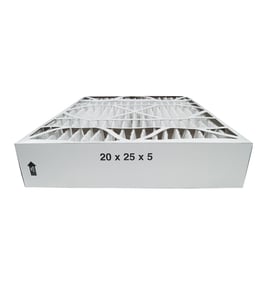

What is a heat pump indoor coil?
A heat pump indoor coil (often called the evaporator coil) is the heat exchanger inside your home that absorbs heat from indoor air during cooling and helps move heat into your home during heat pump heating. In an Icp fan coil like model FSM2X2400A1, it works with the blower to condition air and manage humidity.
- Cooling mode: warm indoor air passes over the coil; heat and moisture are removed from the air.
- Heat pump heating mode: the indoor coil becomes the “hot” coil; it releases heat into the air stream.
- Works with the blower: airflow across the coil is required for proper heat transfer.
- Supports comfort: proper coil performance helps with temperature control and indoor humidity.
- Weak airflow from vents (often tied to a dirty filter or airflow restriction)
- Reduced cooling or heating capacity
- Ice or frost on refrigerant lines or the coil area
- Water around the unit from condensate drain issues
- Higher run time or short cycling
Your installation information emphasizes that the main consumer maintenance is air filter care and condensate drain operation. Start here before assuming the coil is bad:
| Check | What to do | Why it matters |
|---|---|---|
| Air filter | Inspect monthly; clean or replace as needed | Low airflow can freeze the coil and reduce comfort |
| Condensate drain | Make sure it drains freely | A clogged drain can cause leaks and humidity problems |
| Blower operation | Confirm the indoor blower runs in cooling/heating calls | No airflow means the coil cannot exchange heat properly |
If you need a replacement filter for this model, match it to the correct size and style listed for your unit; the parts list includes the furnace air filter 1171652.
The indoor coil is where heat transfer happens; when airflow is restricted (dirty filter, blower issue) or drainage is blocked, the system can lose capacity, ice up, or leak water. Keeping airflow and drainage correct protects the coil and improves efficiency.
Last updated: February 2026
Is an evaporator coil the same as an air handler?
No. On your Icp FSM2X2400A1 fan coil, the evaporator coil is one component inside the air handler (fan coil). The air handler is the indoor unit that moves air with a blower and houses the coil (and sometimes electric heat), while the coil is the part that absorbs heat for cooling.
- Air handler (fan coil): Indoor cabinet that contains the blower, controls, and the evaporator coil
- Evaporator coil: Refrigerant coil that provides cooling by absorbing heat from indoor air
- Electric heat kit (if equipped): Adds heat strips for auxiliary or emergency heat
- Air filter: Protects the coil and blower from dust buildup (location varies by installation)
| Item | What it is | Main job | Where you see it |
|---|---|---|---|
| Air handler (fan coil) | Complete indoor unit | Circulates air; supports cooling and sometimes heat | Closet, attic, basement, or mechanical room |
| Evaporator coil | Heat exchanger inside the air handler | Provides cooling (and heat pump heating) | Inside the air handler cabinet |
Knowing the difference helps you troubleshoot correctly. For example, weak airflow points more toward the blower, filter, or controls, while poor cooling with normal airflow can point toward the evaporator coil, TXV, or refrigerant-side issues.
- The installation instructions cover multiple FSM models and show that the evaporator coil is part of the fan coil assembly, with installation orientations (upflow, downflow conversion, horizontal) affecting access and drainage.
- Condensate management is critical: the unit uses primary and secondary 3/4-inch NPT drain connections, and both drain lines should be installed with properly sized traps to prevent water issues.
If you are diagnosing a “fan not running” or intermittent blower operation, these model-listed parts are common starting points:
- Turn off power at the breaker and air handler disconnect.
- Confirm the filter is clean and correctly installed.
- If you are testing electrical components, use safe meter practices and follow the wiring diagram in the installation guide.
Last updated: February 2026
How are the blower and coil arranged in most heat pump blower coils?
In most heat pump fan coil setups, the blower and evaporator coil are arranged in one of two airflow configurations: blow-through (blower before the coil) or draw-through (blower after the coil). Your Icp FSM2X2400A1 can be installed in orientations that place the coil assembly and blower in a defined cabinet layout.
- Blow-through: the blower pushes air into the coil first, then air leaves the coil and goes to the ductwork.
- Draw-through: the blower pulls air through the coil first, then pushes it into the ductwork.
- Both designs are used in heat pump fan coils; the goal is steady airflow across the coil for good heating and cooling performance.
The installation instructions show the coil assembly and blower assembly as separate sections inside the fan coil cabinet, and they describe removing and reinstalling the coil assembly during horizontal conversions.
When you are converting the unit (for example, horizontal right), pay attention to:
- Coil orientation and mounting (coil mounting screw and casing flange)
- Condensate pan position (pan down)
- Tubing and drain connection alignment
- Reinstalling access panels to prevent air leaks and sweating
For the model-specific conversion steps and diagrams, use the installation guide.
| Configuration | Blower location vs. coil | Typical effect |
|---|---|---|
| Blow-through | Blower before coil | Coil sees positive pressure; cabinet sealing matters |
| Draw-through | Blower after coil | Coil sees negative pressure; drain and air bypass control matter |
Blower-to-coil arrangement affects airflow, condensate management, and how sensitive the system is to air leaks. If airflow is wrong (dirty filter, duct restriction, wiring/control issue), the coil can underperform and comfort can drop.
If you are troubleshooting weak airflow or blower operation on this model, these parts are commonly involved:
Last updated: February 2026