Installation guide
 Owner’s manual
Are integrated microwaves a good idea?
Yes. An integrated microwave is a good idea when you want a clean built-in look and you can meet cabinet cutout, electrical, and safety requirements. For the Dacor MMD24S microwave in-a-drawer, correct clearances and the required anti-tip block are the deciding factors; use the installation guide.
When an integrated microwave is a good fit
Integrated and drawer-style microwaves work best when the kitchen layout supports a dedicated opening and safe access.
- You want to free up counter space
- You have a cabinet cutout that matches the specified measurements
- You prefer a drawer load style (less reaching than an over-the-range unit)
- You can provide a properly grounded outlet in the specified location
- You can secure the required anti-tip block
MMD24S-SPECIFIC installation checks
These items directly affect safety, alignment, and day-to-day usability.
| Check | Why it matters | Where to confirm |
|---|---|---|
| Anti-tip block | Helps prevent tipping when the drawer opens | Installation guide |
| Cutout depth and overlaps | Prevents rubbing, gaps, and poor fit | Installation guide |
| Grounding and outlet location | Reduces shock risk and nuisance issues | Installation guide |
| Cabinet heat tolerance | Protects surrounding finishes | Installation guide |
Practical tips (and a common repair note)
- Plan for full drawer travel so it does not hit handles, islands, or walkways
- Do not use the microwave drawer as storage
- Keep the unit level and square to reduce slide-rail binding
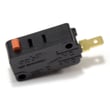
- If it will not run after closing, door-switch circuits are a common cause; the monitor switch 66006 is one switch-related component used on this model
Why it matters
Integrated microwaves look great and save space, but performance and safety depend on correct cabinet fit, support, and anti-tip installation.
Last updated: February 2026
Can I use a Countertop Microwave as a built-in?
Yes, but only if the countertop microwave is specifically approved for built-in or cabinet installation. Most countertop microwaves require open airflow around the cabinet and are not designed to be enclosed; for your Dacor MMD24S microwave in-a-drawer, use the built-in cutout, clearance, and anti-tip requirements in the installation guide.
What makes a microwave “built-in safe”
A microwave can be installed in a cabinet only when its instructions allow it and provide required clearances and mounting details.
- It includes cabinet cutout dimensions and minimum clearances
- It specifies a dedicated electrical outlet location and grounding requirements
- It uses a mounting method (brackets, rails, or an anti-tip block) to prevent tipping
- It warns against installing in combustible cabinetry outside stated clearances
- It is designed to vent heat correctly when enclosed
How the MMD24S is different from a countertop microwave
The MMD24S is a drawer-style built-in unit that must be secured with an anti-tip block and installed to specific cabinet measurements.
| Feature | Typical countertop microwave | Dacor MMD24S microwave in-a-drawer |
|---|---|---|
| Enclosure in a cabinet | Usually not allowed unless a trim kit is used | Designed for cabinet installation |
| Tip protection | Not applicable | Anti-tip block required |
| Venting/clearances | Needs open airflow around the case | Uses defined cutout and overlap clearances |
| Installation reference | Countertop placement guidance | Cutout and electrical specs in the installation guide |
If you still want a “built-in look” with a countertop microwave
Use one of these safer approaches:
- Place it on an open shelf with the manufacturer’s required side, top, and rear clearances
- Use only a trim kit that is listed for your exact microwave model (if available)
- Keep the rear and side vents unobstructed; do not seal the unit into a tight cubby
- Ensure the outlet is accessible and the cord is not pinched
Why it matters
Improperly enclosing a countertop microwave can trap heat, stress internal components, and create unsafe operating conditions. Built-in models like the MMD24S are engineered around cabinet cutouts, grounding, and anti-tip requirements so the unit operates and vents as intended.
Last updated: February 2026
What is the disadvantage of a built-in microwave?
A built-in microwave like the Dacor MMD24S (microwave in-a-drawer) costs more up front and is less flexible to replace because it must match the cabinet cutout and clearances. Installation is also more involved, including safety requirements such as securing an anti-tip block.
Common disadvantages (what most homeowners notice)
- Higher total cost: the unit plus installation and any cabinet modifications.
- Harder replacement later: you typically need the same cutout size, overlap, and depth.
- More complex installation: electrical supply location, grounding, and securing the unit matter.
- Less flexibility: you cannot easily move it like a countertop microwave.
- Service access can be tighter: built-in placement can make troubleshooting and removal more time-consuming.
Built-in vs countertop: quick comparison
| Feature | Built-in (like MMD24S drawer) | Countertop microwave |
|---|---|---|
| Installation | Cabinet cutout, electrical planning, anti-tip considerations | Plug in and place |
| Replacement | Must match opening and clearances | Easy swap |
| Kitchen space | Frees counter space | Uses counter space |
| Upfront cost | Typically higher | Typically lower |
Installation-related drawbacks specific to drawer microwaves
The MMD24S installation guidance emphasizes planning and safety. In practice, that means built-in drawer models can require more prep work than other microwave types.
- The drawer must be secured with a properly installed anti-tip block.
- The unit must be properly grounded and installed to code.
- Surrounding cabinets and wall coverings must withstand heat.
- The cutout and placement must allow proper fit and support.
For the exact cutout and clearance requirements for your kitchen, use the installation guide.
Why it matters
A built-in microwave looks seamless and saves counter space, but the tradeoff is commitment: once the cabinet opening is built, your future replacement options are tied to those dimensions and installation requirements.
Last updated: February 2026