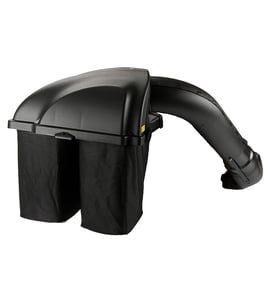

How to attach a grass catcher to a lawn mower?
To attach a grass catcher, we hang the catcher frame or bag assembly on the mower’s rear mounting points, then secure the straps, latches, or hooks so the bag sits tight and the discharge path is sealed. For the Craftsman 36626922 leaf'n grass catcher, correct alignment prevents blowouts and clogs.
Before you start (fit and safety checks)
- Park the mower on level ground, set the parking brake, and shut the engine off.
- Let moving parts stop completely; keep hands clear of the blade and discharge opening.
- Confirm the mower deck discharge side matches the catcher’s chute direction.
- Check that the rear mounting points are straight and not bent.
- Empty the bagger first; a full bag is harder to seat and can pop off.
Basic attachment steps (most rear baggers)
- Mount the support: Set the catcher frame on the mower’s rear bracket or hitch-style mount.
- Engage the hooks/pins: Slide the catcher’s hooks into the mower’s mounting slots (a firm wiggle is normal).
- Lock it down: Close the latch, install the retaining pin, or tighten the strap so the frame cannot lift.
- Connect the chute: Fit the chute to the deck discharge and to the catcher inlet; make sure it is fully seated.
- Test fit: Tug up and back on the catcher; it should not rattle loose.
Quick troubleshooting if it will not stay on
- Hooks will not seat: Clean grass buildup from the mounting slots; check for bent brackets.
- Bag pops off: Re-seat the frame so both hooks are fully engaged, then re-latch.
- Poor pickup: Check for chute gaps, wet grass, or an overfilled bag.
- Frequent clogs: Mow slower, raise deck height slightly, and avoid heavy wet clippings.
What “secure” should feel like
| Check | What you want | What it prevents |
|---|---|---|
| Frame engagement | Both sides fully hooked | Catcher falling off |
| Latch/strap tension | Snug, no lift | Vibration loosening |
| Chute seal | No visible gaps | Blowout, clogging |
Why it matters
A grass catcher that is fully seated and sealed keeps airflow strong through the chute, which improves bagging performance and reduces clogging, mess, and premature wear on the catcher mounting points.
For model-specific replacement hardware or diagrams, search the Craftsman 36626922 parts listing first, or use Sears PartsDirect to look up parts by your mower model number.
Last updated: February 2026
Do zero turn mowers have grass catchers?
Yes, many zero-turn mowers can use a grass catcher, but it depends on the mower’s deck design and whether a compatible bagger kit is made for that exact model. For the Craftsman 36626922 leaf'n grass catcher, compatibility is determined by the mower’s model-specific mounting and discharge setup; we use the mower model number to match the correct catcher parts on Sears PartsDirect.
What determines whether a zero-turn can use a grass catcher
A grass catcher (bagger) needs a way to move clippings from the deck into bags, so fitment comes down to the mower’s discharge and mounting points.
- Discharge type: side discharge decks often need a chute and adapter to route clippings
- Deck size and airflow: larger decks typically need larger chutes or higher-capacity bagging
- Mounting hardware: rear frame brackets and hanger points must match the mower
- Blower or powered assist: some baggers use a belt-driven or powered blower to prevent clogging
- Exhaust and engine clearance: catcher frames must clear mufflers, guards, and rear tires
Common bagger configurations you’ll see on zero-turns
| Configuration | How it moves clippings | Best for |
|---|---|---|
| Rear bagger (gravity/airflow) | Deck airflow pushes clippings through a chute | Light to moderate grass, dry conditions |
| Rear bagger with blower assist | Blower boosts airflow to the bags | Heavy grass, damp clippings, leaf pickup |
| Side bagger (less common) | Side-mounted collection | Tight rear clearance situations |
Quick checks before you buy a catcher or parts
Use these checks to avoid ordering a kit that will not mount correctly.
- Confirm the mower model number (from the frame tag)
- Verify deck size (inches) and discharge location
- Check whether your mower already has a rear hitch plate or mounting holes
- Inspect the deck for a baffle/adapter location where a chute attaches
- Decide whether you need blower assist for your grass type and mowing conditions
Why it matters
A grass catcher that is not designed for your exact zero-turn can clog, leak clippings, rub tires, or fail to mount securely. Matching the catcher to the mower model and deck setup gives you better pickup performance and fewer chute blockages.
Last updated: February 2026
Can you put a catcher on a ride-on mower?
Yes. You can add a grass catcher to many ride-on mowers, as long as the mower has a compatible discharge setup (rear or side discharge) and the correct mounting points for the bagger frame and chute. For Craftsman model 36626922 (leaf'n grass catcher attachment), compatibility depends on your mower’s deck and discharge style; confirm your mower model before ordering parts through Sears PartsDirect.
What has to match for a catcher to fit
A grass catcher is not universal; the mower and deck determine whether the chute lines up and whether the support brackets will bolt on correctly.
- Discharge type: side discharge or rear discharge (must match the catcher’s chute)
- Deck size and deck housing shape (common sizes are 42 in, 46 in, 48 in, 54 in)
- Hanger bracket and frame mounting locations on the mower
- Presence of a mulching plug or mulch kit (must be removed to bag)
- Blade type and condition (bagging works best with sharp, standard or high-lift blades)
Quick compatibility checklist (before you buy)
Use this checklist to avoid ordering a catcher that will not mount or will clog.
| Check | What you’re looking for | Why it matters |
|---|---|---|
| Mower model number | Exact mower model from the ID tag | Ensures the correct bagger frame and chute fit |
| Deck discharge opening | Side or rear discharge location | Determines chute routing and connection |
| Deck size | Measure or confirm deck width | Many baggers are deck-size specific |
| Mounting points | Existing holes/brackets at rear frame | Needed to support the bagger weight |
Installation and setup tips for best performance
Even when the catcher fits, setup affects how well it bags.
- Bag when grass is dry; wet clippings clump and plug the chute.
- Mow a little higher and slow down in heavy growth.
- Keep the chute clear and the deck clean underneath.
- Empty bags before they are packed full to maintain airflow.
- Replace cracked chutes or worn straps so the system stays sealed.
Why it matters
A properly matched grass catcher improves cut quality and reduces cleanup time, but a mismatched chute or deck size causes poor airflow, clogs, and uneven pickup.
Last updated: February 2026
How does a grass bagger work?
A grass bagger (grass catcher) for the Craftsman 36626922 leaf'n grass catcher collects clippings as you mow by using airflow from the mower deck to move cut grass through a chute and into collection bags; air vents out while the clippings stay contained for easy disposal.
What’s happening while you mow
Most bagger systems rely on the mower’s blade and deck design to create lift (airflow). That moving air carries clippings into the bagger so they do not drop back onto the lawn.
- The blade cuts grass and creates suction and discharge airflow
- A discharge chute routes clippings toward the catcher
- Bags fill as air escapes through fabric or vented panels
- A frame supports the bags and keeps the chute aligned
- When bags are full, you stop and empty them
Key parts of a typical bagger setup
Even though exact components vary by tractor and attachment, most systems include the same core pieces.
| Component | What it does | Common issue when it fails |
|---|---|---|
| Discharge chute | Directs clippings to the bags | Clogs from wet grass or debris |
| Bag(s) | Holds clippings while letting air vent | Reduced airflow if fabric is packed with dust |
| Lid/top cover | Helps maintain airflow and contain debris | Poor sealing reduces pickup |
| Mount/frame | Supports bags and positions chute | Misalignment causes blowout or leaks |
Tips to improve bagging performance
These steps prevent clogs and help the catcher fill evenly.
- Mow when grass is dry; wet clippings clump and plug the chute
- Use a slower ground speed in heavy grass to keep airflow steady
- Keep the deck clean underneath; buildup disrupts lift
- Avoid overfilling; stop when bags are about 3/4 full
- Check for chute kinks, gaps, or loose connections
Why it matters
A bagger works best when airflow stays strong. Good airflow means cleaner pickup, fewer clumps left behind, and less time spent clearing chute blockages.
Finding the right replacement parts
For Craftsman 36626922, match parts by the full model number and your tractor’s deck/discharge configuration; you can search by model and diagrams on Sears PartsDirect.
Last updated: February 2026