 Owner’s manual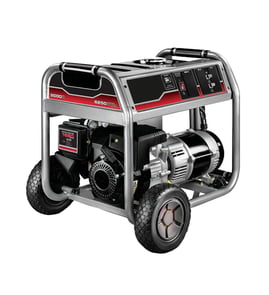

How long will a Coleman PM0545008 generator run?
Runtime on the Coleman PM0545008 depends mainly on fuel tank level and how many watts you draw; heavier loads burn fuel faster. For the most accurate run-time guidance for your setup, use the operating and fueling instructions in the PM0545008 owner's manual.
What determines runtime on this model
- Electrical load (watts/amps): more load equals shorter runtime
- Motor starting surges: pumps and compressors can spike demand
- Fuel quality and carburetion: stale fuel can cause inefficient running
- Altitude and temperature: higher altitude and heat reduce available power
- How loads are distributed: uneven loading can cause nuisance breaker trips
Simple way to estimate your runtime
- Add up the running watts of everything you plan to power.
- Keep total demand within the generator’s rated output (check the nameplate ratings).
- Test your real-world load for 15 to 30 minutes and monitor fuel use; then scale that rate to your tank level.
Planning table
| Load level | Example use | What to expect |
|---|---|---|
| Light (about 25%) | lights, chargers, small tools | Longest runtime per tank |
| Medium (about 50%) | mixed essentials | Moderate runtime per tank |
| Heavy (75% to 100%) | many loads, frequent motor starts | Shortest runtime; refuel more often |
How to maximize runtime safely
- Run only the loads you need; turn off high-draw items when not in use.
- Balance loads across available receptacles to reduce overheating and trips.
- Let the generator cool before refueling; shut it off and keep fuel away from ignition sources.
- Use a watt meter or clamp meter to confirm actual draw if you are near the limit.
Why it matters
Accurate runtime planning prevents overloads, breaker trips, and voltage drop, especially when powering multiple circuits through the generator’s receptacles and cord set.
Last updated: February 2026
What are the most common issues with PM0545008?
The most common issues we see with the Coleman PM0545008 generator are no-start conditions, rough running or surging, and no AC power output. These problems usually trace to fuel quality, ignition and spark, airflow, or basic electrical protection devices like breakers and fuses; use the PM0545008 owner's manual for model-specific checks and specs.
Common symptoms and what they usually mean
- Won’t start: stale fuel, clogged carburetor jets, dirty air filter, fouled spark plug, low oil shutdown
- Starts then dies: restricted fuel flow, stuck choke, dirty carburetor, tank vent issue
- Surging (hunting): partially clogged carburetor, air leak, governor linkage sticking
- No AC power: tripped breaker, blown fuse (if equipped), bad receptacle, wiring issue, failed capacitor/AVR (if equipped)
- Low power or bogging under load: overloaded circuits, dirty air filter, fuel restriction, engine speed out of spec
- Excess vibration/noise: loose fasteners, damaged mounts, unbalanced load, engine misfire
Quick checks we recommend first (safe, high-impact)
- Disconnect all loads and try starting again.
- Verify fresh gasoline and the fuel valve is ON.
- Set choke correctly (more choke cold, less as it warms).
- Check oil level; many generators will not run if oil is low.
- Inspect the air filter and spark plug condition.
- Reset any circuit breakers on the control panel.
Troubleshooting map (symptom to next step)
| Symptom | Most likely area | Best next step |
|---|---|---|
| Cranks but won’t fire | Fuel or spark | Check spark plug, then fuel flow/carburetor |
| Runs rough/surges | Fuel/air/governor | Clean carburetor, check air filter, inspect linkages |
| Runs fine but no outlets work | Breaker/wiring/regulation | Reset breaker, test receptacle voltage with a meter |
| Dies when load is applied | Overload or engine output | Reduce load, verify engine speed, check air/fuel |
Why it matters
Generator problems often look “electrical,” but many PM0545008 complaints start with fuel varnish or restricted airflow. Fixing the root cause prevents repeated no-starts, protects connected equipment, and helps the engine hold steady RPM for stable voltage.
Helpful DIY reference
If you need to test output safely, a meter is the right tool; follow how to use a multimeter to test electrical parts video for the basics before checking receptacles or continuity.
Last updated: March 2026
What engine is in a Coleman PM0545008?
The Coleman generator model PM0545008 uses a 10 HP Briggs & Stratton (B&S) OHV engine. We list it in the parts breakdown as “Engine 10 hp B&S OHV,” which matches the factory configuration for this generator.
Where we confirm the engine
You can verify the engine callout in the parts list/drawing in the owner's manual. Look for the engine line item in the reference table.
What “10 HP B&S OHV” means
- 10 HP: the engine horsepower rating used for this generator configuration.
- Briggs & Stratton (B&S): the engine manufacturer.
- OHV: overhead valve design, commonly used for better efficiency and durability.
Quick ID checklist (on the generator)
Use these checks to confirm you are matching the correct engine to your exact unit:
- Check the engine label on the recoil starter housing or valve cover area.
- Match the generator model number PM0545008 on the generator data tag.
- Compare the parts drawing in the manual to what you see on the frame and engine mounts.
- Confirm whether your unit is original or has had an engine swap in the past.
Replacement and service notes
The manual notes that engines are typically handled through the engine manufacturer’s warranty coverage rather than being supplied as a standard generator replacement part.
| Task | Best reference | Why it matters |
|---|---|---|
| Identify exact engine model/type code | Engine label + owner's manual | Ensures correct tune-up and repair parts |
| Find generator-side parts (mounts, adapters, isolators) | Owner's manual parts list | Prevents fit and alignment issues |
| Electrical troubleshooting (output issues) | Wiring/parts diagram | Avoids misdiagnosing engine vs alternator problems |
Why it matters
Using the correct engine identification helps you buy the right maintenance items (spark plug, air filter, carburetor parts) and prevents mismatches when diagnosing “won’t start” versus “no power output” problems.
Last updated: February 2026