 Owner’s manual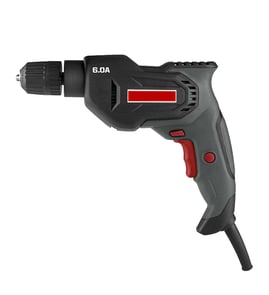

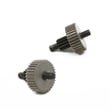
What are the parts of a power drill?
A power drill is built around a motor that spins a chuck to hold and drive the bit; on the Craftsman 315101280 reversing drill, you also have user controls like the switch trigger, lock-on button, and forward-reverse lever that manage speed and direction. For the full diagram and parts list, use the owner's manual.
Main parts you will see on the Craftsman 315101280
- Motor housing: contains the motor that provides rotation
- Switch trigger: turns the drill on and off
- Lock-on button: keeps the drill running for extended drilling (continuous run)
- Forward-reverse lever: changes chuck rotation direction (forward for drilling, reverse for backing out)
- Chuck: clamps the drill bit in place
- Chuck jaws: the gripping surfaces inside the chuck
- Chuck key: tightens and loosens the chuck jaws (this model uses a key)
How the key controls work (quick reference)
| Part | What it does | Important use note |
|---|---|---|
| Switch trigger | Starts and stops the drill | Release to stop before changing direction |
| Forward-reverse lever | Sets rotation direction | Do not change direction while the drill is running |
| Lock-on button | Holds trigger “on” for continuous drilling | Avoid using lock-on when you may need to stop suddenly |
| Chuck key | Tightens/loosens chuck jaws | Use the provided key, not a wrench |
Why it matters
Knowing the names of the drill parts helps you troubleshoot faster (for example, a drill that will not run can be related to the switch trigger or the forward-reverse lever not being fully set). It also helps you match the correct diagram callout when ordering repair parts for model 315101280.
Last updated: February 2026
How to replace drill bit on Craftsman drill?
To replace the drill bit on your Craftsman 315101280 reversing drill, unplug the drill first, then use the chuck key to loosen the chuck jaws, swap the bit, and tighten the jaws securely. This model uses a keyed chuck, not a keyless chuck.
Steps to remove and install a drill bit (keyed chuck)
- Unplug the drill.
- Insert the chuck key and loosen the chuck jaws until the opening is slightly larger than the bit.
- Remove the old bit.
- Insert the new bit fully into the chuck jaws (full jaw length).
- Tighten the chuck jaws securely using only the chuck key.
- Remove the chuck key and return it to its storage spot.
Important do’s and don’ts
- Do tighten the chuck firmly so the bit does not slip under load.
- Do not use a wrench to tighten or loosen the chuck jaws.
- Do hold the front of the drill slightly up while positioning the bit so it does not fall out.
- Do clamp or vise the workpiece before drilling so it cannot spin.
- Do grasp only the insulated handle(s) when drilling into walls (the bit and chuck can become electrically live if you hit wiring).
Quick reference table
| Task | Power | What you use | Key point |
|---|---|---|---|
| Remove bit | Unplugged | Chuck key | Loosen jaws, pull bit out |
| Install bit | Unplugged | Chuck key | Insert fully, tighten securely |
| Drill | Plugged in | Trigger switch | Use steady pressure, do not force |
Why it matters
A properly tightened bit reduces wobble, slipping, and stripped chuck jaws. Unplugging first also prevents accidental starts while your hands are near the chuck.
For the exact diagrams and chuck key placement for this model, follow the 315101280 owner's manual.
Last updated: February 2026
Where can I buy Craftsman replacement parts?
You can buy replacement parts for your Craftsman reversing drill model 315101280 through Sears PartsDirect by using the model number to match the correct parts list and diagrams. For this drill, the parts list in the owner's manual is also a reliable way to identify the exact part number before you order.
Best way to get the right part for model 315101280
Using the model number is the fastest way to avoid ordering the wrong switch, cord, chuck, or screw.
- Find the model plate on the motor housing and confirm it reads 315101280
- Use the parts list and exploded view to identify the exact item you need
- Match the part number and description before purchasing
- Replace with identical Craftsman replacement parts (as specified in the manual)
- If you are unsure between similar items, compare your original part visually before ordering
What you will typically need when ordering
Having these details ready helps ensure an exact match.
| What to gather | Example for this drill | Why it matters |
|---|---|---|
| Model number | 315101280 | Ensures the correct parts list |
| Part number | From the parts list | Identifies the exact replacement |
| Part description | From the diagram/list | Confirms function and fit |
| Quantity | Usually 1 | Prevents incomplete repairs |
Why it matters
Power tool parts can look similar but differ in thread direction, size, or electrical rating. Ordering by the correct model number and parts list helps you get a part that fits and performs safely.
Last updated: February 2026
How to remove the chuck on a Craftsman drill?
To remove the chuck on your Craftsman 315101280 reversing drill, unplug the drill, loosen the internal chuck screw (it is left-hand threaded), then break the chuck loose from the spindle using the chuck key and a mallet. Follow the sequence in the owner's manual to avoid damaging the chuck jaws.
Steps to remove the chuck (Craftsman 315101280)
- Unplug the drill.
- Close the chuck jaws.
- Insert the chuck key and tap it sharply clockwise with a mallet to loosen the internal screw.
- Open the chuck jaws.
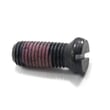
- Remove the chuck screw by turning it clockwise (this screw uses left-hand threads).
- Reinsert the chuck key and tap it sharply counterclockwise with a mallet to loosen the chuck from the spindle.
- Unscrew the chuck by hand and remove it.
Thread direction quick reference
| What you are loosening | Direction to turn/tap | Why |
|---|---|---|
| Chuck screw (inside the chuck) | Clockwise to remove | It has left-hand threads |
| Chuck on the spindle | Counterclockwise to loosen | Standard loosening direction |
Important do's and don'ts
- Use only the chuck key for the chuck; do not use a wrench on the chuck jaws.
- Use a mallet (not a steel hammer) to reduce the chance of cracking the chuck key or damaging the gear teeth.
- Keep the drill steady; a bench with a pad or a vise with soft jaws helps.
- If the chuck is stuck, repeat the tap steps with firm, controlled strikes rather than increasing force dramatically.
Why it matters
The chuck screw and spindle threads lock the chuck in place during forward and reverse operation. Removing the screw in the wrong direction can strip threads or round the screw head, turning a simple chuck replacement into a bigger repair.
Last updated: February 2026