Installation guide
 Owner’s manual
 Error Codes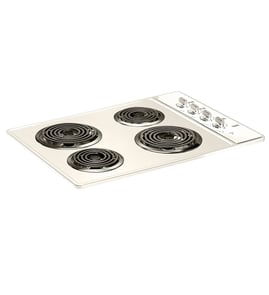




What is the downside to induction cooktops?
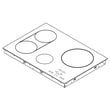
Induction cooktops like the Jenn-Air JIC4430XS00 heat fast and stay relatively cool, but the tradeoffs are higher upfront cost, cookware compatibility requirements, and more electronics that can be sensitive to power quality and heat. Some users also notice buzzing or clicking sounds during use.
Common downsides (what you will notice day to day)
- Cookware must be magnetic: Cast iron and many stainless pans work; aluminum, copper, and glass usually do not unless they have a magnetic base.
- Noise is normal: A low buzz, hum, or clicking can happen, especially with certain pan sizes and power levels.
- Power outage equals no cooking: Induction needs electricity; it will not operate without power.
- Learning curve: Heat changes are immediate, so boiling, simmering, and melting can feel different than radiant electric.
- Glass top can be damaged: Dropping heavy cookware can crack the surface; sliding rough-bottom pans can scratch.
Electrical and installation considerations
Induction cooktops typically require a dedicated circuit and correct wiring for safe operation. For model-specific electrical requirements, cutout details, and mounting steps, follow the installation guide.
| Topic | What to expect with induction |
|---|---|
| Cookware | Must attract a magnet |
| Heat response | Very fast changes |
| Sound | Some buzzing/clicking is common |
| Surface durability | Strong, but can crack if impacted |
Why it matters
Most “induction problems” are actually cookware mismatch, installation issues, or power interruptions. Using compatible pans and installing the cooktop to spec helps prevent nuisance shutoffs, uneven heating, and avoidable service calls.
When a “downside” points to a repair
If the cooktop is completely dead, shuts off repeatedly, or shows no response, a failed internal fuse is a common electrical protection issue. For this model, the cooktop fuse WPW10328492 is one of the key parts to check and replace when appropriate.
Last updated: February 2026
Is JennAir considered high end?
Yes. Jenn-Air is widely considered a high-end (luxury) appliance brand; it is positioned above mainstream lines and is known for premium design, finishes, and feature sets. For your Jenn-Air JIC4430XS00 30-inch induction cooktop, that typically means higher-end components and a stronger focus on aesthetics and performance.
What “high end” usually means for a Jenn-Air induction cooktop
High-end positioning shows up most in build materials, electronics, and the overall cooking experience.
- Premium glass-ceramic main top and tighter fit and finish
- More advanced power control and sensing compared with basic electric cooktops
- Higher-cost electronic components (display boards, harnesses, fuses)
- Design-forward styling intended to match luxury kitchen packages
- Repairs often involve larger assemblies rather than small sub-parts
Parts and repair cost expectations (example components)
If you are comparing brands, replacement-part pricing is one of the clearest “real world” differences. Here are a few common part categories you will see for model JIC4430XS00:
| Part category | What it affects | Example part for JIC4430XS00 |
|---|---|---|
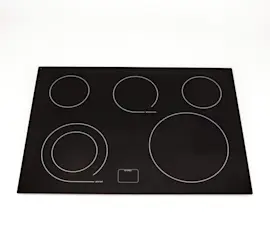
| Main top / glass | Cracks, chips, cosmetic damage | Main top WPW10396621 |
| Fuse | No power, dead cooktop symptoms | Cooktop fuse WPW10328492 |
| Cooling / blower fan | Overheating, shutdowns, error behavior | Blower fan W10328378 |
Why it matters when you are troubleshooting or buying parts
Because Jenn-Air is a premium line, we see more repairs tied to electronic controls and glass-top assemblies. That makes correct diagnosis important before ordering parts, especially for “no power” or intermittent heating issues.
Practical tips before you order
- Confirm your exact model number is JIC4430XS00 (the last two digits matter)
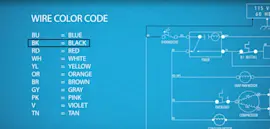
- Use the wiring diagram and component locations in the owner's manual
- If the cooktop is completely dead, start with power supply checks, then test the fuse
- If a burner will not heat, suspect the heating module, wiring, or control inputs
- If the unit shuts down after heating, check airflow and the blower fan operation
Last updated: February 2026
What are common problems with JennAir stoves?
Common problems we see with Jenn-Air cooking appliances include burners or elements not heating, the cooktop shutting off or not responding, error codes/lock features being active, and electrical issues such as a blown fuse or failed control. For your Jenn-Air JIC4430XS00 30" induction cooktop, the most common complaints are “won’t heat,” “intermittent heating,” and “dead control panel.” See the owner's manual for model-specific indicators and operating checks.
Common symptoms and what usually causes them
- One zone will not heat: incompatible cookware, a failed induction “hot plate,” or a wiring issue.
- Cooktop is completely dead: tripped breaker, loose power connection, or a blown internal fuse.
- Controls do not respond: control lock is on, moisture on the touch panel, or a failed display/control board.
- Cooktop turns on then shuts off: overheating/ventilation problem, fan issue, or a failing component.
- Cracked or damaged glass top: impact damage or heat stress; the main top may need replacement.
Quick checks we recommend first (induction-specific)
- Confirm the pan is induction-ready (a magnet should stick to the bottom).
- Try a different pan size that matches the cooking zone.
- Power reset: turn the breaker off for 1 minute, then back on.
- Make sure the cooling air path is clear (do not block intake or exhaust).
- If the panel is wet or greasy, clean and dry it fully before testing again.
Parts that commonly fix “no heat” or “no power” on JIC4430XS00
| Symptom | Likely part area | Example part for this model |
|---|---|---|
| No power, no display | Fuse, wiring | Cooktop fuse WPW10328492 |
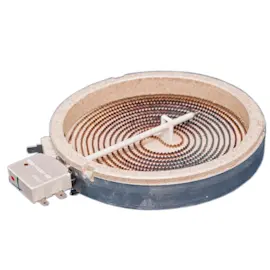
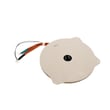
| One zone not heating | Induction element assembly | Hot plate WPW10396548 or hot plate WPW10396549 |
| Intermittent operation | Harness/connection | Cooktop wire harness W10396610 |
| Cracked glass top | Main top | Main top WPW10396621 |
Why it matters
Induction cooktops like the Jenn-Air JIC4430XS00 rely on tight electrical connections, proper cooling airflow, and compatible cookware. A simple issue (like a blown fuse or poor ventilation) can look like a major failure, so basic checks can prevent unnecessary part replacement.
Last updated: February 2026
Is it worth repairing an induction cooktop?
Yes, repairing a Jenn-Air JIC4430XS00 30-inch induction cooktop is worth it when the failure is isolated (power, fan cooling, wiring, or controls) and the total repair cost stays well below the price of a comparable replacement. It is usually not worth it when the glass top is damaged or multiple major components have failed.
Quick decision checklist
- Repair if the cooktop still powers on and only one function is affected (one zone, fan noise, intermittent shutoff).
- Repair if the issue points to a single replaceable part such as a fuse, wire harness, or display/control.
- Replace if the main top is cracked, chipped, or badly scratched (glass damage typically drives the highest cost).
- Replace if you have repeated failures after prior repairs (stacked electrical issues).
- Repair if the unit is in good cosmetic shape and fits your cutout; replacement often requires countertop work.
Common repair scenarios for model JIC4430XS00
| Symptom | Most likely direction | Parts that often apply |
|---|---|---|
| Dead cooktop, no lights | Check power supply, then internal fuse | Cooktop fuse WPW10328492 |
| Random shutoff, overheating, loud fan | Cooling airflow or fan issue | Blower fan W10328378 or blower fan W10328381 |
| One or more zones not heating | Induction “hot plate” module or wiring | Hot plate WPW10396548, hot plate WPW10396549, or hot plate W11672508 |
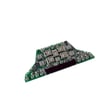
| Display issues or unresponsive touch | Control/display problem | Cooktop display board WPW10396615 |
Cost and effort: what to compare
- Parts cost vs. replacement: If parts plus labor approach about half the cost of a new induction cooktop, replacement usually makes more sense.
- Labor complexity: Induction cooktops involve high voltage and sensitive electronics; many repairs require removing the unit from the countertop.
- Downtime: If you cook daily, a quick part swap (fuse, fan, harness) is often the best value.
Why it matters
Induction cooktops are efficient but electronics-heavy; when the problem is a single component (like a fuse or fan), repair restores full performance without changing the countertop cutout. When the glass top is damaged, replacement avoids sinking money into a high-cost cosmetic and structural part.
Where to confirm details before you decide
Use the wiring diagram, error information, and installation clearances in the owner's manual and the cutout and mounting details in the installation guide.
Last updated: February 2026