 Owner’s manual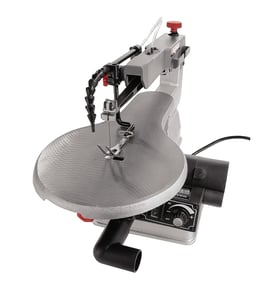

Can you make straight cuts with a scroll saw?
Yes. You can make straight cuts with the Craftsman 315216260 16-inch variable-speed scroll saw, but it takes more setup and technique than a table saw because scroll saw blades are optimized for curves and can follow wood grain. For best results, use a wider blade, correct tension, and slow feed.
How to get straighter cuts
- Use a wider blade when the cut is straight or a large-radius curve (narrow blades wander more).
- Set proper blade tension; pluck the blade and aim for a clear musical note (too loose bends, too tight breaks).
- Let the saw do the work; guide the workpiece slowly and do not force it.
- Keep the workpiece flat on the table and maintain steady, even pressure.
- Expect to compensate for grain-following drift; adjust your feed direction slightly as you cut.
Blade choice and speed: quick guide
The manual notes that blade selection depends on material and cut type, and that blades wear out quickly (often about 1.5 to 2 hours of cutting). A dull blade increases drift and makes straight cuts harder.
| Goal | Blade width | Speed approach | Best practice |
|---|---|---|---|
| Long straight cut | Wider | Moderate, steady | Slow feed; avoid twisting the blade |
| Tight curves | Narrow | Slower | Turn the workpiece, not the blade |
| Thicker wood (over 1 inch) | Wider | Slower | Extra-slow feed to prevent bending |
Why it matters
A scroll saw’s small teeth cut only on the downstroke, so pushing too fast or using low tension can flex the blade and create a wavy line. Dialing in tension and using the right blade makes your cuts cleaner, safer, and more predictable.
For model-specific operating and tensioning steps, follow the owner's manual.
Last updated: February 2026
How do I know which scroll saw blade to use?
For the Craftsman 315216260 16-inch variable-speed scroll saw, pick a blade based on your material, thickness, and how tight the curves are. In general, narrow blades handle intricate curves, wider blades track straighter cuts, and the teeth-per-inch (TPI) should match the thickness and hardness of what you are cutting (see the owner's manual).
Match the blade to the cut you want
- Intricate curves and tight radius cuts: choose a very fine, narrow blade.
- Straight cuts and large curves: choose a wider blade.
- Thin stock (about 1/4 inch or less): fine, narrow blades cut cleaner and turn tighter.
- Thicker wood (over 1 inch): feed very slowly and avoid twisting the blade.
- Bottom tear-out concerns: use a blade style designed to reduce splintering (common options include reverse-tooth styles).
Blade style and size basics for this model
This saw uses 5-inch blades in pin-end or plain-end styles. Blade width, thickness, and TPI should be chosen based on the material and the curve radius you need.
| What you are cutting | Typical blade direction | What to prioritize |
|---|---|---|
| Thin wood, veneer, very tight curves | Narrow blade | Higher TPI, tight turning radius |
| General wood and plastics | Medium blade | Balanced TPI and control |
| Hardwood, plywood, laminates | Appropriate width for the cut | Expect faster blade wear; go slower |
Set blade tension correctly (it affects blade choice)
Even the “right” blade performs poorly if tension is off.
- Use the quick release knob to release or engage tension before cutting.
- Check tension by plucking the blade; it should sound like a musical note.
- Too much tension can snap blades at startup.
- Too little tension can cause bending, wandering cuts, and early breakage.
Why it matters
Blade selection controls cut quality, safety, and blade life. Using a blade that is too wide for tight curves forces side pressure (a top cause of breakage), while using a blade that is too fine for thick or hard stock slows cutting and wears teeth quickly.
Last updated: February 2026
How thick of wood can you cut with a scroll saw?
On the Craftsman 315216260 16-inch variable-speed scroll saw, we cut wood and other fibrous materials up to 2 inches thick. For the cleanest, most accurate results, we get the best performance on wood under 1 inch thick, then slow the feed rate as thickness increases (especially in hardwoods). See the owner's manual.
What affects the maximum thickness you can cut
Even though 2 inches is the rated capacity for this model, real-world results depend on setup and technique.
- Wood hardness: pine and poplar cut easier than oak or maple at the same thickness
- Blade choice: wider blades track straighter; narrow blades turn tighter but deflect easier
- Feed rate: thicker stock needs a slower, steadier feed
- Speed setting (SPM): this saw adjusts from about 500 to 1700 strokes per minute
- Blade condition: dull blades wander, burn, and stall more easily
Practical guidance by thickness
Use this as a quick planning guide for the 315216260.
| Wood thickness | What to expect | Best approach |
|---|---|---|
| 1/8 in. to 1/2 in. | Fast, controlled cutting | Higher speed, fine blade for tight curves |
| 1/2 in. to 1 in. | Best balance of speed and accuracy | Moderate speed, steady feed |
| 1 in. to 2 in. | Slower cutting; higher chance of blade deflection | Slow feed, avoid twisting the blade, use a blade suited for thicker stock |
Tips to avoid blade bending and rough cuts
The blade only removes material on the downstroke, so forcing the work is the quickest way to break or bend blades.
- Let the saw do the work; do not force the cut
- Keep the workpiece flat on the table; support long boards
- For thick wood, guide the stock very slowly and keep side pressure minimal
- Replace blades often; many blades stay sharp about 1.5 to 2 hours of cutting (varies by material and speed)
- Expect more wear when cutting hardwood, plywood/laminates, or material thicker than 3/4 inch
Why it matters
Staying within the saw’s 2-inch capacity and matching blade and speed to the material helps prevent blade breakage, reduces burning, and improves cut accuracy, especially on detailed scrollwork.
Last updated: February 2026
Which way do the teeth go on a scroll saw blade?
On the Craftsman 315216260 scroll saw, install the blade with the teeth pointing down toward the table. Our manual explains that the blade teeth remove material on the down stroke, so teeth-down is the correct orientation for normal cutting.
How we recommend confirming blade direction
- Unplug the saw before installing or adjusting the blade.
- Hold the blade in good light; the sharp points should aim down.
- If you lightly drag a fingernail along the blade, it should feel smoother moving upward and “catch” moving downward.
- Seat the blade fully in the upper and lower holders before tightening.
- Set tension so the blade is straight and stable before you start cutting.
Pin-end vs plain-end blades (same tooth direction)
The 315216260 uses 5-inch blades in either pin-end or plain-end style; both install teeth-down.
| Blade type | End style | Typical reason to choose it | Teeth direction |
|---|---|---|---|
| Pin-end blade | Pins at both ends | Quick changes | Down toward table |
| Plain-end blade | Flat ends | More blade options | Down toward table |
Why tooth direction matters
Teeth-down matches how the saw is designed to cut; it helps keep the workpiece controlled against the table and improves cut quality on wood, plastic, and nonferrous metals.
Related setup tip: tension
Proper tension reduces wandering cuts and breakage.
- Use the quick-release to relax or engage tension.
- Increase tension gradually.
- Avoid over-tensioning; it can snap the blade at startup.
For the blade installation and tension procedure, use the diagrams and steps in the 315216260 owner's manual.
Last updated: February 2026
Should I get pinless or pinned scroll saw blades?
For the Craftsman 315216260 16-inch variable-speed scroll saw, we recommend pinless (plain-end) blades for most projects because they handle tighter turns and make interior cuts easier. Pinned (pin-end) blades are best when you want faster, simpler blade changes for general scrolling.
What this model accepts
The Craftsman 315216260 accepts either pin-end or plain-end (pinless) scroll saw blades. Use the blade installation and tensioning steps in the 315216260 owner's manual so the blade is clamped correctly and tensioned safely.
Pinless vs. pinned: quick comparison
| Feature | Pinless (plain-end) | Pinned (pin-end) |
|---|---|---|
| Best for | Fretwork, lettering, tight-radius curves | General cuts, quick swaps |
| Interior cuts | Fits smaller entry holes | Needs larger entry holes for the pins |
| Blade selection | Widest variety (fine, skip-tooth, spiral) | More limited |
| Setup | Slightly more fiddly | Usually faster |
How we choose the right blade for the job
- Use narrow, fine blades for intricate curves and thin stock.
- Use wider blades for straighter cuts and large-radius curves.
- For interior cuts, drill an entry hole, remove the blade, thread it through the workpiece, then re-install and re-tension.
- Tension the blade so it “plucks” like a musical note; too much tension breaks blades, too little causes wandering.
- Let the saw cut on the downstroke; guide the work slowly and do not force it.
Why it matters
Blade style directly affects what you can cut cleanly. Pinless blades unlock smaller entry holes and tighter detail work; pinned blades trade some finesse for convenience and speed during blade changes.
Last updated: February 2026