Owner’s manual
 Error Codes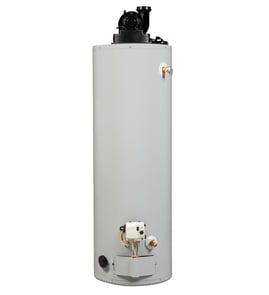



Why are gas water heaters being phased out?
Gas water heaters are being phased out in some areas because local and state policies are targeting lower emissions from buildings, especially nitrogen oxides (NOx) from gas combustion. Your American BFG6150T403NO is a standard natural-gas water heater; whether it is affected depends on your local rules and replacement timelines in your region.
What is driving the phase-outs
Most phase-out proposals focus on reducing air pollution and greenhouse-gas emissions from building equipment.
Common policy drivers include:
- Cutting NOx emissions that contribute to smog
- Meeting regional clean-air targets in dense metro areas
- Electrification programs that favor heat pump water heaters
- New-building codes that restrict new gas hookups
- Incentives that make electric replacements more cost-effective
What this means for your American BFG6150T403NO
In most places, existing gas water heaters can be repaired and maintained; restrictions are more likely to apply to new installations or end-of-life replacements.
Here is how it typically breaks down:
| Situation | What usually happens | What you can do now |
|---|---|---|
| Your unit is working normally | No immediate change | Maintain it and keep it safe per the owner's manual |
| Pilot will not stay lit or burner will not run | Repair may be practical | Check ignition and safety shutoff components such as the nat gas th 100108267 |
| Tank is leaking or has major internal failure | Replacement is typical | Compare local replacement options (gas vs. electric/heat pump) |
Safety and compliance items we recommend
Even when policies change, safe operation stays the same. The manual highlights critical safety topics such as flammable vapor risks, safety shutoff behavior, and lighting instructions.
We recommend:
- Never store or use gasoline, solvents, or other flammables near the water heater
- If the water heater has been under water, replace the unit (flood exposure is a replacement condition)
- If the pilot goes out repeatedly, address the cause before relighting
- Keep the combustion area clear and properly vented
- Use only model-correct replacement parts when servicing
Why it matters
Phase-outs can affect what equipment is allowed for a future replacement, what rebates are available, and how quickly you can get a like-for-like gas unit installed. Keeping your current gas water heater operating safely can buy time while you plan for whatever your local code requires next.
Last updated: February 2026
What is the average cost of replacing a gas hot water heater?
Replacing a standard tank-style gas water heater like the American BFG6150T403NO typically costs $1,600 to $2,400 installed; a tankless replacement commonly runs $2,400 to $5,400 installed. Your final price depends most on venting changes, gas line work, and local labor rates.
What drives the price up or down
- Tank size and efficiency (higher efficiency units usually cost more)
- Venting changes (new vent pipe, chimney liner, power vent conversion)
- Gas piping updates (pipe sizing, shutoff valve, sediment trap)
- Water piping changes (new shutoffs, unions, expansion tank)
- Code-required safety items (drain pan, seismic straps, combustion air)
Typical cost breakdown (installed)
| Cost item | Common range | Notes |
|---|---|---|
| Basic tank replacement labor | $600 to $1,500 | Swap-out with minimal changes |
| Standard tank water heater | $700 to $1,500 | Varies by capacity and efficiency |
| Venting and gas line updates | $0 to $1,500+ | Biggest swing factor |
| Disposal and misc. materials | $50 to $300 | Haul-away, fittings, connectors |
Parts that are often replaced during a swap
Even when you replace the whole heater, these items are commonly renewed to reduce leaks and service calls:
- Temperature and pressure relief valve (see t&p valve 100108279)
- Drain valve (see drain valve 100109106)
- Draft hood (see draft hood 100111362)
Why it matters
A “simple” replacement can turn expensive if the installer has to correct venting, combustion air, or gas pipe sizing. Reviewing the safety and installation requirements in the owner's manual helps you understand what work may be needed before you approve an estimate.
Last updated: February 2026
What is the typical lifespan of a gas hot water heater?
A typical gas hot water heater lasts 8 to 12 years. For your American BFG6150T403NO gas water heater, regular maintenance like periodic draining and flushing, plus anode rod inspections, helps you reach the high end of that range; neglect usually shortens tank life.
What affects lifespan the most
- Water quality (hard water and sediment increase wear)
- Maintenance frequency (flushing reduces sediment buildup)
- Anode rod condition (a depleted anode speeds tank corrosion)
- Water temperature setting (higher temps increase stress and scaling)
- Use patterns (heavy daily demand increases cycling)
Maintenance schedule we recommend
Use your owner's manual for the exact procedure and safety steps for the BFG6150T403NO.
| Maintenance item | Typical interval | Why it helps |
|---|---|---|
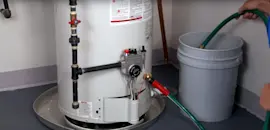
| Drain and flush tank | Every 6 to 12 months | Reduces sediment and overheating at the burner |
| Inspect anode rod | Every 3 years | Protects the tank from corrosion |
| Check T&P relief valve | Yearly | Confirms overpressure protection works |
| Inspect venting and draft | Yearly | Helps prevent poor combustion and soot |
Parts that commonly extend service life
If you are doing maintenance or addressing symptoms (odor, slow leaks, poor heating), these model-matched parts are commonly involved:
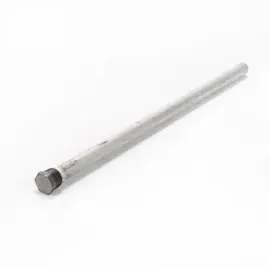
- Anode rod 100108260 (inspect every 3 years; replace if more than 50% depleted)
- T&p valve 100108279 (replace if it drips continuously or fails a functional check)
- Drain valve 100109106 (replace if it seeps or will not close fully)
Why it matters
Once a tank begins internal corrosion, performance can drop quickly and leaks can develop. Staying on a simple maintenance routine helps keep recovery time steady, reduces sediment-related noise, and typically delays full replacement.
Last updated: February 2026