



How to fix furnace pressure switch stuck open?
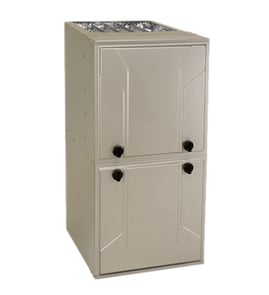
On the Icp NUGG050DD04 upflow gas furnace, a “pressure switch stuck open” condition means the control is not proving inducer draft. We fix it by restoring proper venting and condensate flow, confirming the inducer runs, and then testing the pressure switch circuit for a consistent close.
Safety first
- Turn off power at the furnace switch or breaker before touching wiring.
- If you smell gas, stop and have a qualified technician check the furnace.
- Keep panels and the burner door installed during normal operation; door switches affect testing.
Fast checks that solve most “stuck open” faults
- Confirm the inducer motor starts on a call for heat.
- Inspect the vent pipe and termination for blockage (snow, leaves, nests) and for sagging that can hold water.
- Pull the pressure switch hose and check for cracks, loose fit, water, or debris; clear it.
- Clear the inducer port (the small nipple where the hose connects) if restricted.
- If your setup uses condensate, clear the trap and drain so water cannot back up into the inducer/collector.
- Verify wiring spade terminals at the switch and control board are tight and not heat-damaged.
How we test the pressure switch
Use a multimeter on continuity (power off to connect leads; then observe during a heat call).
| Check | Normal result | If not normal, focus on |
|---|---|---|
| Inducer running | Switch closes (continuity) | Venting, condensate, weak inducer, hose/port restriction |
| Hose removed | Switch stays open | Switch stuck closed (different fault) |
| Hose and port clear | Switch closes reliably | If it does not, replace the switch |
A light tap and clearing the hose can free a sticky diaphragm once, but repeated failures mean the switch is worn or draft is still restricted.
Related parts to consider
- If the furnace overheats and cycles off, check the high-limit circuit; a failing limit switch 1013102 can interrupt heating and create confusing symptoms.
- If airflow is weak, inspect the blower; a failing furnace blower fan motor 613209 can contribute to overheating and shutdowns.
Why it matters
The pressure switch is a safety device that prevents burner operation without proper venting. Fixing the root cause prevents lockouts and protects the ignition and heat exchanger.
Last updated: January 2026
What are the most common issues with NUGG050DD04?
For the Icp NUGG050DD04 upflow gas furnace, the most common problems are no heat, short cycling (burner shuts off quickly), weak airflow, and blower issues. These symptoms usually trace back to airflow safety controls, the blower motor and capacitor, or a failing switch in the control circuit.
Common symptoms and what they usually point to
- Furnace runs but no heat: a safety switch is open, ignition sequence is interrupted, or gas valve control is not being energized.
- Burner lights then shuts off: overheating and the limit switch is opening; restricted airflow is the most common cause.
- Blower will not start or hums: weak capacitor, failing blower motor, or a stuck blower wheel.
- Weak airflow or noisy blower: dirty wheel, loose wheel, or motor issues.
- Intermittent operation: loose wiring connections or a failing switch.
Parts on this model that commonly relate to these issues
If your symptoms match, these are the model-specific parts we often see involved on NUGG050DD04:
- Limit switch 1013102 (burner shuts off, short cycling from overheating)
- Furnace blower fan motor 613209 (no airflow, humming, overheating)
- Capacitor 12907 or capacitor 12908 (motor struggles to start, runs hot)
- Switch 611872 or switch 1013101 (safety or control circuit interruptions)
- Furnace blower fan wheel 600586 (noise, vibration, poor airflow)
Quick checks we recommend before replacing parts
- Replace the air filter and make sure supply and return vents are open.
- Confirm the thermostat is calling for heat and has good batteries (if applicable).
- Turn power off, inspect wiring for loose spade connectors and heat damage.
- Listen for the blower: humming without spinning often indicates a capacitor or motor problem.
- If the furnace shuts down after a short run, check for overheating causes (filter, blocked return, closed registers).
Troubleshooting guide by symptom
| Symptom | Most common cause | Parts often involved |
|---|---|---|
| Burner shuts off quickly | Overheat condition | Limit switch, blower motor, blower wheel |
| Blower hums, won’t start | Start/run issue | Capacitor, blower motor |
| Loud blower or vibration | Wheel imbalance/loose | Blower wheel, motor mounts |
| Random shutdowns | Electrical interruption | Switch, wiring connections |
Why it matters
Gas furnaces use multiple safety controls to prevent overheating and unsafe operation. When airflow drops or an electrical switch opens, the furnace can shut down repeatedly, which increases wear on the blower motor and can lead to more frequent no-heat calls.
Last updated: March 2026
What does 4 flashes on my furnace mean?
On an Icp upflow gas furnace like model NUGG050DD04, 4 flashes typically indicates an ignition lockout (the control board stopped trying to light the burners after multiple failed ignition attempts). The furnace usually needs the underlying ignition issue corrected before it will heat normally.
What to check first (safe, homeowner-level)
- Set the thermostat to OFF, then back to HEAT, and raise the setpoint to call for heat.
- Replace or clean the air filter; restricted airflow can contribute to safety shutdowns.
- Confirm the gas shutoff valve is fully open and other gas appliances are working.
- Make sure the furnace door panel is fully seated; many furnaces will not run if the door switch is not engaged.
- Turn power OFF at the furnace switch or breaker for 60 seconds, then restore power to clear a soft lockout.
Common causes of a 4-flash ignition lockout
These are the most frequent reasons we see for repeated ignition failures:
- Dirty or failing flame sensor (burners light briefly, then shut off)
- Weak or inconsistent hot surface igniter or spark ignition
- Gas supply issue (low pressure, partially closed valve)
- Blocked intake or venting, or a pressure switch proving issue
- Control board not sensing flame reliably due to grounding or wiring problems
Quick symptom-to-cause guide
| What you observe | Most likely direction | What to do next |
|---|---|---|
| Inducer runs, igniter glows, no flame | Gas not opening or ignition not occurring | Verify gas supply; technician may test gas valve and ignition circuit |
| Flame lights, then shuts off in 1 to 5 seconds | Flame not being proven | Clean flame sensor; check grounding and burner flame |
| Blower runs but no heat cycle starts | Safety/limit condition or lockout | Check filter and vents; inspect limit circuit |
Parts that can be involved
If airflow or overheating is part of the problem, the limit circuit is a common checkpoint. For this model, a related part is the limit switch 1013102.
Why it matters
An ignition lockout is a safety response. Resetting may get heat back temporarily, but fixing the root cause prevents repeated shutdowns, nuisance lockouts, and potential damage to ignition components.
Last updated: January 2026