Error Codes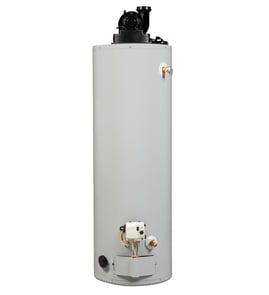




What is the average labor cost to install a 50-gallon gas water heater?
For a typical 50-gallon gas water heater installation, we usually see labor run about $400 to $1,000 for a straightforward replacement. If your Ao Smith FSG50232 install needs gas line changes, venting updates, or tight-space access, labor commonly increases beyond that range.
- Swap vs. new install: Replacing an existing gas water heater in the same spot costs less than a first-time install.
- Venting work: Reusing an existing vent is simpler; reworking vent pipe or adding draft/combustion changes adds time.
- Gas piping changes: New shutoff valve, sediment trap, or line resizing increases labor.
- Water line updates: Corroded shutoffs, rigid piping, or re-plumbing to meet current practice adds cost.
- Location and access: Attic, crawlspace, or tight closet installs typically cost more than an open garage/basement.
- Haul-away and disposal: Some installers charge separately.
| Install scenario | Typical labor range | Notes |
|---|---|---|
| Like-for-like replacement (same location) | $400 to $800 | Most common when connections line up well |
| Replacement with moderate updates | $700 to $1,200 | Minor venting or piping changes |
| Complex install (tight access, major vent/gas changes) | $1,200+ | Can rise quickly with code-driven rework |
- Confirm tank size and fuel type (50-gallon, natural gas).
- Measure clearance for removal and placement (doorways, stairs, closet opening).
- Identify whether you have rigid venting or special venting requirements.
- Check the condition of the shutoff valves and visible piping.
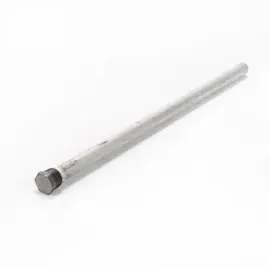
- If your current heater has performance issues (lukewarm water, odor, noise), consider maintenance parts like an anode rod 100109594 during service.
Labor is the biggest variable in total cost. A simple swap can be priced predictably, but venting and gas-line work can add hours and additional materials, which is why two installs for the same 50-gallon heater can be priced very differently.
Last updated: January 2026
What is the life expectancy of an A. O. Smith hot water heater?
An A. O. Smith tank-style gas water heater like model FSG50232 typically lasts 8 to 12 years. With consistent maintenance (especially flushing sediment and protecting the tank from corrosion), many units reach 10 to 15 years of service.
| Water heater type | Typical lifespan | What usually ends it |
|---|---|---|
| Tank-style gas (like FSG50232) | 8 to 12 years | Tank corrosion, sediment damage |
| Tankless gas | 15 to 20 years | Scale buildup, component wear |
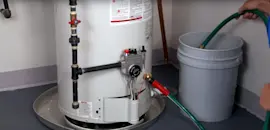
- Flush the tank periodically to reduce sediment buildup.
- Check and replace the sacrificial anode when it is heavily worn; see the anode rod 100109594.
- Keep the burner and pilot area clean and unobstructed.
- Verify stable gas supply and proper combustion (yellow, sooty flames shorten life).
- Watch for early signs of internal corrosion (rusty water, frequent pressure relief valve dripping).
- Hot water runs out faster than it used to.
- Rumbling or popping sounds (sediment overheating).
- Rust-colored water from the hot side.
- Moisture or leaking at the tank seam or bottom.
- Repeated pilot outages or burner issues (after basic cleaning and checks).
Most tank failures are caused by corrosion and sediment. Staying ahead of those two issues can delay leaks, improve recovery, and reduce energy waste, which is why parts like the anode rod are so important on a gas water heater.
Last updated: January 2026
What is the most common problem with gas water heaters?
The most common gas water heater problem is no hot water because the pilot will not stay lit, usually tied to the thermocouple/pilot system or the gas control valve. On Ao Smith model FSG50232, sediment buildup is also very common and can cause rumbling, slow recovery, and reduced efficiency.
- Pilot goes out repeatedly: thermocouple issue, pilot tube issue, or gas control/valve issue
- No hot water but burner never lights: pilot system problem or gas control valve problem
- Rumbling or popping sounds: sediment buildup in the tank
- Water is hot then turns lukewarm fast: dip tube problem or heavy sediment
- Sooting or poor flame: burner/orifice restriction or combustion air issues
- Confirm the gas shutoff valve is fully open and other gas appliances work.
- Look through the sight glass (if equipped) to see whether the pilot is lit.
- If the pilot lights but will not stay lit, focus on the pilot safety circuit.
- If you hear rumbling, plan a tank flush to remove sediment.
- If you smell gas, stop and have the unit checked by a qualified technician.
These are frequent replacement parts for this model when the pilot system is the root cause:
| Symptom | Common suspect | Example model part to check |
|---|---|---|
| Pilot lights then drops out | Thermocouple not proving flame | Thrmocoupl 100108462 |
| Weak/unstable pilot flame | Pilot feed restricted or damaged | Pilot tube 100110045 |
| Pilot ok but burner control is erratic | Gas control/valve issue | Valve 100109724 |
A gas water heater that cannot keep the pilot lit will not heat water reliably, and sediment buildup makes the heater work harder, raising operating cost and shortening tank life. Addressing the pilot system and flushing sediment are the two highest-impact fixes.
Last updated: January 2026