Error Codes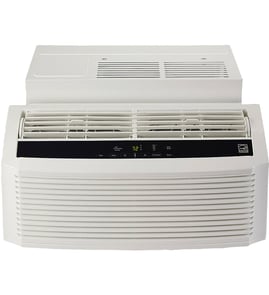




How many square feet will a 60,000 BTU air conditioner cool?
A 60,000 BTU air conditioner typically cools about 2,000 to 3,000 sq. ft. in average conditions. That estimate assumes standard 8-foot ceilings and typical insulation; heavy sun exposure, poor insulation, or high ceilings reduce the effective coverage.
Quick sizing rule (BTU to square feet)
We use a practical rule of thumb for many homes: about 20 to 30 BTU per sq. ft.
- 60,000 BTU ÷ 30 = ~2,000 sq. ft. (harder conditions)
- 60,000 BTU ÷ 20 = ~3,000 sq. ft. (easier conditions)
- Add capacity if the space has lots of west-facing glass, high occupancy, or a hot kitchen nearby
What changes the real-world coverage
These factors can swing sizing by hundreds of square feet:
- Ceiling height (taller ceilings need more BTU)
- Insulation and air leaks (older homes often need more BTU)
- Sun exposure and window area (direct sun adds load)
- Humidity level (humid climates need more capacity for comfort)
- Room layout (open floor plans cool differently than closed rooms)
Why it matters (oversized vs. undersized)
Correct sizing helps comfort and efficiency. An oversized unit can cool too fast and leave humidity behind; an undersized unit can run constantly and still struggle on hot days.
| If the AC is... | What you may notice | What to do |
|---|---|---|
| Oversized | Short cycling, clammy air | Consider a smaller capacity or better airflow management |
| Undersized | Runs nonstop, can’t reach set temp | Increase capacity or reduce heat gain (shades, sealing) |
| Right-sized | Steady run times, even comfort | Maintain filters and coils regularly |
Model note for GE AWCS06BWB1
GE AWCS06BWB1 is a room (window) air conditioner model; 60,000 BTU is far beyond typical window-unit capacity. If your AWCS06BWB1 is not cooling well, start with airflow and maintenance basics like cleaning or replacing the filter WJ85X33815.
Last updated: January 2026
What is the 3 minute rule for air conditioners?
The 3-minute rule means waiting at least 3 minutes after you turn off your GE room air conditioner model AWCS06BWB1 before turning it back on. That short pause lets refrigerant pressures equalize, which helps protect the compressor and reduces nuisance shutdowns from rapid cycling.
How to follow the 3-minute rule (best practice)
- If you shut the unit off, wait 3 minutes before pressing ON again.
- If power flickers or the unit is unplugged, wait 3 minutes before restarting.
- Avoid rapidly switching between Cool and Fan modes; give it a few minutes.
- If the unit seems “unresponsive” right after stopping, it may be in a built-in delay.
- Keep airflow strong; a dirty filter can contribute to icing and short cycling.
Why the wait matters
When an air conditioner stops, refrigerant pressures on the high and low sides need time to balance. Restarting too quickly can force the compressor to start under higher load, which increases stress, heat, and the chance of repeated trips.
What you may notice on AWCS06BWB1
Many modern room air conditioners include an automatic restart delay to protect the compressor. Here is what that can look like:
| Situation | What you see | What to do |
|---|---|---|
| You turn it off then immediately back on | Fan may run, compressor stays off | Wait 3 minutes; then cooling should resume |
| Power outage or unplugged briefly | Unit may not cool right away | Restore power, then wait 3 minutes |
| Unit cycles frequently | Room never feels stable | Clean filter, check airflow, verify settings |
Quick maintenance that supports reliable cooling
A clogged filter restricts airflow, which can lead to evaporator icing and poor performance. For AWCS06BWB1, replace or clean the filter WJ85X33815 as needed and keep the front grille clear of dust and blockage.
Why it matters
Following the 3-minute rule helps prevent compressor strain, reduces short cycling, and keeps cooling more consistent, especially during hot days when the system is already working hard.
Last updated: January 2026
What is the average cost of replacing an air conditioning unit?
Replacing an air conditioning unit ranges widely by type: most window (room) air conditioners like GE AWCS06BWB1 are typically replaced for a few hundred dollars plus basic installation supplies, while whole-home central AC replacements commonly run several thousand dollars including labor.
Typical replacement cost ranges (by system type)
- Window (room) air conditioner: typically $150 to $600 for the unit (installation is usually DIY)
- Portable air conditioner: typically $250 to $700
- Ductless mini-split (single zone): typically $3,000 to $8,000 installed
- Central air conditioner (split system): typically $5,000 to $12,000 installed
- High-end or complex central installs: can exceed $15,000
| System type | What you usually pay for | Biggest cost driver |
|---|---|---|
| Window (room) AC | Unit + small supplies | Unit size/features |
| Mini-split | Equipment + professional install | Labor + line set/electrical |
| Central AC | Equipment + labor + possible duct/electrical | Home size + ductwork condition |
What drives the price up or down
- Capacity and efficiency (higher efficiency equipment costs more up front)
- Installation complexity (electrical upgrades, access, permits, line set routing)
- Ductwork condition (central systems may need duct repairs or modifications)
- Labor rates in your area (often a major portion of installed cost)
- Add-ons (thermostat upgrades, surge protection, condensate pump, etc.)
When replacement makes more sense than repair (room AC)
For a room air conditioner like AWCS06BWB1, replacement is often the better value when:
- Cooling performance is poor even after cleaning and basic maintenance
- The unit has repeated electrical issues (cord, plug, controls)
- The coil is badly corroded or the sealed system is failing
- Repair cost approaches a large share of the price of a new unit
If you are repairing instead of replacing, common maintenance and airflow fixes start with the filter WJ85X33815.
Why it matters
Choosing the right “replacement” path prevents overspending: a window air conditioner is usually a straightforward swap, but central and ductless systems are priced mainly around professional labor, home size, and installation requirements.
Last updated: January 2026