 Owner’s manual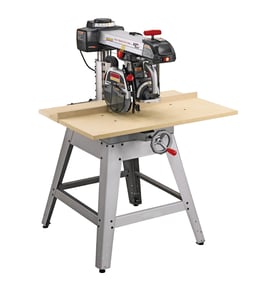

Are radial arm saws worth anything?
Yes. A Craftsman radial arm saw like model 315220381 is worth something when it is complete, runs smoothly, and can be aligned accurately; these saws excel at repeatable crosscuts, dados, and other straight-line cuts, but they only hold value when they are set up and used with the correct guards and adjustments from the owner's manual.
What drives the value (and usefulness)
Radial arm saw value is mostly about condition and how safely and accurately it can be tuned.
- Completeness: blade guard, riving knife, anti-kickback pawls, knobs, and covers installed
- Accuracy potential: the arm, carriage, and table can be aligned and stay aligned
- Motor and carriage feel: smooth travel, no grinding, no excessive play
- Electrical condition: intact cord/plug, switch works reliably, no overheating smell
- Intended use: best for crosscutting and dado work; ripping requires extra care and correct setup
Quick worth-it checklist for model 315220381
Use this as a fast go/no-go before you invest time restoring or tuning.
| Check | What “good” looks like | Why it matters |
|---|---|---|
| Safety hardware present | Guarding and anti-kickback parts are installed | Missing safety parts reduces safe usability and resale value |
| Alignment routine | You can do frequent alignment checks (about 10 minutes) | This saw is designed to hold fine tolerances when kept aligned |
| Proper power setup | 3-prong plug into a properly grounded outlet | Reduces shock risk and nuisance electrical issues |
| Material use | Cutting wood and wood composites only | Prevents unsafe operation and premature wear |
How we recommend using it (to keep it valuable)
The manual notes this saw can do cross cutting, ripping, mitering, beveling, compound cutting, and resawing, plus dado or molding cuts with attachments. To keep performance and value high:
- Perform the initial setup adjustments before regular use
- Do a weekly alignment check to maintain precision and reduce machine damage
- Keep the feed controlled during crosscuts to prevent the saw from “climbing”
- Use the correct blade type for the cut (crosscut vs. dado stack, when applicable)
- Keep the table/fence straight and replace worn sacrificial surfaces as needed
Why it matters
A radial arm saw is only “worth it” when it is safe and predictable. On the 315220381, frequent alignment checks and correct guarding are what turn an older saw into a precise, useful shop tool instead of a frustrating project.
Last updated: February 2026
What are the common problems with radial arm saws?
Common problems on the Craftsman 315220381 radial arm saw include inaccurate cuts from misalignment, the blade pushing the workpiece sideways during crosscuts (blade heeling), riving knife contact, and heavy sawdust buildup that affects guarding and cut quality. Regular alignment checks and cleaning prevent most issues.
Most common symptoms and what they usually mean
- Cuts are not square or repeatable: table, arm, or column alignment is off.
- Blade pushes wood to one side on crosscuts: blade is heeling, fence/tables are not straight, or the arm/column is loose.
- Riving knife strikes the wood: riving knife is not aligned to the blade.
- Saw feels harder to control in a crosscut: control cut device is not set up correctly or needs adjustment.
- Poor cut quality or burning: blade teeth are dull, bent, or dirty.
- Excess sawdust in guards and covers: cleaning frequency is too low.
Checks we recommend first (fast and high impact)
- Unplug the saw and remove the switch key before any inspection or adjustment.
- Verify alignment weekly; this model is designed for fine tolerances, and frequent checks help maintain accuracy.
- Inspect the blade and teeth; sharpen or replace if dull or damaged.
- Confirm the fence and tables are straight; sand or replace if they are not true.
- Clean sawdust from the work area and blade guard assembly; buildup can interfere with safe operation.
Quick problem-to-fix guide
| Problem you see | Common cause | What to do |
|---|---|---|
| Wood shifts sideways on crosscut | Blade heeling; loose arm/column; fence not straight | Square blade to fence; tighten/adjust arm and column; true the fence/table |
| Riving knife hits the cut | Riving knife misaligned | Align riving knife to blade |
| Inaccurate angles or drifting | Arm/table/column misalignment | Perform the alignment sequence in the manual |
| Guard area packs with dust | Infrequent cleaning | Clean inside blade cover and guards more often |
Why it matters
A radial arm saw can make complex cuts with fine tolerances, but accuracy depends on keeping the arm, column, table, and blade aligned. Good alignment also improves control and reduces the chance of the saw “climbing” during a crosscut.
For the exact adjustment sequence, control cut device setup, and maintenance steps for model 315220381, follow the owner's manual.
Last updated: February 2026
What is the best brand of radial arm saw?
There is no single “best” brand of radial arm saw; the best choice depends on how you will use it (crosscutting vs. ripping), how often you will run it, and how much adjustability and safety hardware you want. If you already own a Craftsman 315220381, keeping it properly adjusted and guarded usually matters more than the name on the badge.
How we recommend choosing a “best” brand
Focus on the factors that affect cut quality, safety, and long-term serviceability:
- Intended work: frequent crosscuts, occasional rips, or production use
- Build and alignment stability: arm, column, yoke, and carriage should lock solidly
- Safety features: blade guard, removable switch key, and anti-kickback pawls for rip cuts
- Parts and documentation: clear diagrams and parts lists make maintenance easier
- Shop fit: table size, fence setup, and dust control options
For your Craftsman saw, the 315220381 owner's manual explains key safety features (like the removable switch key and blade guard assembly) and calls out anti-kickback pawls for rip cuts, which are critical regardless of brand.
Brand comparison (what “best” usually means)
Radial arm saws tend to fall into a few practical categories:
| Category | What it’s best for | What to watch for |
|---|---|---|
| Vintage, heavy-duty cast iron saws | Stability and smooth cuts | Condition, alignment wear, missing guards |
| Modern, industrial or production saws | Daily use, repeatability | Cost, space, power requirements |
| Value and homeowner-grade saws | Occasional projects | More frequent tune-ups, lighter-duty components |
Why it matters
A radial arm saw can do accurate crosscuts and controlled rip cuts, but only when the arm and carriage lock securely and the guarding and anti-kickback hardware are installed correctly. “Best brand” becomes less important than a saw that is complete, aligned, and used with the right setup for the cut.
Practical tips if you are evaluating a used radial arm saw
- Verify the blade guard assembly is present and functional.
- Confirm the saw has a removable switch key and the switch works reliably.
- Check that the arm lock and carriage travel feel smooth with no binding.
- Inspect the table and fence for flatness and secure mounting.
- For ripping, make sure anti-kickback pawls are included and used.
Last updated: February 2026
When did Craftsman stop making radial arm saws?
Craftsman radial arm saws were most common in the Sears lineup from the mid-1900s through the early 1990s, and they became far less common after that as miter saws took over. For your Craftsman model 315220381, the manual shows a publication date of 10-99, which confirms documentation and parts identification support continued into the late 1990s.
What we know for Craftsman model 315220381
The model-specific documentation identifies your saw as a 10-inch stationary radial arm saw and includes exploded views and parts lists for service work. Use the 315220381 owner's manual to match assemblies and callouts before ordering or replacing components.
- Model number 315220381 is shown on the manual cover.
- The manual includes safety rules, assembly, operation, maintenance, and a parts list.
- The manual notes the model plate is attached to the base (useful for confirming the exact model).
- The manual publication date shown is 10-99.
Practical timeline owners use (what “stopped making” usually means)
Because Craftsman tools were produced across multiple model families and suppliers, owners typically track the change by retail availability rather than a single stop date.
| Timeframe | What you typically see | What it means for you |
|---|---|---|
| 1950s to 1980s | Radial arm saws were a common shop saw | Many units still run well with alignment and maintenance |
| Late 1980s to early 1990s | Fewer new models compared with earlier decades | Parts and documentation become more model-specific |
| Late 1990s | Manuals and parts diagrams still published for existing models | You can still identify correct parts and assemblies |
Why it matters for repair and safe operation
Radial arm saw performance depends heavily on alignment, guarding, and smooth carriage travel. When restoring or maintaining an older saw like the 315220381, a careful setup prevents inaccurate cuts and reduces the chance of binding.
- Confirm arm and column locks hold firmly
- Check carriage bearings/rollers for play
- Verify fence and table are flat and secure
- Inspect cord, switch, and wiring for damage
- Set blade square and recheck bevel/miter scales
Last updated: February 2026