Error Codes




Do I need to drain my Haier portable air conditioner?
Most Haier portable air conditioners, including model QPCD10AXLWW1, only need draining when the internal tank fills or when you’re in very humid conditions. In normal cooling, many units re-use condensate to improve efficiency, so routine daily draining is usually not required.
- The unit stops cooling and shows a “full tank” style indicator or beeps
- Water is leaking or sloshing inside the cabinet
- You’re running Dry/Dehumidify mode a lot (this creates more water)
- Indoor humidity is consistently high (rainy season, basement, coastal air)
- You’re storing the unit or moving it and want to prevent spills
- Confirm the exhaust setup is tight and venting outdoors; poor venting can increase condensation.
- Make sure the drain plug/cap is seated and the drain pan area is clean.
- Clean the air filters; restricted airflow can cause icing and extra water.
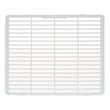
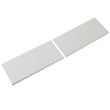
Helpful parts for airflow and venting on QPCD10AXLWW1 include the filter of lower panel WJ85X23126 and the room air conditioner exhaust hose WJ65X22920.
| Option | Best for | What to expect |
|---|---|---|
| Manual drain (remove drain cap, drain into pan) | Occasional “tank full” events | Fast, but you must monitor and empty as needed |
| Continuous drain (hose to floor drain) | Very humid climates, long run times | Most consistent; reduces shutdowns |
| Auto-evaporation (if equipped) | Cooling mode in moderate humidity | Less draining, but not “no drain ever” |
If the tank fills and the unit shuts down, you lose cooling and can get water leaks. Keeping filters clean and the exhaust hose sealed helps the system run colder and drier with fewer drain interruptions.
Related help: room air conditioner installation and operation tips
Last updated: January 2026
How to use Haier AC without remote?
If you lost the remote for your Haier room air conditioner model QPCD10AXLWW1, you can still turn the unit on and off using the control panel on the air conditioner. For full control of temperature, fan speed, and modes, replace the remote or use a compatible universal remote.
- Press the Power button on the unit to turn cooling on or off.
- Use any Mode, Fan, Temp Up/Down, or Timer buttons on the unit (if your control panel has them).
- If the panel is unresponsive, unplug the unit for 2 minutes, then plug it back in to reset the electronics.
- Make sure the unit is set up correctly for operation; poor venting can make it seem like controls are not working.
Most portable and room air conditioners rely on the remote for convenient access to all settings. These are the most reliable options:
- Replace the remote with the correct part: remote control WJ26X23127
- Use a universal A/C remote that supports Haier codes (follow the universal remote’s pairing steps)
- If your unit is a portable style that vents through a window, confirm the window kit and hose are complete and sealed; missing pieces can cause weak cooling and frequent cycling
| Symptom | Likely cause | What to check |
|---|---|---|
| Unit turns on but won’t change settings | Panel lock or limited panel controls | Look for a lock icon or hold a lock button combo (if present) |
| Unit beeps but doesn’t respond | Control needs reset | Unplug 2 minutes, then retry |
| Cooling seems weak even on max | Venting or airflow problem | Hose connection, window seal, clean filters |
| Remote replacement still won’t work | Sensor or control issue | Fresh batteries, line-of-sight, try reset |
Running a room air conditioner without the right controls often leads to comfort problems (wrong temperature or mode) and efficiency issues. Getting the correct remote back in service helps you set cooling mode, fan speed, and timers so the unit can maintain temperature without unnecessary run time.
For more setup and operating best practices, use: room air conditioner installation and operation tips
Last updated: January 2026
What are the common problems with Haier AC?
For the Haier QPCD10AXLWW1 room air conditioner, the most common problems are weak or warm airflow (often from dirty filters or poor venting), water leaking, and control or sensor issues that cause short cycling or incorrect temperature control.
- Running but not cooling well: clogged air filter, blocked intake or exhaust, dirty coils, or a fan problem
- Water leaking inside: unit not level, blocked drain path, or high humidity causing excess condensate
- Poor airflow: dirty filter, obstructed louvers, or a kinked exhaust hose on portable setups
- Won’t turn on or shuts off: power supply issue, control board problem, or overheating protection
- Odd noises or vibration: loose panels, fan blade rubbing, or worn wheel/caster on portable units
- Clean the filters and confirm airflow: A clogged filter is the most common cause of weak cooling.
- Verify venting is correct (portable units): Make sure the exhaust path is short, straight, and sealed.
- Check for ice on the evaporator area: Ice points to restricted airflow or a temperature-sensing issue.
- Look for water path problems: Confirm the unit is level and the drain outlet/cover area is not blocked.
- Reset power: Unplug for 5 minutes, then restart to clear minor control glitches.
If your issue is related to venting, filtration, or portability hardware, these model-matched parts are often the fix:
| Symptom | What to inspect | Example model-matched part |
|---|---|---|
| Weak cooling on portable setup | Exhaust routing and seals | Room air conditioner exhaust hose WJ65X22920 |
| Weak airflow or dust buildup | Filter and filter frame fitment | Filter of lower panel WJ85X23126 |
| Unit hard to move or wobbles | Casters/wheels | Universal wheel WJ01X23120 |
Room air conditioners lose performance fast when airflow is restricted or exhaust air is not properly routed. Fixing airflow and drainage first prevents icing, reduces humidity problems, and helps the compressor run efficiently.
Related help: window air conditioner running but not cooling, troubleshooting a leaking room air conditioner.
Last updated: January 2026
What is the price of Haier AC 1 ton?
A “Haier AC 1 ton” price depends on the exact Haier model, the unit type (window, portable, or split), and where you’re buying it. For Haier model QPCD10AXLWW1, we focus on replacement parts pricing, such as the room air conditioner exhaust hose WJ65X22920.
“1 ton” is a standard cooling-capacity definition: 1 ton equals 12,000 BTU per hour. Many room air conditioners are marketed by BTU instead of tons, so the best way to compare prices is to match the same capacity and unit style.
- Match cooling capacity (BTU/hr) to “tons”
- Match unit type (portable vs window vs split)
- Compare efficiency ratings (EER/CEER for room units)
- Confirm what’s included (window kit, exhaust hose, remote)
- Factor in installation and service costs
If your goal is repair vs replace, price out the parts that commonly affect venting, fit, and usability on portable-style room AC setups.
- Venting: room air conditioner exhaust hose WJ65X22920
- Window kit: Haier main window panel- dual hose WJ71X24858
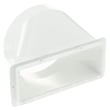
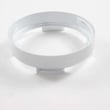
- Hose fitting: hose connector WJ35X23121
- Mobility: universal wheel WJ01X23120
| Goal | What to compare | What you get |
|---|---|---|
| Price a “1 ton” AC | 12,000 BTU/hr, same unit type, similar efficiency | True apples-to-apples pricing |
| Decide repair vs replace | Parts total plus labor | Clear total cost picture |
| Improve weak cooling | Airflow, filters, and venting first | Often restores performance |
“1 ton” pricing is only meaningful when the capacity and unit type match. On a room air conditioner like QPCD10AXLWW1, a crushed hose, poor window seal, or missing panel can reduce cooling performance even when the compressor is working.
For cooling complaints, we follow the checks in window air conditioner running but not cooling before replacing major components.
Last updated: January 2026