Error Codes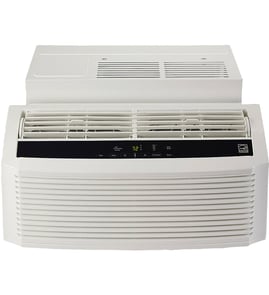




Does the mini air conditioner really work?
Yes, a “mini air conditioner” can work, but what it does depends on the type. For real air conditioning like your GE room air conditioner model AKLK08AAG1, the unit must remove heat and exhaust it outside; many “mini AC” gadgets are just small fans or evaporative coolers.
What most “mini AC” products actually are
Many products marketed as mini air conditioners fall into one of these categories:
- Evaporative coolers: Add moisture and can feel cooler in very dry air, but they do not truly air-condition a room.
- Personal spot coolers: Cool a very small area right in front of the outlet.
- True portable ACs: Refrigerant-based cooling, but they must vent hot air outside to work correctly.
Quick comparison: what to expect
| Type sold as “mini AC” | Needs venting? | Best use case | What you will feel |
|---|---|---|---|
| Evaporative cooler | No | Dry climates, small personal area | Mild cooling, higher humidity |
| Small “desktop AC” | No | Very close range only | Fan-like cooling |
| Portable AC (single-hose) | Yes | Small rooms with a window | Real cooling, less efficient |
| Portable AC (dual-hose) | Yes | Small to medium rooms | Real cooling, more efficient |
| Window/room AC (like AKLK08AAG1) | Built-in exhaust path | Bedrooms, offices | Strongest, most consistent cooling |
Why it matters
If a unit cannot exhaust heat outdoors, it cannot lower the room’s total heat load. That is why window air conditioners and properly vented portable ACs deliver true temperature drop, while many “mini AC” products only improve comfort in a limited area.
How to get better cooling from a room air conditioner
Before replacing the unit, we recommend these basics:
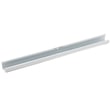
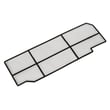
- Clean or replace the air filter; a clogged filter reduces airflow and cooling (see filter WJ85X27793).
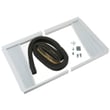
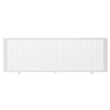
- Make sure the front grille/panel is seated correctly so airflow is not blocked.
- Close doors, blinds, and air leaks to reduce heat gain.
- Set the mode to Cool and use a lower set temperature.
- If the unit runs but does not cool, use symptom-based troubleshooting like window air conditioner running but not cooling.
Last updated: January 2026
How many BTU do I need to cool a 20x20 room?
A 20x20 room is 400 square feet, so we typically recommend about 8,000 BTU (400 x 20 BTU per sq ft) for a standard room. For your GE room air conditioner model AKLK08AAG1, your final BTU target depends on sun exposure, insulation, and ceiling height.
Quick BTU estimate for a 20x20 room
Use this simple sizing method for most room air conditioners:
- Measure room size: 20 ft x 20 ft = 400 sq ft
- Multiply by 20 BTU per sq ft
- Result: 8,000 BTU
Adjust up or down for real-world conditions
- Add BTU for strong afternoon sun or large west-facing windows
- Add BTU for high ceilings (over about 8 ft)
- Add BTU for poor insulation or lots of air leaks
- Add BTU if the room regularly has multiple people in it
- Reduce BTU slightly for shaded rooms with good insulation
BTU sizing table (common room sizes)
| Room size (sq ft) | Typical BTU range |
|---|---|
| 300 | ~6,000 |
| 400 | ~8,000 |
| 500 | ~10,000 |
| 600 | ~12,000 |
Why it matters
Correct BTU sizing helps your GE window unit cool evenly and control humidity. An undersized unit runs constantly and struggles; an oversized unit short-cycles, which can leave the room feeling clammy.
Related maintenance that affects cooling
Even with the right BTU rating, airflow problems can make an air conditioner feel underpowered:
- Clean or replace the air filter regularly (see filter WJ85X27793)
- Make sure the front grille and intake are not blocked
- Keep the evaporator and condenser coils free of dust buildup
- Confirm the unit is level and installed correctly
- If you see an error code, use GE error codes to narrow the cause
Last updated: January 2026
What are the most common issues with AKLK08AAG1?
For the GE AKLK08AAG1 room air conditioner, the most common problems are weak cooling from restricted airflow, water leaking from poor drainage or tilt, and control or connectivity issues. Many fixes are basic maintenance; a few point to a failed component that needs replacement.
Most common symptoms and what usually causes them
- Not cooling well: dirty or clogged air filter, blocked front intake, iced evaporator coil from low airflow
- Unit leaks water indoors: unit not tilted slightly outward, clogged drain path, dirty filter causing icing and meltwater overflow
- No power or intermittent operation: tripped breaker, loose plug, damaged cord, internal electrical issue
- Loud rattling or vibration: loose front panel, unit not secured in the window, debris in the fan area
- Wi-Fi/app not connecting (if equipped): weak signal, module issue, router band mismatch
Quick checks we recommend first (10 to 20 minutes)
- Set Mode = Cool and lower the set temperature; confirm the fan is running.
- Remove and clean the air filter; reinstall it fully seated. If it is torn or won’t clean up, replace it with the filter WJ85X27793.
- Make sure the front intake and louvers are clear; reseat the front panel WJ71X27811 if it feels loose.
- Check for ice on the front coil area; if iced, run Fan Only until fully thawed, then clean the filter again.
- For leaks, confirm the unit has a slight outward tilt so condensate drains outside.
Symptom-to-fix guide
| Symptom | Most likely cause | What to do |
|---|---|---|
| Weak cooling | Airflow restriction | Clean/replace filter; clear intake |
| Water indoors | Drain/tilt issue | Tilt outward; clear drain path |
| Rattling | Loose panels/mounting | Tighten mounting; reseat front panel |
| Wi-Fi drops | Signal/module | Improve coverage; consider wifi module WJ26X27827 |
Why it matters
A clean filter and solid airflow prevent icing, improve cooling performance, and reduce water leaks. Catching a loose panel early also prevents vibration noise and wear on the fan and housing.
Last updated: March 2026