 Owner’s manual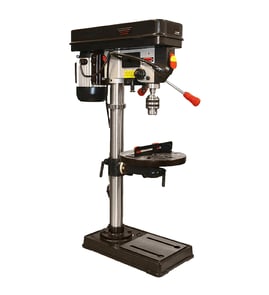

What to look for in a good drill press?
A good drill press gives you stable, repeatable holes with safe, controlled operation. For a Craftsman 113213130 13-inch drill press, prioritize a solid column and table, a wide speed range you can actually set correctly, and safety features that help you clamp work and avoid “freehand” drilling (see the 113213130 owner's manual).
Key features that matter most
- Quill travel and depth stop: More quill travel and a reliable depth stop make repeat drilling easier and more accurate.
- Speed range and easy speed changes: You need low speeds for large cutters and higher speeds for small bits; the manual also calls out strict speed limits for certain accessories.
- Table rigidity and adjustability: A table that locks firmly reduces chatter and wandering holes.
- Chuck and spindle condition: Low wobble (runout) improves accuracy; worn bearings or a poorly seated chuck cause wobble.
- Workholding support: A drill press is designed for clamping and supporting the workpiece, not holding it by hand.
Safety and accessory compatibility (don’t skip this)
The drill press is only as “good” as its safe operating envelope. Our Craftsman 113213130 manual highlights accessory limits that should guide your buying decision and how you use the tool.
| Item or setup | What to look for | Why it matters |
|---|---|---|
| Holesaw use | Ability to run 400 RPM or less | Prevents thrown work and tool stress |
| Drum sander use | Ability to run 1800 RPM or less | Reduces risk of accessory failure |
| Bit length | Avoid bits over 7 inches long or extending 6 inches below chuck jaws | Long bits can bend or break |
| Workholding | Table and fence/clamp options | Prevents the workpiece from spinning or lifting |
Quick “in the shop” checklist before you buy or tune up
- Lock the head and table; push on them to check for flex.
- Spin the chuck by hand (unplugged); look for visible wobble.
- Verify the depth stop is easy to set and repeat.
- Confirm you can set the speeds you need for your common bits and accessories.
- Plan for clamping: a vise, clamps, and a backer board for clean exits.
Why it matters
Most drilling problems people blame on the drill press are really about control: wrong speed, poor clamping, or worn chuck/bearings. A “good” drill press helps you set speed correctly, hold the work securely, and drill repeatably.
For parts and diagrams for this Craftsman model, start with the model parts list, or search by model number on Sears PartsDirect.
Last updated: February 2026
What is the 4 inch rule for drill press?
The 4-inch rule for a drill press means we keep our hands and fingers at least 4 inches away from the rotating drill bit, chuck, and spindle while the Craftsman 113213130 drill press is running. This distance helps prevent accidental contact and serious injury.
How we apply the 4-inch rule safely
- Clamp or vise the workpiece instead of holding it by hand.
- Use a scrap wood backer under the workpiece to reduce splintering and protect the table.
- Keep hands out of the “line of fire” if the bit grabs and the workpiece tries to spin (kickback).
- Stop the drill press before making adjustments, measuring, or clearing chips.
- Remove the switch key when you walk away so the tool cannot be started unintentionally.
Related safety rules from the Craftsman 113213130 manual
The 113213130 owner's manual reinforces several habits that support the 4-inch rule, including:
| Safety habit | What to do | Why it matters |
|---|---|---|
| Secure the drill press | Bolt the base to the floor or to stable plywood | Reduces tipping and movement during drilling |
| Avoid setup work while rotating | Do not do layout, assembly, or setup on the table with the tool spinning | Prevents thrown work and tool contact |
| Use correct accessories and speeds | Follow accessory limits (example: holesaws at 400 RPM max) | Reduces breakage and kickback risk |
| Use proper drill length | Do not use overly long drills that extend too far below the chuck | Helps prevent bending, whipping, or breakage |
Why it matters
Most drill press injuries happen at the point of operation. The 4-inch rule creates a simple “no-hands zone” around the rotating bit and chuck so we rely on clamps, vises, and proper setup instead of our fingers.
Ordering parts and manuals
We use the model number 113213130 to match the correct diagrams and replacement parts; if you are searching beyond the parts list, use Sears PartsDirect to look up parts by model number.
Last updated: February 2026
How to repair a drill press spindle?
On the Craftsman 113213130 13-inch drill press, spindle repair usually means correcting chuck seating, servicing the quill and spindle splines, and replacing worn spindle bearings if runout or noise persists. Use the safety and adjustment procedures in the owner's manual.
Safety first
- Switch OFF and unplug before servicing
- Wear eye protection
- Keep hands clear of the quill return spring and pulleys
- Support the head and table so nothing shifts while you work
- Take photos as you disassemble for accurate reassembly
What to check before disassembly
- Clean the tapered surfaces of the chuck and spindle so the chuck seats fully (a dirty taper causes wobble)
- Tighten pulley set screws and retaining hardware
- Verify belt tension and correct speed selection (vibration can feel like spindle trouble)
Common spindle-related fixes
- Wobble/runout: reseat chuck; if it continues, replace spindle bearings
- Grinding or rumbling: replace spindle bearings
- Rough feed or sticking: clean and lubricate spindle splines (grooves) and the quill rack (teeth)
- Quill returns too fast/slow: adjust quill return spring tension per the manual
Symptom-to-fix guide
| Symptom | Likely cause | Fix |
|---|---|---|
| Chuck won’t stay tight, wobble | Dirty/oily taper | Clean taper; reseat chuck |
| Persistent runout | Worn bearings | Replace spindle bearings |
| Quill feels gritty | Dry splines/rack | Clean and lubricate |
Why it matters
A worn bearing or poorly seated chuck increases runout, which enlarges holes, breaks bits, and adds vibration. Proper quill return spring tension improves control and prevents sudden quill movement.
Getting the right parts
Use model 113213130 to match the correct spindle, quill tube, chuck, and bearing items; you can also search by model on Sears PartsDirect.
Last updated: February 2026
What is a good horsepower for a drill press?
For a home shop drill press like the Craftsman 113213130 (13-inch), 1/3 to 1/2 HP is a good target for most wood and light metal drilling. This model is designed to run under normal load with a 1/3 HP, 1750 RPM ball-bearing motor; confirm motor and speed setup in the 113213130 owner's manual.
Quick horsepower guide (what to choose)
- 1/3 HP: typical woodworking, small to medium bits, occasional light metal
- 1/2 HP: more torque for larger bits, more frequent drilling, tougher hardwoods
- 3/4 to 1 HP: heavy, frequent drilling in thicker stock and harder metals (with proper speeds and tooling)
Match horsepower to the work you do
Use this as a practical rule of thumb when comparing drill presses or replacement motors.
| Your most common work | Good HP range | What you gain |
|---|---|---|
| Softwood, plastics, small holes | 1/3 to 1/2 | Smooth drilling, less cost |
| Hardwood, larger bits, more use | 1/2 to 3/4 | Better torque, less stalling |
| Frequent metalwork, larger diameters | 3/4 to 1 | More power reserve |
What matters as much as horsepower
Even with adequate HP, the wrong RPM or setup causes stalling, burning, and broken bits.
- Use the recommended drill speed chart inside the pulley cover
- Run slower RPM for larger bits and for metal
- Keep bits sharp; use cutting oil on metal
- Clamp the workpiece; do not hand-hold small parts
- Use only accessories designed for the drill press; follow accessory speed limits
Why it matters
Choosing the right horsepower helps prevent bogging down, but correct belt speed selection and safe workholding do more to improve hole quality and reduce kickback. For parts and diagrams for Craftsman model 113213130, you can also search by model on Sears PartsDirect.
Last updated: February 2026