Error Codes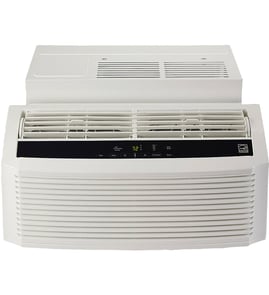



How long does a GE window air conditioner last?
A GE window air conditioner like model AHLE06CAQ1 typically lasts about 10 years with normal use. Consistent maintenance (especially keeping airflow clear and the filter clean) is what most directly determines whether it reaches that lifespan.
Typical lifespan and what changes it
Most room (window) air conditioners fall into a fairly tight lifespan range, but usage and care can move the result up or down.
- Typical lifespan: ~10 years
- Shorter lifespan: heavy run time, poor airflow, dirty coils, frequent power issues
- Longer lifespan: seasonal use, clean filter, correct installation angle, clean coils
Maintenance that helps you reach 10 years
These are the highest-impact steps we recommend for GE room air conditioners.
- Clean or replace the air filter regularly; use the correct filter WJ85X29573
- Keep the front grille and intake clear of dust and furniture
- Clean the evaporator and condenser coils at least seasonally
- Confirm the unit drains correctly (standing water can cause odors and corrosion)
- Use a dedicated outlet (avoid undersized extension cords)
Replace vs. repair: quick decision guide
| What you’re seeing | Most common cause | What we recommend |
|---|---|---|
| Runs but not cooling | airflow restriction, dirty coils | clean filter and coils first |
| Error code on display | sensor/control issue | check GE error codes |
| Water leaking indoors | improper tilt, blocked drain path | verify tilt and drainage |
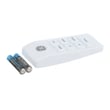
| Won’t respond to remote | weak remote or pairing issue | replace remote WJ26X27734 if needed |
Why it matters
A window air conditioner that is nearing end-of-life often loses efficiency first; that means longer run times, weaker cooling, and more moisture problems. Simple airflow maintenance is the easiest way to protect the compressor and extend service life.
Last updated: February 2026
How to replace filter on GE window AC unit?
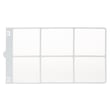
On the GE AHLE06CAQ1 room air conditioner, replacing the air filter is a quick front-access task: remove the front grille, slide the old filter out, slide the clean or new filter in the same orientation, then reinstall the grille. Use the correct replacement filter WJ85X29573.
Steps to replace (or clean) the filter
- Turn the unit off; unplug it if you will remove the front grille.
- Remove the front grille (typically by releasing the tabs or removing screws, depending on the grille style).
- Slide the filter straight out.
- If reusing the filter: rinse with warm water and a small amount of mild detergent; gently scrub if needed.
- Let the filter dry completely before reinstalling.
- Slide the filter back in fully, then reinstall the grille.
What to check if the filter will not fit
- Confirm you are using the model-correct part: filter WJ85X29573.
- Make sure the filter is not bowed or installed backwards.
- Verify the filter track is not blocked by dust buildup.
- Check that the grille is seated correctly; a misaligned grille can pinch the filter.
Filter care schedule (typical)
| Usage conditions | Clean/check frequency | Replace when |
|---|---|---|
| Daily cooling season use | Every 2 to 4 weeks | Torn, warped, or will not come clean |
| Pets, dust, or smoke | Every 1 to 2 weeks | Persistent odor or restricted airflow |
| Occasional use | Monthly | Frame damage or poor fit |
Why it matters
A clean filter keeps airflow strong across the evaporator coil, which helps the GE unit cool better, reduces icing risk, and lowers strain on the fan motor and compressor.
Last updated: February 2026
Why is my GE window air conditioner not getting cold?
If your GE AHLE06CAQ1 room air conditioner is running but not getting cold, the most common causes are restricted airflow (dirty filter or blocked grille), a dirty condenser/evaporator, or a control setting issue. Start with the filter and airflow checks before moving to deeper diagnostics.
Quick checks that fix most “not cold” complaints
- Clean or replace the air filter; a clogged filter can make the unit blow warm air. Use the correct filter WJ85X29573.
- Make sure the front intake is not blocked by curtains, furniture, or dust buildup on the grille.
- Set Mode = Cool, Fan = Auto, and lower the set temperature at least 5°F below room temperature.
- Confirm the unit is not in Energy Saver behavior that cycles the compressor off frequently.
- Give it time after a power interruption; many window ACs delay compressor restart for a few minutes.
Cleaning steps that restore cooling
Dirty coils reduce heat transfer and can make the compressor run without effective cooling.
- Unplug the unit.
- Remove the front grille and filter; wash the filter with warm water, let it dry fully.
- Vacuum dust from the intake area and visible coil surfaces (use a soft brush).
- If the outdoor side is packed with lint or debris, gently clean the condenser area.
What to watch for while it runs
| Symptom | Most likely cause | What to do next |
|---|---|---|
| Airflow is weak | Clogged filter or blocked intake | Clean/replace filter; clear obstructions |
| Airflow is strong but not cold | Dirty coils, bad sensor, control issue | Clean coils; check settings; consider diagnostics |
| Coils ice up | Low airflow or low charge | Fix airflow first; if icing returns, service is needed |
When it points to a repair (not just maintenance)
These signs usually mean a component problem that needs testing:
- Compressor hums but cooling never starts
- Repeated icing even with a clean filter and good airflow
- Unit cools briefly, then warms up and cycles abnormally
For guided troubleshooting by symptom and model type, use window air conditioner running but not cooling and for display/diagnostic indicators use GE error codes.
Why it matters
Running a window air conditioner with restricted airflow can cause icing, poor comfort, higher energy use, and extra wear on the compressor. Fixing airflow first is the fastest, lowest-cost path to restoring cooling.
Last updated: February 2026