Installation guide
 Owner’s manual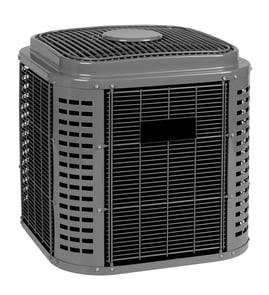





How much does a 1800 square-foot AC unit cost?
For a 1,800 square-foot home, a typical installed central AC or heat pump system commonly costs about $5,600 to $14,700, depending on capacity (often around 3 tons), efficiency (SEER2), ductwork condition, and electrical or refrigerant-line work. For your Payne PA10JA018000AA, use the sizing and installation requirements in the installation guide to plan accurately.
Installed cost is mostly labor and job complexity, not just the outdoor unit. Expect the biggest swings from:
- System type: straight cool AC vs. heat pump (your model is a heat pump)
- Efficiency rating (SEER2): higher efficiency usually costs more up front
- Ductwork: repairs, sealing, or resizing can add significant cost
- Electrical work: disconnect, breaker, wiring, and code updates
- Refrigerant line set: reuse vs. replace; long runs cost more
- Indoor equipment: coil/air handler compatibility and any upgrades
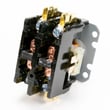
Your PA10JA018000AA installation guide calls out items that can affect labor and materials, including proper grounding/power wiring to the contactor and control wiring routing through a grommet.
| Unit size group | Liquid line (in.) | Vapor line (in.) |
|---|---|---|
| 018, 024 | 3/8 | 5/8 |
Why this matters: if your existing vapor line size or routing does not match what the system needs, the installer may recommend changes that increase total cost.
Use this list to get quotes that are easier to compare:
- Confirm the target tonnage (many 1,800 sq ft homes land near 3 tons, but load calculations decide)
- Ask whether the quote includes new line set or reusing the old one
- Verify what is included for electrical (disconnect, whip, breaker, permits)
- Confirm indoor coil/air handler changes and thermostat upgrades
- Ask about duct sealing or repairs if airflow is weak
Correct sizing and airflow protect comfort and equipment life. The owner guidance also emphasizes keeping airflow unrestricted and filters clean because restricted airflow reduces efficiency and can shorten system life; those same airflow issues can also push you toward a larger, more expensive system than you actually need.
Last updated: February 2026
How to look up AC model number?
Your Payne central air conditioner model number is printed on the unit’s rating (data) label; copy the full model exactly as shown so you can match the correct parts list, wiring information, and service specs in the owner's manual.
On most Payne outdoor units, the rating plate is in one of these common locations:
- On the outside of the cabinet near the electrical service panel
- Inside the access panel (after removing a few screws)
- Near the refrigerant service valves or compressor compartment
- On a metal plate or durable sticker labeled Model and Serial
- On an inside corner post or near the fan shroud
Accurate model information prevents mismatches when you are comparing components like a contactor or fan prop.
- Write the model number and serial number exactly (letters and numbers in order)
- Take a clear photo of the label before closing the panel
- Wipe dust off gently so characters are readable (avoid harsh solvents)
- Use the model number when checking wiring diagrams and 24 VAC control circuits
| Label field | What it’s used for | What it looks like |
|---|---|---|
| Model number | Parts lookup and correct documentation | Letters and numbers (often ends with a suffix) |
| Serial number | Manufacturing date tracking and service history | Letters plus numbers |
Central air conditioner parts and wiring can vary by model and production run. Using the exact model number helps you match the correct diagrams and replacement components shown in the installation guide.
Last updated: February 2026
How to tell AC size by model number?
For Payne model PA10JA018000AA, the cooling size is built into the model number as a three-digit “unit size” code. Here, 018 indicates about 18,000 BTU/hr, which equals 1.5 tons (18,000 ÷ 12,000). Confirm on the unit rating plate and in the installation guide.
Most central air conditioners and heat pumps use one of these nominal capacity codes:
- Look for a three-digit group like 018, 024, 030, 036, 042, 048, 060
- Read it as thousands of BTU/hr (example: 018 = 18,000 BTU/hr)
- Convert BTU/hr to tons: BTU/hr ÷ 12,000 = tons
- Verify the final capacity on the outdoor unit rating plate (especially if the system has been modified)
| Size code | Approx. BTU/hr | Approx. tons |
|---|---|---|
| 018 | 18,000 | 1.5 |
| 024 | 24,000 | 2.0 |
| 030 | 30,000 | 2.5 |
| 036 | 36,000 | 3.0 |
| 042 | 42,000 | 3.5 |
| 048 | 48,000 | 4.0 |
| 060 | 60,000 | 5.0 |
Correct sizing affects comfort, humidity control, and energy use. It also matters for matching the indoor coil and refrigerant metering device; the installation instructions call out verifying the indoor coil piston against the outdoor unit rating plate.
Even with the right “018” size, these items can make the system cool poorly:
- Outdoor unit clearances and airflow around the condenser
- Refrigerant tubing size and leak-free connections
- Correct line-voltage wiring and 24V control wiring
- Thermostat setup (cooling call and fan operation)
- Indoor airflow (filter, blower, coil cleanliness)
Last updated: February 2026