Owner’s manual



How many sq ft will a 4-ton AC cool?
A 4-ton central AC like the Icp N4A342AKA300 typically cools about 2,000 to 2,500 sq ft in an average, well-insulated home with standard 8-foot ceilings. Real coverage depends on insulation, windows, sun exposure, and ductwork; use a Manual J load calculation for the right size.
Typical coverage ranges (what changes the number)
Most 4-ton systems land in one of these buckets:
- 1,600 to 2,000 sq ft: older homes, poor insulation, lots of west-facing glass, hot climates
- 2,000 to 2,500 sq ft: average insulation, typical windows, balanced sun exposure
- 2,500 to 2,800 sq ft: tight envelope, great insulation, efficient windows, mild climates
Quick sizing reference table
| Home factor | If you have more of this | Expected sq ft per 4 tons |
|---|---|---|
| Insulation/air sealing | Leaks, low insulation | Lower end of range |
| Ceiling height | 9 to 12 ft ceilings | Lower end of range |
| Sun exposure/windows | Big sunny windows | Lower end of range |
| Duct condition | Leaky/undersized ducts | Lower end of range |
| Shade/efficient windows | Shaded, low-E glass | Higher end of range |
Why “right size” matters
A system that is too large can short-cycle (turn on and off frequently), which reduces humidity control and comfort. A system that is too small can run constantly and still not keep up on hot days.
What we recommend for your N4A342AKA300
- Confirm airflow basics first (these affect cooling capacity in real life):
- Check and replace the return air filter monthly during heavy use.
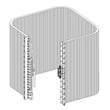
- Keep the outdoor coil and fins clear of grass clippings, leaves, and lint.
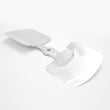
- Make sure nothing is obstructing the condenser fan blade.
- Use the thermostat correctly:
- Set the selector to COOL.
- Set the temperature below the current room temperature.
- Consider FAN = ON for steadier comfort (many installations benefit from continuous circulation).
- Use the model documentation for operating and maintenance details: owner's manual.
Parts that commonly affect cooling performance
If your outdoor unit is noisy, not moving air well, or has visible damage, these model-specific parts are common suspects:
For ordering additional replacement parts by model number, use the parts list for N4A342AKA300 or search on Sears PartsDirect.
Last updated: February 2026
How much does it cost to put AC in a 3,000 sq ft house?
Installing central AC for a 3,000 sq ft home typically costs $8,000 to $18,000 for a complete split-system (equipment plus labor). Final price depends on ductwork condition, required tonnage, efficiency (SEER2), and electrical or line-set work; use the N4A342AKA300 owner's manual for operation and maintenance basics.
Biggest factors that change the price
- Ductwork: sealing and minor repairs vs. adding or replacing ducts
- System size: many 3,000 sq ft homes land around 4 to 5 tons, depending on climate and insulation
- Efficiency level: higher SEER2 costs more up front
- Electrical work: disconnect, breaker, wiring, or service upgrades
- Refrigerant line set and pad: reuse vs. replace, plus routing difficulty
- Permits and labor rates: vary by region and access to the equipment
Typical cost breakdown
| Cost item | Typical range | What it covers |
|---|---|---|
| Equipment (outdoor unit + indoor coil/air handler) | $4,500 to $11,000 | Size and efficiency drive most of this |
| Installation labor | $2,500 to $7,000 | Set, evacuate, charge, start-up, testing |
| Ductwork (if needed) | $0 to $8,000+ | None if existing ducts are usable |
| Electrical and misc. materials | $300 to $2,500 | Disconnect, whip, breakers, fittings |
Why it matters
Correct sizing and airflow protect comfort and equipment life. Oversizing can short-cycle and leave humidity high; restricted airflow (like a dirty filter) can reduce cooling and stress the compressor.
Helpful maintenance reminders (Icp N4A342AKA300)
- Check the return air filter monthly; replace or clean as needed
- Keep the outdoor coil and fins clear of leaves, grass clippings, and lint
- If the system will not run, check thermostat settings and breakers/fuses
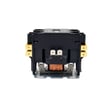
If you are repairing the outdoor unit, common service parts include the central air conditioner contactor 1172472. For ordering parts by model, use the parts list for N4A342AKA300 or search on Sears PartsDirect.
Last updated: February 2026
What is the most expensive part to replace on an AC unit?
On an Icp split-system air conditioner like model N4A342AKA300, the most expensive single component to replace is typically the compressor because it is the sealed, refrigerant-handling “heart” of the system. Another high-cost repair is often a coil (indoor evaporator or outdoor condenser coil), depending on labor and refrigerant work.
What usually costs the most (and why)
The priciest repairs usually involve sealed-system work, specialized tools, and significant labor.
- Compressor: high part cost plus refrigerant recovery, evacuation, and recharge
- Evaporator coil (indoor coil): can require refrigerant work and access inside the air handler
- Condenser coil (outdoor coil): may involve major disassembly and refrigerant work
- Major electrical failures: less common, but can add up when multiple components are damaged
For model-specific maintenance and troubleshooting steps that help prevent expensive failures, follow the guidance in the N4A342AKA300 owner's manual.
Lower-cost parts that can still cause “no cooling”
Many “AC not cooling” calls are caused by smaller parts or maintenance issues, not the compressor.
- Dirty return air filter (a leading cause of poor cooling and compressor stress)
- Tripped breaker or blown fuse
- Dirty or blocked outdoor coil and fins
- Worn electrical components such as a contactor
- Outdoor fan issues such as a damaged fan blade
If you’re diagnosing an outdoor fan or electrical issue on this model, common replacement parts we list include the central air conditioner contactor 1172472 and the central air conditioner condenser fan blade 1172713.
Quick cost comparison (typical)
Actual totals vary by region, access, and refrigerant handling, but this shows why compressors and coils lead the list.
| Repair area | Typical cost driver | Why it gets expensive |
|---|---|---|
| Compressor | Part + labor | Sealed-system refrigerant work and time |
| Evaporator or condenser coil | Labor + refrigerant | Major disassembly, brazing, evacuation |
| Contactor or fan blade | Labor | Straightforward electrical or mechanical swap |
Why it matters
Your manual notes that dirty air filters are the most common cause of inadequate cooling performance and of compressor failures. Keeping filters clean and outdoor coils clear helps reduce the chance of the most expensive repair.
Ordering parts
We list model-matched parts for N4A342AKA300 on the parts list for this unit; you can also search by model number on Sears PartsDirect.
Last updated: February 2026