Owner’s manual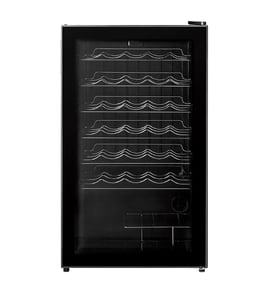



What is the difference between a wine cooler and a beverage cooler?
A wine cooler is designed to store wine at steady, moderate temperatures with bottle racks, while a beverage cooler is designed to chill a wider mix of drinks using flatter, more flexible shelving and often colder setpoints. The Jenn-Air JWC2450ARS is built around wine-rack storage and wine-friendly temperature control.
Key differences in real-world use
- Temperature goals: Wine storage focuses on stable, moderate temperatures; beverage storage focuses on colder, ready-to-drink chilling.
- Storage layout: Wine coolers use bottle racks; beverage coolers typically use adjustable shelves for cans, bottles, and mixers.
- Bottle handling: Wine racks support bottle placement and easy label viewing; beverage shelves prioritize quick access and varied container sizes.
- Door and rack access: Wine coolers with slide-out racks need extra clearance so racks can extend without hitting cabinetry.
- Light and heat: Wine storage benefits from minimizing added heat; turning the interior light off when not needed helps keep temperatures steadier.
What the JWC2450ARS manual confirms
The JWC2450ARS uses a numbered temperature control and is intended for wine storage practices, including rack-based loading and temperature variation guidance inside the cabinet.
| Manual detail (JWC2450ARS) | What it means for you |
|---|---|
| Control settings are numbered (1 through 7) | You adjust temperature by changing a setting, then allow time for the cabinet to stabilize |
| Mid setting targets about 55°F for long-term wine storage | This is a classic wine-storage target temperature |
| Door must open a minimum of 150° to pull racks out | Plan installation clearance so you can actually use the slide-out racks |
Why it matters
Using the right cooler protects flavor and packaging. Wine stores best with steady temperatures and rack storage, while sodas, beer, and sports drinks are usually better served by colder temperatures and flexible shelving.
For the exact operating guidance (control settings, rack loading, and door clearance), use the JWC2450ARS owner’s manual.
Last updated: January 2026
What is the life expectancy of a wine cooler?
A wine cooler like the Jenn-Air JWC2450ARS typically lasts 10 to 15 years. Lifespan depends most on ventilation, condenser cleanliness, stable room temperature, and how consistently the unit can hold set temperatures without running nonstop.
What affects lifespan the most
- Airflow and ventilation: blocked front openings make the compressor work harder
- Condenser cleanliness: lint and dust reduce cooling efficiency
- Heat exposure: direct sunlight or nearby heat sources shorten component life
- Door use and sealing: frequent openings and a poor seal increase run time
- Loading habits: overloading and blocking internal airflow causes temperature swings
Maintenance that extends life (JWC2450ARS)
The JWC2450ARS owner guidance calls out condenser care as a key performance item. We recommend:
- Brush or vacuum lint and dirt from the condenser at least twice a year
- Keep the front airflow openings clear so the unit can reject heat properly
- Turn the interior light off when not needed to reduce added heat inside
- Allow temperature changes time to stabilize before making repeated adjustments
For model-specific operating and care details, use the JWC2450ARS owner’s manual.
Quick expectations table
| Item | Typical expectation | Why it matters |
|---|---|---|
| Overall lifespan | 10 to 15 years | Normal compressor and control life for quality units |
| Condenser cleaning | 2 times per year | Reduces run time and overheating |
| Temperature stability | Allow about 48 hours after initial setting | Prevents over-adjusting and short cycling |
Why it matters
Most early wine cooler failures trace back to heat and restricted airflow. Keeping the condenser clean and vents open helps the sealed refrigeration system run cooler and steadier, which protects the compressor, start components, and temperature control.
Last updated: January 2026
What is the most common problem with wine coolers?
The most common wine cooler problem is inconsistent cooling (too warm, too cold, or temperature swings). On the Jenn-Air JWC2450ARS, this is most often tied to restricted airflow and a dirty condenser, plus frequent door openings or an incorrect control setting; all of these make the unit run longer and struggle to hold temperature.
What to check first (fast, high-impact)
- Confirm the temperature control is not set to OFF and is set to the desired range.
- Minimize door openings; prolonged openings make the cooler run long and warm up.
- Make sure nothing blocks the front airflow openings.
- Clean condenser lint and dust; the manual recommends brushing or vacuuming it at least twice a year.
- Verify the unit is level; being out of level can cause vibration and noisy operation.
Why cooling problems happen most often
Wine and beverage coolers depend on steady ventilation across the condenser coils. When lint and dust build up, heat cannot shed efficiently, so the compressor runs longer and temperatures drift.
Common symptoms and likely causes
| Symptom | Most likely cause | What we do |
|---|---|---|
| Runs long | Condenser needs cleaning, door opened often, control set too cold | Clean condenser, reduce openings, adjust control |
| Interior too warm/too cold | Control improperly set, thermometer reading is off | Reset control, check temp at center of cabinet |
| Moisture inside | Too many door openings, hot/humid weather | Reduce openings, allow humidity to stabilize |
| No light | Bulb burned out, no power at outlet | Replace bulb, check outlet power |
Parts that may be involved
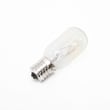
If the light is out (a common “it seems dead” complaint), the correct replacement bulb for this model is the light blub WPA3073101. For cleaning and service steps, follow the safety notes and procedures in the JWC2450ARS owner’s manual.
Why it matters
Wine and beverages store best when temperature stays stable. Keeping airflow clear and the condenser clean prevents long run times, reduces temperature swings, and helps protect the compressor.
Last updated: January 2026