 Owner’s manual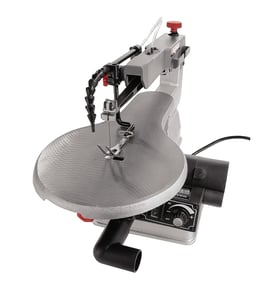

Are all scroll saw blades universal?
No. Scroll saw blades are not universal; you must match the blade style and size to your saw’s clamps and the material you’re cutting. For the Craftsman 315216360, the saw uses 5-inch blades in either pin-end or plain-end style (and blade choice affects cut quality and breakage). See the owner's manual for blade type, installation, and tension guidance.
What fits the Craftsman 315216360
This model accepts a range of blade widths and thicknesses, but the key “fit” requirements are:
- Length: 5-inch scroll saw blades
- End type: Pin-end or plain-end blades
- Selection: width, thickness, and teeth-per-inch (TPI) based on material and curve radius
- Operation note: teeth cut on the downstroke, so feed rate matters
How to choose the right blade (practical rules)
Use these rules to pick a blade that cuts cleanly and lasts longer:
- Choose narrow, fine blades for tight curves and thin stock (about 1/4 inch thick or less for very fine blades).
- Choose wider blades for straighter cuts and larger-radius curves (wider blades cannot turn as tightly).
- Match TPI to material thickness: higher TPI for thinner material; lower TPI for thicker wood and faster cutting.
- For wood, best results are typically with stock under 1 inch thick; go slower and avoid twisting the blade on thicker cuts.
- Expect blades to wear out; many blades stay sharp roughly 1/2 hour to 2 hours depending on material and speed.
Blade choice and speed: quick reference
| Cutting goal | Blade direction | Blade width | Speed/feed guidance |
|---|---|---|---|
| Tight curves in thin material | Downstroke cutting | Narrow | Slower feed; let the saw do the work |
| Straight or gentle curves | Downstroke cutting | Wider | Steady feed; avoid side pressure |
| Thicker wood or hardwood | Downstroke cutting | Moderate to wider | Very slow feed; prevent twisting/bending |
Why it matters
Using the wrong blade style (pin-end vs plain-end), the wrong width, or the wrong tension can cause poor tracking, rough cuts, and frequent blade breakage. Proper blade selection and tension also reduces heat and helps the saw cut smoothly without forcing the workpiece.
Last updated: February 2026
Should I get pinless or pinned scroll saw blades?
For the Craftsman 315216360 16-inch variable-speed scroll saw, we recommend pinless (plain-end) blades for most projects because they let you do tighter, more detailed work and inside cuts through small starter holes. This model accepts both pin-end and plain-end 5-inch blades, so you can choose based on the cut you need. See the owner's manual for blade installation and tensioning details.
Quick pick guide (what to buy)
- Choose pinless (plain-end) for fretwork, lettering, puzzles, and tight-radius curves.
- Choose pinned (pin-end) for quick, general cutting when you want easy blade changes.
- Match blade width to the curve: narrow for tight curves, wider for straighter cuts.
- Match teeth per inch (TPI) to material thickness: higher TPI for thinner material.
- Expect blades to wear quickly; plan on frequent changes for best results.
Pinless vs pinned: what changes in real use
| Feature | Pinless (plain-end) | Pinned (pin-end) |
|---|---|---|
| Inside cuts | Best (fits smaller pilot holes) | Limited (pins need larger holes) |
| Detail work | Best for tight turns | Better for larger curves |
| Blade variety | Widest selection (fine, spiral, specialty) | More limited |
| Blade changes | Slightly more setup | Often faster |
Model-specific notes for Craftsman 315216360
Our manual calls out that this saw uses 5-inch blades in either style (pin-end or plain-end). It also notes blades typically stay sharp about 1/2 hour to 2 hours depending on material and speed, so keeping spares on hand is normal.
Why it matters
Blade style affects how small a curve you can cut, whether you can do clean inside cutouts, and how often you fight blade drift or breakage. Using the right blade width and TPI also reduces side pressure, which helps prevent broken blades and improves accuracy.
Last updated: February 2026
What are some common scroll saw mistakes?
Common mistakes on the Craftsman 315216360 16-inch variable-speed scroll saw include incorrect blade tension, forcing the workpiece, starting the saw with the blade touching the wood, and not securing the saw to a stable bench. These issues lead to rough cuts, broken blades, and unsafe hand positions; our owner's manual covers the correct setup and operating habits.
Most common mistakes (and what to do instead)
- Wrong blade tension: Too much tension can snap a blade at startup; too little tension can let the blade bend, wander, or break early.
- Forcing the feed rate: Guide the wood slowly and let the blade do the cutting; forcing causes blade deflection and burning.
- Starting with the blade touching the workpiece: Clear the blade from the material before switching on, then let the motor reach full speed.
- Not clamping or bolting the saw down: Vibration makes it harder to control the cut and increases the chance of a slip.
- Twisting the blade in thick stock: For wood over about 1 inch thick, feed very slowly and avoid side pressure that bends the blade.
- Using dull blades too long: Scroll saw blades are consumables; replace them often for clean, accurate cuts.
Quick setup checklist for cleaner cuts
- Bolt the saw to a firm, level workbench (a comfortable table height is around hip height).
- Confirm the blade is installed correctly and tensioned before powering on.
- Hold the work firmly against the table; keep hands out of the blade path.
- Keep the table clear of debris and dust so the workpiece stays flat.
Symptoms and likely causes
| What you notice | Most likely mistake | Best next step |
|---|---|---|
| Blade breaks right away | Tension too high, or side-loading the blade | Reduce tension slightly; feed straight and slower |
| Cut wanders or bevels | Forcing the cut, low tension, dull blade | Slow feed; re-tension; replace blade |
| Excess vibration | Saw not secured to bench | Clamp or bolt saw to a stable surface |
| Burning or rough edges | Dull blade or too fast feed | Replace blade; ease the feed rate |
Why it matters
Most scroll saw problems trace back to control: correct blade tension, a steady feed rate, and a stable saw reduce blade breakage and help you cut accurately (especially on curves and fine detail).
Last updated: February 2026
What is better than a scroll saw?
A band saw is better than a scroll saw when you need more power, thicker-cut capacity, and faster straight or curved cuts. Your Craftsman 315216360 16-inch variable-speed scroll saw is still the better choice for tight, intricate inside cuts and fine detail work; see the owner's manual for safe setup and cutting guidance.
Scroll saw vs. band saw: which is “better” for the job?
A band saw typically wins for general woodworking because it handles larger stock and a wider range of cuts. A scroll saw wins for precision and delicate control.
| Task | Scroll saw (Craftsman 315216360) | Band saw |
|---|---|---|
| Intricate fretwork, tight curves | Best | Good, but limited by blade width |
| Inside cutouts (piercing) | Best | Not practical |
| Cutting thick hardwood fast | Limited | Best |
| Straight ripping and resawing | Not intended | Best |
| Smooth, low-tear detail cuts | Best | Varies by blade and setup |
When a band saw is the better tool
Choose a band saw if you need:
- More cutting power for thicker material
- Faster cutting for repeated parts
- Ripping lumber, resawing, or making veneers
- Larger work capacity for bigger projects
- A more “all-around” shop saw
When your scroll saw is the better tool
We recommend sticking with the Craftsman 315216360 scroll saw for:
- Fine detail work and tight-radius curves
- Thin stock and controlled, slow cutting
- Inside cutouts (drill a starter hole, thread the blade, then cut)
- Materials it is designed for, including wood, plastics, and nonferrous metals (like aluminum, brass, and copper)
Why it matters
Using the right saw improves cut quality and safety. The manual guidance for this model emphasizes letting the saw do the work (do not force the cut), keeping hands clear of the blade, and securing the saw to a stable bench to prevent tipping or walking during use.
Last updated: February 2026
Which way do the teeth go on a scroll saw blade?
On the Craftsman 315216360 16-inch variable-speed scroll saw, the blade teeth face down toward the table. This is because the blade cuts on the downstroke, so downward-facing teeth pull the workpiece into the table for better control.
Quick check before you cut
- Unplug the saw before touching the blade or blade holders.
- With the blade installed, look at the teeth: the points should aim down.
- If your blade has a printed label, it typically reads correctly when the blade is oriented properly (varies by blade brand).
- Make sure the blade is centered through the throat plate and the hold down foot.
- Apply proper tension so the blade “plucks” like a guitar string (a clear musical note, not a dull thud).
Why teeth direction matters
When teeth face down, the blade removes material on the downstroke, which:
- Reduces lifting and chatter of thin stock
- Improves cut accuracy on wood, plastic, and nonferrous metals
- Helps prevent the workpiece from riding up the blade
Blade setup tips for this model
Use these adjustments to get clean cuts and fewer broken blades:
| Setup item | What “right” looks like | What happens if it’s off |
|---|---|---|
| Teeth direction | Teeth point down toward the table | Poor cutting, burning, grabbing, or bouncing |
| Blade tension | Clear “musical note” when plucked | Too tight: breaks quickly; too loose: wanders |
| Hold down foot alignment | Centered around the blade, not rubbing | Blade deflects, foot contact, rough cuts |
| Feed pressure | Guide slowly, do not force | Blade breaks, cuts drift |
Where to confirm in the documentation
We cover blade installation, tensioning, and general operation details in the owner's manual.
Safety note
Never start the saw with the blade touching the workpiece; let the motor reach full speed first.
Last updated: February 2026