Owner’s manual
 Error Codes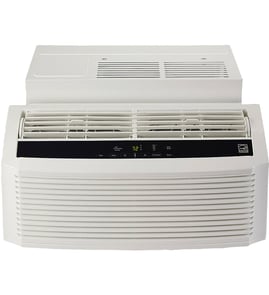




How long is the warranty on a GE window air conditioner?
GE room air conditioner model AHFK18AAH1 has a limited 1-year warranty from the original purchase date. During that one-year period, GE covers any part that fails due to defects in materials or workmanship; GE also covers labor and related service to replace the defective part.
Warranty length and coverage (AHFK18AAH1)
- Warranty term: 1 year from the date of original purchase
- Parts: covered for defects in materials or workmanship
- Labor/service: covered for covered repairs during the 1-year term
- What you should keep: proof of purchase plus the model and serial number
Quick summary table
| Warranty item | What it means | What you need to provide |
|---|---|---|
| Length | 1 year | Purchase date on receipt |
| Covered failure | Defect in materials or workmanship | Model and serial number |
| Covered costs | Parts plus labor/service for the covered repair | Access to the unit for service |
Common exclusions to plan for
These are typical items called out in the limited warranty section:
- Improper installation, delivery, or maintenance
- Choosing an air conditioner with improper cooling capacity for the intended space
- Product modifications or unreasonable use
- Service calls that only explain how to use controls or features
Why it matters
If your unit is within the 1-year window, it often makes sense to pursue warranty service before paying out of pocket for repairs involving the control board, fan motor, or other electrical components.
Where to confirm the exact wording
Use the warranty section in the AHFK18AAH1 owner's manual for the full terms, exclusions, and what information GE requests when scheduling service.
Last updated: February 2026
How much do AC spare parts usually cost?
AC spare parts for the GE AHFK18AAH1 room air conditioner range from low-cost hardware and clips (often under $10) to higher-cost electrical and motor components (commonly $50 to $300+). For the most accurate fit and repair guidance, use the AHFK18AAH1 owner's manual to confirm the part and access steps.
Typical price ranges (parts only)
These are common ranges for room air conditioners; your exact cost depends on the component and availability.
- Filters, clips, small covers: $5 to $30
- Capacitors, sensors, wiring harnesses: $25 to $125
- Control boards and UI components: $60 to $200
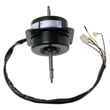
- Fan motors and fan assemblies: $150 to $300+
- Sealed-system parts (coils, tubing): $150 to $400+ (often technician-only work)
Examples from this AHFK18AAH1 parts list
Here are real-world examples that show how wide the spread can be:
| Part type | Example part for AHFK18AAH1 | Typical role | Cost pattern |
|---|---|---|---|
| Maintenance | Room air conditioner air filter WJ85X23947 | Improves airflow, helps prevent icing | Lower cost, routine replacement |
| Electrical | Capacitor (example: WJ20X24430) | Helps start/run the motor/compressor | Mid-range |
| Control | Main control board (example: WJ26X27741) | Runs modes, fan speeds, sensors | Mid to higher |
| Motor | Fan motor (example: WJ94X25904) | Drives indoor/outdoor fan | Higher |
When a repair is worth it (quick checklist)
We use these rules of thumb when comparing parts cost vs. replacing the unit:
- The unit cools well and the issue is airflow, noise, or controls
- The repair is a common wear item (filter, capacitor, fan blade)
- The part cost is reasonable compared to a new room air conditioner
- The problem is not in the sealed refrigerant system
- You can safely access the part without disturbing refrigerant lines
Why it matters
Room air conditioner parts pricing is driven by complexity: simple maintenance parts (like an air filter) are inexpensive, while electronics (control boards) and mechanical drive parts (fan motor) cost more and can add labor time.
Last updated: February 2026
How to order GE appliance parts?
To order parts for your GE AHFK18AAH1 room air conditioner, use the complete model number and serial number, then order by the exact part ID or part number from the parts list. If you need in-warranty or out-of-stock ordering help, contact Sears PartsDirect support.
What to have ready before you order
- Model number: AHFK18AAH1
- Serial number (from the rating label on the unit)
- The part name and part ID (example: room air conditioner air filter WJ85X23947)
- A quick symptom description (for example: “not cooling” or “won’t power on”)
How we recommend ordering the correct part
- Confirm the model number matches AHFK18AAH1.
- Use the parts list to match the failed component by name.
- Verify the part ID and part number before checkout.
- If the part is listed as unavailable, contact Sears PartsDirect support for ordering options.
Common parts customers order for this model
| What you need | What it affects | Example part for AHFK18AAH1 |
|---|---|---|
| Air filter | Airflow, icing, cooling performance | Room air conditioner air filter WJ85X23947 |
| Remote control | Operation and settings | Remote WJ26X27734 |
| Main control board | Power, modes, error behavior | Main control board WJ26X27741 |
Why it matters
Ordering by the exact model number and part ID helps prevent fit issues and repeat repairs, especially on electronic parts like a control board or UI components.
For model-specific identification details, use the owner's manual.
Last updated: February 2026
What AC parts are most commonly replaced?
For the GE AHFK18AAH1 room air conditioner, the most commonly replaced parts are the ones that affect airflow, starting, and controls: the air filter, fan components, capacitor, remote, and control boards. Regular cleaning and correct operation (per the AHFK18AAH1 owner's manual) helps these parts last longer.
Most common replacement parts (and what they do)
- Air filter: traps dust so the evaporator coil can absorb heat efficiently (example: room air conditioner air filter WJ85X23947).
- Capacitor: helps the fan motor and compressor start and run smoothly.
- Fan motor and fan blades: move air across the indoor coil and push heat out through the outdoor coil.
- Electronic controls: user interface board and main control board manage modes, temperature, and fan speeds.
- Remote control: common replacement when buttons fail or the remote is lost.
Quick symptom-to-part guide
| What you notice | Most likely area | Common parts to check first |
|---|---|---|
| Weak airflow, musty smell, icing | Airflow restriction | Air filter, indoor fan blade, indoor fan shroud |
| Hums, struggles to start, trips | Start/run circuit | Capacitor, fan motor |
| Runs but won’t respond to buttons | Controls | Main control board, UI board |
| No response from remote | Remote system | Remote, batteries, front panel window/sensor area |
Why these parts get replaced often
Window and room air conditioners pull a lot of air through a compact cabinet. Dust buildup and vibration are the main reasons “wear” parts (filter, fan, capacitor) and “handling” parts (remote, front panel) get replaced.
What we recommend before ordering parts
- Unplug the unit before inspecting or cleaning.
- Clean the grille and case; then clean or replace the air filter.
- Check for ice on the indoor coil; let it fully thaw before testing again.
- Confirm the mode settings (Cool vs. Energy Saver) and temperature setpoint.
- If you see an error code, use the GE error codes guide to narrow the failure.
Last updated: February 2026
What are the 5 main parts of AC?
The 5 main parts that make an air conditioner cool are the compressor, condenser coil, expansion device, evaporator coil, and fan (blower). In your GE AHFK18AAH1 room air conditioner, these parts work together to move heat from indoors to outdoors; the controls and air filter support that process.
The 5 core components (what each one does)
- Compressor: pumps refrigerant through the sealed system and raises pressure/temperature.
- Condenser coil (outdoor coil): releases heat to the outside air.
- Expansion device (capillary tube/valve): drops refrigerant pressure so it can absorb heat.
- Evaporator coil (indoor coil): absorbs heat from room air and cools it.
- Fan (blower): moves air across the coils (indoor fan for room air; outdoor fan for condenser airflow).
Common “support” parts you will also see on this model
These are not part of the core refrigeration loop, but they strongly affect cooling performance and reliability:
- Air filter (keeps the evaporator coil from clogging)
- Electronic control boards and user interface
- Thermistors/sensors (temperature feedback)
- Power cord and wiring harness
- Front panel and grille (airflow path)
Quick map: part to symptom
| If this part has a problem | Common symptom you notice | What to check first |
|---|---|---|
| Air filter | Weak airflow, icing, poor cooling | Clean/replace filter |
| Indoor fan | Air not blowing well | Fan speed setting, obstructions |
| Outdoor coil/fan | Runs but does not cool well | Outdoor coil cleanliness |
| Controls/sensors | Erratic temps, won’t start | Error codes, reset/power cycle |
Parts we commonly replace for airflow and control issues
Why it matters
When any one of the five core components is restricted (dirty coil/filter), not moving air (fan issue), or not controlling refrigerant flow (sealed-system issue), the unit can run longer, cool less, and ice up. Regular filter care and coil cleaning prevent many “not cooling” complaints.
For model-specific operating and care steps (including air filter and outdoor coil cleaning), use the AHFK18AAH1 owner’s manual.
Last updated: February 2026
Why is my GE window air conditioner not getting cold?
If your GE AHFK18AAH1 window air conditioner runs but is not getting cold, the most common causes are restricted airflow (dirty filter or blocked front grille), incorrect temperature/mode settings, or iced-up cooling coils. Start with filter cleaning and correct settings, then address icing and airflow.
Quick checks that fix most “not cold” complaints
- Set Cool mode (not Fan) and choose High Cool for testing.
- Set the temperature to 64°F and wait a full 3 minutes for the compressor time delay.
- Make sure curtains, blinds, or furniture are not blocking the front of the unit.
- Clean or replace the air filter; GE recommends cleaning at least every 30 days.
- If the outdoor temperature is below 32°F, do not run Cool mode.
For model-specific operating details and care steps, follow the AHFK18AAH1 owner’s manual.
If the cooling coils are iced up
Ice blocks airflow and stops cooling. Use this defrost method:
- Switch to High Fan (or High Cool with the temperature set as high as it will go).
- Let the ice melt completely; this can take a few hours.
- After defrosting, reinstall a clean filter and confirm the front airflow is strong.
What to check next (symptom-to-cause)
| What you notice | Most likely cause | What we recommend |
|---|---|---|
| Weak airflow from the front | Dirty filter or blockage | Clean/replace filter; clear obstructions |
| Airflow OK but room stays warm | Settings or heat load | Use High Cool, lower set temp, give time to cool |
| Unit cools then stops, frost/ice appears | Coils icing from low airflow | Defrost, then correct airflow issue |
| Compressor seems delayed after restart | Normal protection delay | Wait about 3 minutes |
Parts that commonly restore cooling performance
If your filter is damaged or will not clean up well, replacement is often the fastest fix: room air conditioner air filter WJ85X23947.
Why it matters
A restricted filter or blocked airflow can cause coil icing, longer run times, and poor comfort. Keeping airflow strong helps the compressor cycle normally and maintain the set temperature.
Last updated: February 2026