Installation guide
 Owner’s manual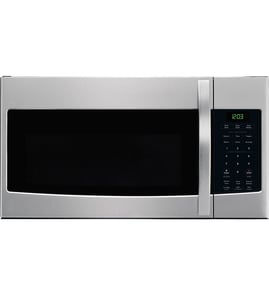




Are all GE over the range microwaves the same size?
No. GE over-the-range microwaves are not all the same size, but most are designed to fit a standard 30-inch cabinet opening. For GE model JNM1851DM4BB, the installation requirements call for a 30-inch wide space between cabinets and mounting height clearances that must be followed for a proper fit; see the JNM1851DM4BB installation guide.
What is typically the same (and what is not)
Most over-the-range microwaves share a similar width, but height, depth, and mounting points can vary by model and series.
- Usually similar: overall width intended for a 30-inch cabinet opening
- Often different: height and depth (how far the unit sticks out)
- Can differ by model: venting layout (top, rear, recirculating), mounting plate hole pattern, and power cord routing
- Always important: required clearances above the cooktop and to the cabinet bottom
Fit checks we recommend before you buy a replacement
Use these checks to avoid a mismatch when replacing an existing unit.
- Confirm the cabinet opening is 30 inches wide and free of obstructions.
- Confirm the microwave will be installed 30 inches or more above the cooking surface.
- Confirm the top of the microwave will be 66 inches or more from the floor.
- Verify whether you are venting to the outside or recirculating; that affects duct alignment and filters.
- Compare your existing mounting plate and upper cabinet holes to the new unit’s templates.
Key installation clearances (from the GE guidance)
| Requirement | What to plan for |
|---|---|
| Space between cabinets | 30 inches wide |
| Clearance to cooktop | Cabinet bottom 30 inches or more above cooking surface |
| Overall mounting height | 66 inches or more from floor to top of microwave |
| Range width below | Designed for installation over ranges up to 36 inches wide |
Why it matters
Even when two GE over-the-range microwaves are both “30-inch models,” differences in depth, venting, and mounting templates can force cabinet modifications or cause airflow and leveling problems. Following the model-specific clearances helps ensure safe operation and a clean, flush install.
Last updated: January 2026
What is the difference between a 700 watt and a 1000 watt microwave?
A 1000-watt microwave cooks faster and more evenly than a 700-watt microwave because it delivers more cooking power per minute. On a GE microwave/hood combo like model JNM1851DM4BB, higher wattage typically means shorter cook times, better results on dense foods, and less need to stir or rotate.
What higher wattage changes in real cooking
- Speed: 1000 watts heats food noticeably faster than 700 watts.
- Evenness: higher power helps reduce cold spots in thicker foods.
- Convenience: fewer pauses to stir, rotate, or turn food.
- Frozen foods: better performance on frozen meals and dense items.
- Timing: recipes written for “standard” microwaves usually assume around 900 to 1100 watts.
How to adjust cook times when wattage is different
If a recipe is written for 1000 watts and you have 700 watts, increase time by about 40%. If you go the other direction (700 to 1000), reduce time by about 30%.
| Recipe written for | Your microwave | Quick time adjustment |
|---|---|---|
| 1000 W | 700 W | multiply time by 1.4 |
| 700 W | 1000 W | multiply time by 0.7 |
Use power levels to get similar results
Your JNM1851DM4BB supports multiple power levels (1 to 10), which helps you control how aggressively food heats. Lower power levels cook more evenly and often need less stirring, while High (power level 10) is the fastest. For the exact keypad steps and feature behavior, follow the JNM1851DM4BB owner’s manual.
Why it matters
Wattage is the biggest reason two microwaves can give different results with the same cook time. Matching time and power level to your microwave’s output helps prevent overcooked edges, underheated centers, and unnecessary arcing risk from overheated packaging.
Last updated: January 2026
What's the average lifespan of a GE microwave?
A GE microwave like model JNM1851DM4BB typically lasts 8 to 10 years with normal household use. Heavy daily use, poor ventilation, and skipped cleaning shorten life; keeping the cavity, door latches, and filters clean helps it reach the full expected lifespan.
What most often ends a microwave’s life
These are the most common wear points we see on over-the-range microwave/hood combos:
- Door interlock system wear (latches, levers, switches) that prevents safe operation
- High-voltage heating circuit failure (magnetron, diode, capacitor, transformer)
- Ventilation problems (grease buildup, restricted airflow) that overheat components
- Control issues (keypad or control board problems)
- Turntable drive wear (motor or coupler issues)
If your unit will not start or acts like the door is not closed, the door interlock switch is a common suspect; see the micro-switch WB24X830.
How to help your JNM1851DM4BB last longer
We recommend these habits because they reduce heat stress and prevent arcing and corrosion:
- Wipe the interior regularly; a baking soda and water solution works well
- Keep the grease filter clean so the vent fan can move air properly
- Never run the microwave empty
- Use microwave-safe containers (avoid metal trim and foil)
- Make sure the door closes smoothly and latches firmly
For model-specific care and cleaning steps, follow the JNM1851DM4BB owner’s manual.
Quick “repair vs. replace” guide
| Symptom | Common cause | Typical next step |
|---|---|---|
| Runs but does not heat | High-voltage component issue | Service recommended; test components safely |
| Dead, no display | Power supply or internal fuse issue | Check outlet and breaker; then diagnose internal power path |
| Starts then stops when door moves | Door interlock switch/latch issue | Inspect latch alignment; test interlock switch |
| Loud hum or burning smell | High-voltage or fan issue | Stop using; inspect and service |
A good troubleshooting overview is in why is my microwave not heating.
Why it matters
Microwaves contain a high-voltage system and safety interlocks. When a unit is near end-of-life, symptoms like intermittent heating or door-related starting problems can become more frequent; addressing airflow and door-latch issues early often prevents bigger failures.
Last updated: January 2026